
Victoria’s Ballarat Line Upgrade: Rail Infrastructure Advancements
The Ballarat Line Upgrade boosts Victoria’s rail network with new passing loops, improved signaling, and enhanced safety, delivering faster, more reliable services. Discover how this major project benefits regional communities and the economy!
This article explores the significant Ballarat Line Upgrade program underway in Victoria, Australia. The project, a joint venture between the state and federal governments, represents a substantial investment aimed at modernizing and enhancing the capacity of this crucial regional rail line. We will explore the various phases of the upgrade, focusing on the infrastructural improvements, their impact on passenger services, and the broader economic implications of this large-scale undertaking. The analysis will encompass the technical aspects of the upgrade, including track works, signaling, and the expansion of passing loops, while also considering the logistical challenges of managing such a complex project and its effects on commuters during the construction period. Finally, the article will assess the long-term benefits of the upgrade for the regional economy and the overall improvement to the passenger experience. This multifaceted examination provides a detailed understanding of the project’s significance and impact.
Track and Signaling Enhancements
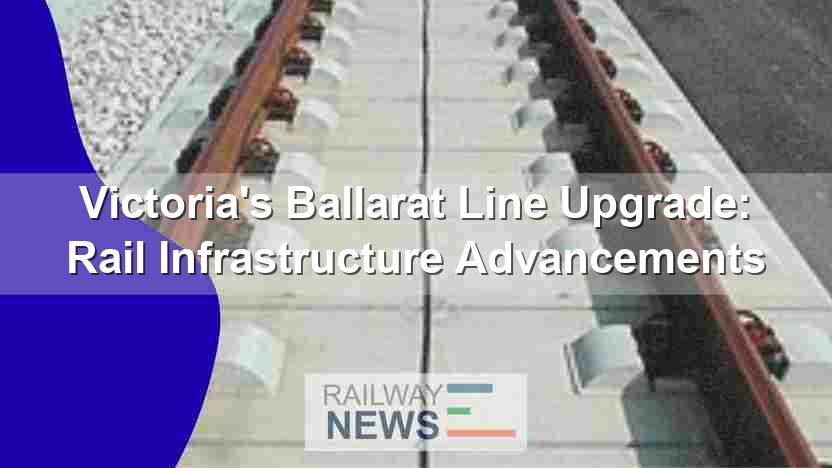
The core of the Ballarat Line Upgrade involves significant track works. This includes the installation of new track, as demonstrated by the recent addition at the Millbrook passing loop. The construction of new passing loops at Millbrook and Ballan is crucial for increasing the line’s capacity, enabling more frequent and efficient train services. This directly addresses the limitations of the existing infrastructure, which previously hindered the ability to run additional peak-hour services. The project also encompasses the strategic relocation of underground utilities, a complex undertaking requiring careful planning and execution to minimize disruption. The installation of new rail turnouts (points) improves operational flexibility, allowing for smoother train movements and maneuverability. Additionally, the extension of drainage culverts improves the resilience of the railway infrastructure against water damage, ensuring the long-term stability and performance of the line.
Safety and Passenger Experience Improvements
Beyond infrastructural upgrades, the project prioritizes safety improvements. The installation of new safety fencing along the line is a critical component, enhancing safety for both railway workers and the public. While construction is underway, V/Line (Victoria’s regional train operator) services are temporarily replaced with coach services to ensure passenger safety and minimize disruption during the construction period. The long-term aim of the upgrade is to significantly enhance the passenger experience by providing more frequent and reliable train services during peak hours. This will directly benefit commuters who rely on the Ballarat Line for daily travel, leading to improved journey times and a more comfortable commuting experience.
Economic Impact and Funding
The Ballarat Line Upgrade has significant economic ramifications. The project creates substantial employment opportunities, as evidenced by the 350 workers engaged in recent phases. The A$502 million ($382.4 million USD) investment by the federal government, coupled with the A$55 million ($41.9 million USD) contribution from the state government, highlights the importance of this project. This funding is part of the broader A$1.75 billion ($1.33 billion USD) Regional Rail Revival program, a testament to the commitment to upgrading Victoria’s regional rail network. The economic benefits extend beyond job creation, with improved transport infrastructure boosting economic activity in the region by supporting businesses and facilitating easier commuting for workers.
Project Timeline and Conclusion
The Ballarat Line Upgrade is a phased project with a projected completion date towards the end of 2019. Significant progress has already been made, with over 200,000 worker-hours dedicated to the project since its commencement in late 2017. The culmination of this detailed upgrade will result in a modernized and significantly enhanced rail corridor. The addition of passing loops, improved signaling systems, new track, and upgraded safety features will allow for more frequent and reliable train services, addressing the needs of a growing regional population and fostering economic growth. The substantial investment underscores the commitment to improving regional transport infrastructure in Victoria, providing long-term benefits to commuters and the broader regional economy. The successful completion of this project serves as a model for future rail infrastructure upgrades, emphasizing the importance of strategic planning, effective resource allocation, and a focus on passenger safety and improved service delivery. It showcases the transformative potential of rail infrastructure investment in driving economic development and enhancing the quality of life in regional communities.

Railway infrastructure, rolling stock and transport technologies specialist focused on global rail industry developments, high-speed rail systems, signaling technologies and freight transportation. Covering railway investments, public transport modernization, rail operations and international mobility projects across Europe, Asia and North America.
RELATED POSTS

October 8, 2026 1:15 pm
Alstom secured a €1bn contract to build 13 automated trains,...

October 1, 2026 7:09 am
United States regulators confirmed a September 30 deadline for the...

October 8, 2026 12:18 pm
Siemens Mobility signed an agreement with VinSpeed to supply 350...

October 4, 2026 5:14 pm
Alstom secured a CA$4.7 billion order from VIA Rail Canada...

October 5, 2026 6:12 pm
AECOM and Jacobs secured a contract in September 2026 to...

October 1, 2026 12:13 am
Illinois approved $1.5 billion annually for the Northern Illinois Transit...