
Venezuela’s Tinaco-Anaco High-Speed Rail Project
Venezuela’s Tinaco-Anaco railway, a 466.7km high-speed line, boosts transport and economic growth, connecting key industrial and agricultural centers.
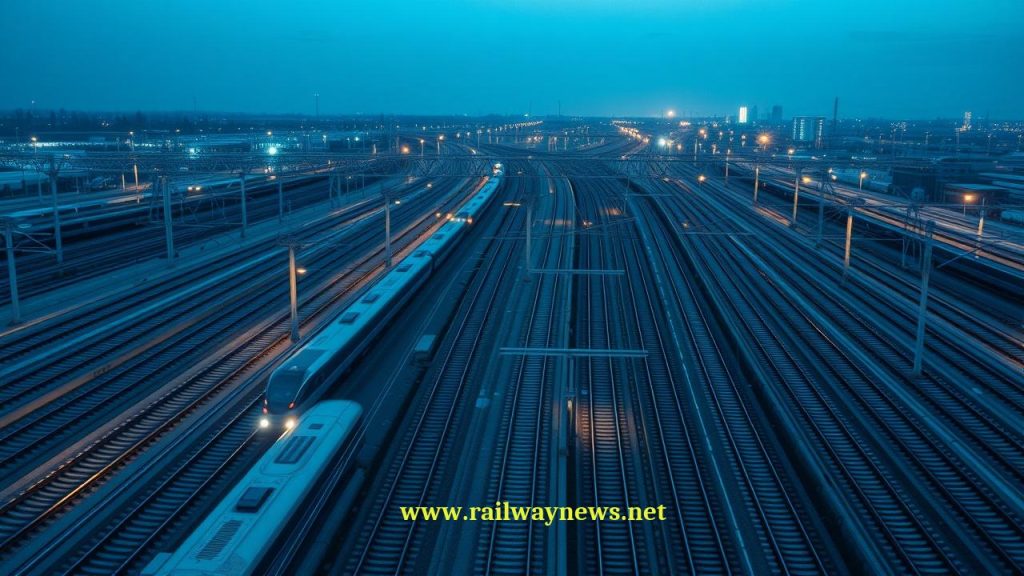
⚡ In Brief: Tinaco-Anaco High-Speed Rail Project
- Scope: 466.7 km standard-gauge (1,435 mm) double-track line designed for 220 km/h operations, connecting Anaco (oil industry) to Tinaco (agriculture) via Guárico State.
- Technical specs: 25kV AC electrification, CTCS-2 signaling, 10 stations, 25 bridges, 1 tunnel; projected capacity 190M tonnes cargo + 210M passengers annually.
- Finance & delivery: $7.5 billion China-Venezuela Strategic Development Fund joint venture; CREC (40%) + Venezuelan state entities (60%); construction began 2009.
- Current status (2026): ~31% physical completion (~41 km track laid); project stalled since ~2015 due to Venezuela’s macroeconomic crisis and payment defaults; CREC withdrew without completing works.
- Strategic significance: Flagship of Venezuela’s National Rail Development Plan; case study in BRI infrastructure risk, technology transfer challenges, and the vulnerability of capital-intensive projects in resource-dependent economies.
When the first concrete sleepers were laid near El Pao in Cojedes State in 2011, engineers from China Railway Engineering Corporation (CREC) and Venezuelan counterparts celebrated what was billed as Latin America’s most ambitious high-speed rail undertaking. Bulldozers carved alignment through the Llanos plains, steel piles rose for the Unare River viaduct, and a factory in Valencia began assembling prototype passenger coaches. Yet by 2016, those same tracks sat unused, vegetation reclaiming embankments, while CREC crews demobilized after Caracas failed to meet payment milestones amid collapsing oil revenues. The Tinaco-Anaco project—conceived as an engine of industrial integration—instead became a stark illustration of how geopolitical ambition, technical ambition, and fiscal reality can diverge in infrastructure development.
What Is the Tinaco-Anaco High-Speed Rail Project?
The Tinaco-Anaco Railway is a planned 466.7 km (290-mile) electrified, double-track, standard-gauge (1,435 mm) high-speed rail corridor in central Venezuela, designed to operate passenger and freight services at speeds up to 220 km/h (137 mph). Conceived under Venezuela’s National Rail Development Plan, the line aims to link the oil-industrial hub of Anaco (Anzoátegui State) with the agricultural center of Tinaco (Cojedes State), traversing Guárico State and serving ten intermediate stations. Technically, the project adopts Chinese high-speed rail export standards: 25kV AC overhead catenary electrification, CTCS-2 (Chinese Train Control System Level 2) for train protection and signaling, and continuous welded rail (CWR) on ballasted track with design parameters optimized for the tropical savanna geology of the Llanos. Beyond transport, the initiative embedded a technology-transfer component: joint-venture factories in Venezuela for rolling stock assembly, rail welding, and switch manufacturing, intended to build domestic industrial capacity alongside the physical infrastructure.
Route Engineering: Navigating the Llanos Plains
The alignment follows a predominantly east-west trajectory across Venezuela’s central plains, maintaining a minimum curve radius of 2,200 m to sustain 220 km/h operations. Geotechnical challenges included expansive clay soils prone to seasonal swelling/shrinking, high water tables requiring elevated embankments, and seasonal flooding of tributaries feeding the Orinoco basin. To mitigate settlement risk, engineers specified a sub-ballast layer of graded granular material (minimum 30 cm thickness) over geotextile-reinforced formation, with drainage ditches spaced at 50 m intervals. The single tunnel (approx. 1.2 km) penetrates a low sandstone ridge near Valle de la Pascua, while the 25 bridges include three major viaducts: the 840 m Unare River crossing (pre-stressed concrete box girders), the 620 m Guanare River structure, and the 410 m Ticoporo viaduct using incremental launching methods.
| Parameter | Specification | Design Rationale |
|---|---|---|
| Gauge | 1,435 mm (standard) | Compatibility with Chinese HSR rolling stock and global interoperability |
| Design Speed | 220 km/h (passenger), 120 km/h (freight) | Balance of journey time reduction vs. construction cost in developing economy context |
| Electrification | 25 kV AC, 50 Hz, overhead catenary | Chinese export standard; enables high power density for acceleration and gradients |
| Signaling | CTCS-2 (cab signaling + balise-based positioning) | Cost-effective for 220 km/h operations; avoids full ETCS Level 2 complexity |
| Track Structure | UIC 60 rail, concrete sleepers, elastic fastenings, ballasted | Proven durability in tropical climates; easier maintenance than slab track |
| Max Gradient | 12.5‰ (passenger), 15‰ (freight) | Accommodates Llanos topography while maintaining traction margins |
Rolling Stock and Operational Concept
The project specified a mixed-traffic fleet: 8-car EMUs derived from the CRH1 platform (for passenger services) and electric locomotives hauling container and bulk freight wagons. Passenger units were designed for 2+2 seating in economy, air conditioning rated for 35°C ambient, and regenerative braking feeding energy back to the 25 kV catenary. A key innovation was the planned local assembly: a joint-venture facility in Valencia (Carabobo State) would receive CKD (completely knocked down) kits from CRRC Qingdao Sifang, with progressive localization of bogies, interiors, and control systems. Operational planning assumed a hub-and-spoke model: high-speed passenger services (Anaco–Tinaco in ~2h 15m) complemented by feeder diesel multiple units on conventional branches. Freight operations prioritized time-sensitive agricultural exports (cocoa, coffee) and oilfield equipment, with dedicated sidings at Anaco for intermodal transfer to PDVSA logistics networks.
Comparative Context: Latin American Rail Modernization
| Project | Length (km) | Design Speed | Gauge | Status (2026) | Key Challenge |
|---|---|---|---|---|---|
| Tinaco-Anaco (VE) | 466.7 | 220 km/h | 1,435 mm | Stalled (~31% complete) | Macroeconomic instability, payment defaults |
| Rio–São Paulo HSR (BR) | 511 | 350 km/h | 1,435 mm | Planning/feasibility | Land acquisition, environmental licensing, financing |
| Belgrano Cargas Upgrade (AR) | 1,500+ | 80 km/h (freight) | 1,000 mm (meter) | Partial rehabilitation | Gauge conversion costs, rolling stock availability |
| Tren Maya (MX) | 1,525 | 160 km/h | 1,435 mm | Operational (Phase 1) | Environmental impact, community consultation, cost overruns |
| Ferrocarril Central Andino (PE) | 342 | 60 km/h (freight) | 1,435 mm | Operational (freight) | Extreme altitude (4,818 m), maintenance in rugged terrain |
| Buenos Aires–Rosario Corridor (AR) | 300 | 160 km/h (passenger) | 1,435 mm (conversion) | Early construction | Gauge standardization, signaling integration |
The China-Venezuela Partnership: Structure and Stress Points
The $7.5 billion financing package was channeled through the China-Venezuela Strategic Development Fund, a bilateral vehicle established in 2008 where oil shipments served as partial collateral. CREC held a 40% equity stake in the project company, with the remainder held by Venezuela’s State Railways Institution (IFE) and related entities. This structure aimed to align incentives: CREC provided engineering, procurement, and construction expertise, while Venezuela contributed right-of-way, local labor, and long-term revenue commitments. Technology transfer was formalized via memoranda covering local assembly of EMUs, rail welding equipment, and signaling components. However, three critical stress points emerged: (1) Payment volatility: Venezuela’s reliance on oil revenues meant project disbursements fluctuated with crude prices; the 2014–2016 price collapse triggered arrears exceeding $1.2 billion by 2015. (2) Local capacity gaps: While factory infrastructure was built, achieving SIL-2 certification for locally assembled safety-critical components proved slower than projected. (3) Macroeconomic distortion: Hyperinflation (peaking at >1,000,000% annually in 2018) eroded the real value of Venezuelan equity contributions and complicated procurement of imported spares. By late 2015, CREC had completed approximately 31% of civil works—including 41 km of track, foundations for 12 stations, and major bridge substructures—but demobilized after repeated payment delays, leaving the project in suspended animation.
Editor’s Analysis: The Tinaco-Anaco project encapsulates a pivotal tension in 21st-century infrastructure: the allure of turnkey, high-specification solutions versus the necessity of fiscal and institutional resilience. Technically, the design was sound—220 km/h is an appropriate “sweet spot” for developing economies, balancing journey-time gains against capital intensity. The choice of Chinese standards (CTCS-2, 25 kV AC) offered cost advantages over European alternatives. Yet the project’s vulnerability lay not in engineering but in governance: anchoring repayment to volatile commodity revenues, underestimating local supply-chain development timelines, and lacking contingency mechanisms for macroeconomic shock. For future BRI or South-South infrastructure partnerships, three lessons emerge: (1) decouple construction financing from single-commodity export flows; (2) phase technology transfer to match absorptive capacity, with independent certification milestones; (3) embed adaptive governance clauses allowing scope/schedule recalibration without triggering default. The rusting gantries near El Pao are not a verdict on high-speed rail in Latin America, but a caution that even the most sophisticated hardware cannot compensate for fragile software—fiscal discipline, institutional continuity, and risk-sharing realism.
— Railway News Editorial
— Railway News Editorial
Frequently Asked Questions
Q1: Why was 220 km/h chosen instead of 300+ km/h like Chinese domestic HSR?
The 220 km/h design speed reflects a deliberate cost-benefit optimization for Venezuela’s economic context and traffic profile. Achieving 300+ km/h requires significantly stricter alignment criteria (minimum curve radius ≥7,000 m vs. 2,200 m), slab track instead of ballasted construction, and more advanced signaling (CTCS-3 vs. CTCS-2), increasing capital costs by an estimated 40–60%. For a 466 km corridor serving intermediate cities with populations under 200,000, the marginal time savings (Anaco–Tinaco in ~1h 45m vs. ~2h 15m) did not justify the added expenditure, particularly given projected passenger yields. Furthermore, 220 km/h operations are compatible with mixed freight-passenger use—a critical requirement for the line’s economic rationale—whereas 300+ km/h lines typically prioritize passenger exclusivity. The choice also aligned with CREC’s export portfolio at the time: the CRH1 platform (derived from Bombardier Regina) was certified for 200–250 km/h operations and offered a proven, cost-effective solution for emerging markets. In hindsight, this speed selection proved prescient: when the project stalled, the partially completed infrastructure retained potential for future rehabilitation at lower cost than a higher-specification alternative would have allowed.
Q2: What happened to the $7.5 billion investment? Was any of it recovered?
Of the $7.5 billion committed, approximately $2.74 billion was expended before work suspension around 2015, according to CREC disclosures and Venezuelan audit reports. These funds covered civil works (earthworks, bridges, tunnel), track materials (rails, sleepers, fastenings), signaling equipment procurement, and establishment of local assembly facilities. No formal recovery mechanism was activated; instead, the debt remains on Venezuela’s sovereign ledger, partially offset against oil shipment obligations under the China-Venezuela Strategic Development Fund framework. Physical assets—completed embankments, bridge substructures, station foundations—remain in situ but have experienced deterioration due to lack of maintenance: vegetation encroachment, drainage blockage, and minor vandalism. The local factories in Valencia produced prototype coaches and components but never achieved series production; equipment sits idle or has been repurposed for conventional rail maintenance. From a financial perspective, the sunk cost represents a loss for both parties, though China has absorbed it within broader BRI portfolio risk management, while Venezuela treats it as part of its external debt restructuring negotiations. Crucially, the expenditure did generate non-financial returns: training of ~1,200 Venezuelan engineers and technicians in HSR construction methods, establishment of geotechnical survey protocols for tropical plains, and demonstration of large-scale project management capacity—assets potentially applicable to future infrastructure initiatives.
Q3: Could the project be revived, and what would it take?
Technical revival is feasible but would require addressing four interdependent prerequisites. First, financial restructuring: a new funding vehicle decoupled from oil-price volatility, potentially blending multilateral development bank guarantees (e.g., CAF, IDB) with phased equity injections tied to milestone verification. Second, technical revalidation: a comprehensive condition assessment of existing works (track geometry, bridge integrity, signaling hardware) to determine rehabilitation vs. replacement needs; preliminary estimates suggest 15–20% of completed civil works may require remediation. Third, operational re-scoping: given changed traffic patterns since 2009, a revised business case might prioritize freight capacity expansion over high-speed passenger service initially, leveraging the corridor for agricultural exports and oilfield logistics to generate early revenue. Fourth, institutional reinforcement</em: strengthening Venezuela’s railway regulator and maintenance entity to ensure long-term asset stewardship, potentially via a public-private partnership model with performance-based contracts. Politically, revival would require bipartisan consensus on infrastructure priority and transparent procurement to restore investor confidence. While challenging, the project’s partial completion offers a foundation: finishing the remaining 69% could cost $4.1–4.8 billion (vs. $7.5 billion greenfield), with phased commissioning enabling revenue generation before full completion. Regional integration—linking to Colombia’s planned Atlantic corridor or Brazil’s northern rail network—could further enhance viability by expanding the addressable market.
Q4: Which technical standards were applied, and how do they compare to European alternatives?
The project adopted a hybrid standards framework anchored in Chinese national specifications but incorporating international best practices. Track design followed TB 10621-2014 (Chinese High-Speed Railway Design Code), specifying UIC 60 rail profiles, concrete sleepers at 1,667 units/km, and elastic fastenings with 20 kN clamping force. Signaling implemented CTCS-2, which uses Eurobalise-compatible transponders for position referencing but employs a proprietary cab-signaling protocol; this contrasts with ETCS Level 2’s GSM-R-based continuous communication. Electrification adhered to GB/T 1402-2010 (25 kV AC, 50 Hz), functionally equivalent to IEC 60850 but with Chinese-specific clearance and insulation coordination rules. Safety certification targeted SIL-2 per IEC 61508 for non-vital systems, with vital functions (interlocking, ATP) designed to SIL-4—though local assembly of SIL-4 components faced certification delays. Compared to European alternatives, the Chinese package offered ~20–30% lower capital cost for equivalent performance at 220 km/h, primarily through standardized component design and supply-chain integration. However, interoperability with existing Venezuelan meter-gauge networks required transitional solutions (gauge-changing facilities were studied but not funded), whereas an ETCS-based approach might have facilitated future integration with Colombian or Brazilian corridors pursuing European standards. The choice ultimately reflected a strategic alignment: Chinese standards enabled technology transfer and local manufacturing, while European standards would have required importing more high-value components. For future projects, a modular approach—adopting globally interoperable interfaces (e.g., UIC rail profiles, IEC electrical standards) while allowing regional variation in signaling—may offer the optimal balance of cost, capacity-building, and long-term flexibility.
Q5: What lessons does Tinaco-Anaco offer for infrastructure planning in resource-dependent economies?
The project underscores three transferable principles for infrastructure development in commodity-exporting nations. First, revenue diversification in financing: anchoring repayment to a single export commodity creates acute vulnerability to price shocks; future projects should blend resource-backed instruments with sovereign guarantees, user-fee mechanisms, and multilateral co-financing to distribute risk. Second, phased implementation with early revenue generation: rather than “big bang” commissioning, prioritizing segments with immediate economic return (e.g., freight corridors serving active industrial zones) can generate cash flow to fund subsequent phases, reducing exposure to macroeconomic volatility. Third, institutional capacity as critical infrastructure: physical assets require sustained stewardship; investing in regulatory frameworks, maintenance training, and asset-management systems upfront is as vital as engineering design. Tinaco-Anaco also highlights the value of “modular ambition”: setting a technically sound but fiscally realistic baseline (220 km/h vs. 350 km/h) preserves optionality for future upgrades without jeopardizing initial delivery. Finally, the project demonstrates that technology transfer must be sequenced to absorptive capacity—certifying local assembly of safety-critical components requires parallel investment in quality management systems and independent verification, not just hardware provision. For policymakers, the takeaway is not to avoid ambitious infrastructure, but to embed resilience: stress-test financing against commodity price scenarios, design for incremental commissioning, and treat institutional development as a core project deliverable, not an afterthought.