
Vectron Locomotives: High-Speed Rail in Europe & Beyond
Siemens Mobility’s high-speed Vectron locomotives boost railway efficiency and sustainability globally. Advanced design, versatility, and reduced emissions mark this game-changing technology.
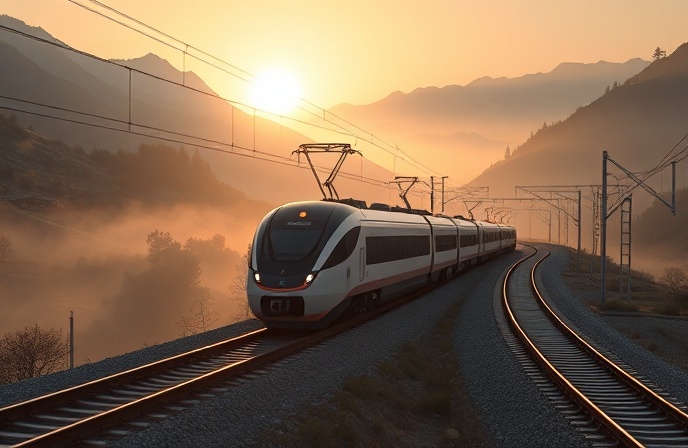
Powering the Future: Unveiling the Capabilities of High-Speed Vectron Locomotives
In the fast-paced world of rail transport, the demand for speed, efficiency, and reliability is constantly escalating. This has led to a surge in interest in advanced locomotive technology, with operators seeking innovative solutions to meet these evolving needs. Today, we delve into the powerful capabilities of high-speed Vectron locomotives, examining their technical specifications, operational advantages, and the impact they are having on railway operations across the globe. These locomotives, manufactured by Siemens Mobility, are rapidly becoming a key component of modern railway fleets. This article will explore the features that make these locomotives a game-changer in the industry.
The ‘What’ is the advanced design and capabilities of Vectron locomotives. The ‘Who’ encompasses railway operators, infrastructure providers, and rolling stock manufacturers. The ‘When’ is now, as these locomotives are currently being deployed and utilized across numerous networks. The ‘Where’ is a global presence, with Vectron locomotives operating in various countries and regions. The ‘Why’ is to improve operational efficiency, reduce environmental impact, and enhance passenger and freight transport. And the ‘How’ is achieved through innovative engineering, optimized performance, and adherence to stringent safety standards. This article will focus on the versatility and advantages provided by these modern locomotives.
Unmatched Performance: Key Features of the High-Speed Vectron
The high-speed Vectron locomotives stand out for their exceptional performance, achieved through cutting-edge engineering and design. These locomotives are capable of operating at speeds exceeding 200 km/h (124 mph) in many configurations, making them ideal for high-speed passenger and freight services. They feature a modular design that allows for easy adaptation to various track gauges, voltages, and signaling systems, increasing their suitability for diverse operating environments. Furthermore, the Vectron incorporates powerful electric motors and advanced control systems, optimizing acceleration, braking, and energy efficiency. Key features contributing to their success include their regenerative braking system, which reduces energy consumption, and their ability to operate on both AC and DC power networks (dual-mode), which is a huge benefit for international operators.
Adaptability and Versatility: A Locomotive for Every Network
One of the most significant advantages of the high-speed Vectron locomotives is their adaptability. The modular design allows for easy modification and customization to meet specific operational needs. These locomotives can be configured for various track gauges, including standard, broad, and narrow gauges, offering a versatile solution for railways with different infrastructure requirements. They can also be equipped with different traction packages to accommodate AC and DC voltage systems, along with varying pantograph and bogie designs to meet specific needs. This flexibility reduces the need for specialized fleets and streamlines maintenance and operation. Additionally, Vectron locomotives are often equipped with European Train Control System (ETCS) for enhanced safety and optimized train control, a key consideration for modern railway operations.
Operational Efficiency and Sustainability: Benefits for the Railway Industry
The introduction of high-speed Vectron locomotives into railway operations offers significant benefits to the industry. Their high performance and operational efficiency contribute to reduced journey times and increased capacity on existing lines. The regenerative braking system of Vectron locomotives substantially lowers energy consumption and operational costs. Furthermore, Vectron locomotives are designed to meet stringent environmental regulations, reducing emissions and promoting sustainable transport solutions. Reduced noise pollution is also a key advantage, contributing to quieter and more comfortable journeys. The locomotives’ reliability is also a core feature, decreasing downtime and improving overall system performance.
Global Deployment and Future Trends in High-Speed Rail
The high-speed Vectron locomotives are already making a significant impact worldwide. They are currently operating in many European countries, along with other regions. Their increasing presence reflects the growing demand for high-speed rail and the industry’s commitment to modernizing infrastructure. Future trends indicate a continued emphasis on improving energy efficiency, developing autonomous train control systems, and integrating data analytics to optimize operations. Further innovation in locomotive design will focus on improving reliability and adaptability to meet ever-changing demands. The widespread adoption of high-speed Vectron locomotives will be a key component in achieving these goals.
Conclusion
In conclusion, the high-speed Vectron locomotives represent a significant advancement in railway technology, offering a compelling combination of performance, adaptability, and sustainability. Their design allows railway operators worldwide to meet the rising demands for increased capacity, greater operational efficiency, and a lower environmental footprint. The modular design contributes to their versatility, while their reliable performance helps to reduce downtime and increase profitability. As the railway industry continues to evolve, the trend toward high-speed rail solutions will only increase, and the Vectron platform is well-positioned to play a key role in these developments. The ongoing expansion of this technology promises continued innovation and transformative change within the global railway sector.
RELATED POSTS

July 4, 2025 7:33 pm
Australian rail faces operational hurdles due to fragmented safety standards....

August 5, 2025 9:33 pm
BNSF Railway's Q2 2024 revenue stalled at $5.7B, flat vs....
October 20, 2025 8:54 am
Alstom unveils Melbourne's new Maidstone tram depot, featuring advanced technology...

August 16, 2016 5:02 am
Digital Automatic Coupler technology is revolutionizing rail freight. This pilot...
February 24, 2019 12:45 pm
California's High-Speed Rail: A revised plan focuses on the...
February 9, 2026 5:58 pm
Union Pacific signed a $1.2 billion contract with Wabtec for...