
V6 Agronomy/Johnstown: Rail-Served Fertilizer Hub in Eastern Ontario
New rail-served fertilizer terminal breaks ground in Eastern Ontario, boosting rail efficiency.
“`html
V6 Agronomy and Port of Johnstown Break Ground on Innovative Rail-Served Fertilizer Terminal
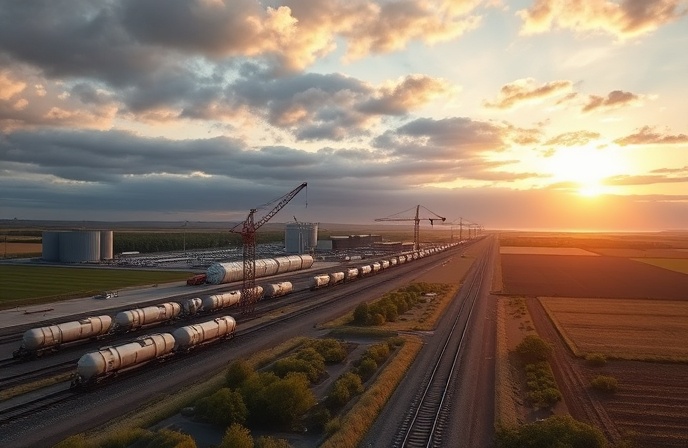
In a move poised to revolutionize the agricultural supply chain in Eastern Ontario, V6 Agronomy Inc. and the Port of Johnstown announced the groundbreaking of a new rail-served fertilizer terminal in Edwardsburgh Cardinal Township on July 29. This project marks a significant investment in efficient, low-carbon logistics, aiming to streamline the delivery of vital crop inputs. The facility, designed for enhanced efficiency, will receive, store, and distribute a range of enhanced efficiency fertilizers and commercial phosphate fertilizers. The question of *when* the terminal will be operational and *how* the facility will impact regional operations is now top-of-mind. This article will delve into the specifics of the project, highlighting its innovative approach to circular logistics and its potential to reshape fertilizer distribution in the region and improve rail efficiency through innovative freight matching with CN.
Enhanced Efficiency and Initial Capacity
The initial phase of the terminal, serving the *what* aspect of the project, focuses on the construction of a facility capable of handling vessel discharges of up to 18,000 tons. This structure is the first of four planned buildings designed to provide a total storage capacity of 150,000 tons of crop input materials. This phased approach allows for scalability, matching the growing demand for high-quality fertilizers and the increasing volume of inbound materials. The location, carefully selected to facilitate access to both maritime and rail transport, is the *where* component. This strategic positioning is crucial in minimizing transportation costs and improving the speed with which essential fertilizers reach regional agricultural operations.
Circular Logistics Model with CN
A key element of this project, answering the *how* aspect of efficient rail freight, is the implementation of a circular logistics model in collaboration with CN. This model will significantly reduce the need for empty rail-car and vessel returns, a critical factor in reducing carbon emissions and optimizing operational efficiency. By pairing outbound phosphate shipments with return loads of Canadian lentils, pulses, potash, grains, and sulfur, CN and V6 Agronomy aim to create a more sustainable and cost-effective supply chain. The *why* behind this initiative is clear: to reduce environmental impact, improve resource utilization, and enhance the overall competitiveness of the agricultural sector. The benefits are more efficient rail car usage, reducing the need for empty miles, a critical element for sustainability efforts in rail freight.
Impact on Regional Agricultural Supply
The establishment of this terminal is expected to have a profound impact on the efficiency and sustainability of the regional agricultural sector. By providing farmers with a reliable and efficient source of essential crop inputs, V6 Agronomy and the Port of Johnstown are contributing to increased productivity and profitability. The facility’s focus on enhanced efficiency fertilizers also aligns with broader industry trends toward more sustainable farming practices. The proximity of the terminal to major transportation routes, including the St. Lawrence Seaway, will further enhance its strategic importance. The terminal will serve as a crucial hub for the efficient distribution of crop inputs, significantly reducing transportation times and costs for local farmers.
Strategic Alignment of Infrastructure and Logistics
This project exemplifies the growing trend of strategic alignment between infrastructure development and logistics operations. The collaborative efforts between V6 Agronomy and CN, in addition to the Port of Johnstown, underscore the importance of partnerships in building resilient and efficient supply chains. The terminal will play a critical role in the long-term sustainability of the region’s agricultural sector. The integrated approach, combining rail, maritime, and warehousing capabilities, is designed to minimize environmental impact while maximizing operational efficiency. The success of this terminal could serve as a model for future infrastructure projects, demonstrating the importance of innovation and collaboration in the rail industry and supply chain management.
Conclusion
The groundbreaking of the V6 Agronomy fertilizer terminal represents a significant development for the agricultural sector and the rail industry. This project’s focus on enhanced efficiency, combined with its strategic implementation of a circular logistics model, signals a shift towards more sustainable and cost-effective supply chain solutions. The collaboration between V6 Agronomy and CN highlights the importance of strategic partnerships in achieving operational excellence and environmental responsibility within the rail industry. The facility’s capacity to handle large volumes of fertilizer, coupled with its strategic location and integration with multimodal transportation networks, positions it to become a key hub for fertilizer distribution in Eastern Ontario. The long-term implications of this project extend beyond regional agricultural benefits, serving as a potential model for other infrastructure projects across North America and inspiring other companies to utilize rail more efficiently. The success of this initiative serves as a harbinger of future innovations in agricultural logistics and rail-served terminals, fostering economic development and environmental sustainability.
Company Summary
V6 Agronomy Inc.: V6 Agronomy is focused on providing growers with innovative crop nutrition solutions and precision application technologies. Their expertise in enhanced efficiency fertilizers and their commitment to sustainable practices are crucial in optimizing crop yields while minimizing environmental impact, making them ideally suited to improve the use of rail transport. V6 Agronomy’s focus on precision and efficiency aligns directly with the rail industry’s goals of reducing waste and increasing cargo capacity.
Port of Johnstown: The Port of Johnstown is a key transportation hub located on the St. Lawrence River, providing critical infrastructure for the movement of goods between Canada and the world. Their investment in this new terminal demonstrates their commitment to supporting agricultural trade and fostering economic growth within the region. The port’s location gives it a strategic advantage in terms of access to both rail and maritime transportation, making it an ideal partner for the V6 Agronomy project.
“`
RELATED POSTS
July 2, 2025 11:33 pm
Suburban Rail Loop project in Melbourne is making substantial progress,...
June 30, 2025 4:33 am
GB Railfreight restarts Horton Quarry rail freight, boosting UK sustainability....

January 31, 2021 5:41 pm
The Construction and Commissioning of Hume Station on Singapore’s Downtown...
December 28, 2022 8:27 am
This article explores the strategic expansion of Rail Vikas Nigam...
January 18, 2020 11:16 pm
This article delves into the significant contract awarded to Stadler,...
November 3, 2021 1:48 pm
**"Alstom's Metropolis trains are now serving Riyadh! These cutting-edge trains,...