
UTC Funds Columbia Rail Crossing Safety Upgrades in Washington
Washington UTC awards $175,000 for vital railway safety upgrades. Columbia Rail will install new crossing signal bungalows, enhancing safety at seven grade crossings.
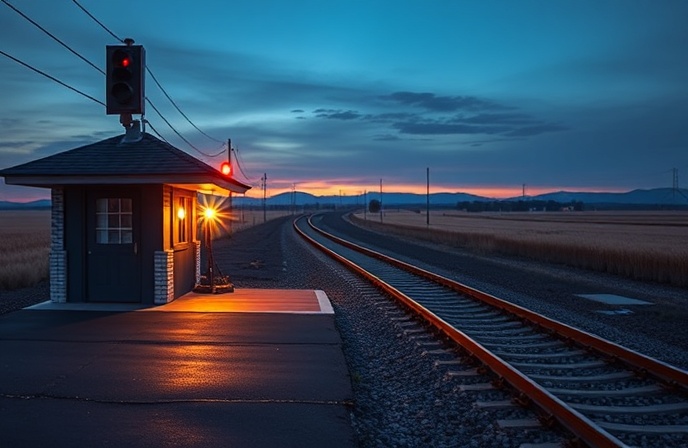
The Washington Utilities and Transportation Commission (UTC) has allocated $175,000 in grant funding to significantly enhance safety at seven railway grade crossings in Walla Walla County. Columbia Rail will utilize these state funds to install advanced crossing signal bungalows at critical locations within the cities of Walla Walla and College Place, marking a key investment in public and operational railway safety.
| Key Entity | Critical Detail |
|---|---|
| Granting Body | Washington Utilities and Transportation Commission (UTC) |
| Fund Source | State’s Grade Crossing Protective Fund |
| Beneficiary Rail Operator | Columbia Rail |
| Core Action | Installation of new crossing signal bungalows |
| Number of Crossings | Seven (7) |
| Locations | Walla Walla and College Place, Walla Walla County |
| Total Grant Amount | $175,000 |
| Estimated Implementation Date | Present (Approval Granted) |
The new crossing signal bungalows represent a crucial upgrade to the existing infrastructure at these Walla Walla County grade crossings. These compact structures, strategically placed near the tracks, house the sophisticated electrical equipment responsible for detecting approaching trains. Upon detection, this equipment initiates the activation of warning lights and gates, a critical sequence for preventing accidents involving vehicles and pedestrians. The investment underscores the UTC’s commitment to improving the reliability and safety of railway operations within the state.
Strategic Impact
This $175,000 investment is designed to bolster the resilience of Columbia Rail’s crossing systems against environmental factors that can lead to operational failures. The new bungalows will be engineered with robust sealing to provide superior protection against ingress of dust, moisture, and the harsh effects of extreme weather. Additionally, the incorporation of heating, air conditioning, and dedicated power outlets will create a stable internal environment for the sensitive electrical components. This proactive measure aims to minimize system malfunctions and ensure the consistent and reliable operation of safety equipment, thereby reducing the risk of derailments or collisions at these busy crossings.
Operational Enhancements
Beyond basic protection, the advanced design of these new signal bungalows addresses the long-term operational needs of railway safety systems. The climate-controlled environment will prevent premature degradation of electrical equipment, extending its lifespan and reducing maintenance costs for Columbia Rail. Stable operating temperatures and humidity levels are paramount for the precise functioning of train detection systems, which rely on accurate sensor readings. By investing in these upgraded facilities, the UTC and Columbia Rail are prioritizing a more dependable safety net for the traveling public and for the rail network itself.
Last June 2025, we published an article about Renfe’s cutting-edge Aranjuez maintenance hub. Click here to read – Future of Rail: Renfe’s Railway Technology Hub, Aranjuez: Essential Guide
Industry Context
In an era of increasing freight and passenger rail traffic, the proactive modernization of grade crossing infrastructure is paramount for industry stakeholders. This $175,000 grant to Walla Walla County exemplifies a broader trend within the railway sector: a heightened focus on preventative maintenance and technological upgrades to ensure network integrity and safety. For railway operators and regulatory bodies, such investments are not merely about compliance but about mitigating risk, enhancing service reliability, and maintaining public trust. CEOs in the rail industry should view this as a benchmark for essential infrastructure investment, directly impacting operational efficiency and long-term profitability by averting costly incidents and service disruptions.

Railway infrastructure, rolling stock and transport technologies specialist focused on global rail industry developments, high-speed rail systems, signaling technologies and freight transportation. Covering railway investments, public transport modernization, rail operations and international mobility projects across Europe, Asia and North America.
RELATED POSTS
August 4, 2026 1:11 pm
Hitachi Rail Canada secured a $407.7M contract to install CBTC...
August 11, 2026 11:13 am
Hungary confirmed the €2.5B Hungarian rail upgrade will not see...
August 4, 2026 11:12 am
MBTA confirmed a $150.8 million overhaul of the 85-year-old Green...
August 1, 2026 7:14 pm
€205 billion funding shortfall threatens the TEN-T rail network's completion...
August 1, 2026 7:56 am
BMZ delivered two new TEM18DM diesel shunting locos to RZD...
August 5, 2026 7:11 pm
JR Central secured Shizuoka governor approval July 7, 2026 for...