
Great British Railways: Public Ownership Boosts Capacity
UK’s public rail ownership initiative boosts capacity with infrastructure upgrades and passenger service enhancements. Great British Railways prioritizes investment, improving the rail network.
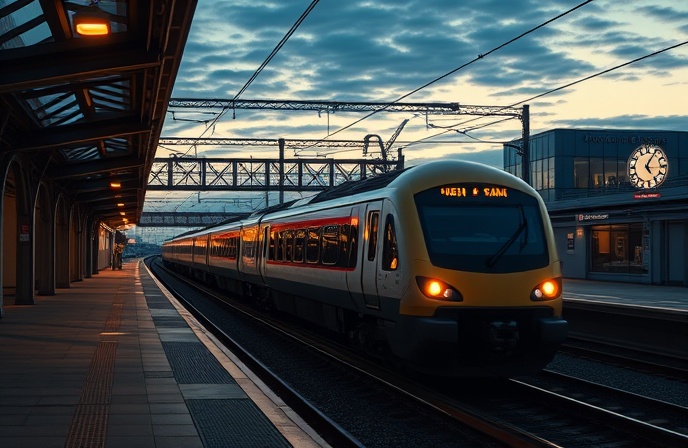
The UK’s railway network is beginning to show tangible results from its transition to public ownership, with early investments driving increased capacity, improved passenger services, and accelerated infrastructure upgrades. Launched in December 2024, the program aims to prioritize public service over shareholder returns, signaling a strategic shift towards a more predictable, accessible, and customer-focused railway system under the new Great British Railways structure.
| Key Entity | Critical Detail |
|---|---|
| Great British Railways Structure | Gradual integration of railway operators into public ownership. |
| Infrastructure & Passenger Experience | Accelerated investment, increased capacity, improved services, contactless payments, modernized stations, AI-driven disruption management, and new rolling stock. |
| Basildon Route | Platform reconfiguration to allow 12-car trains, adding up to 6,500 additional seats per week during peak hours. |
| December 2024 | Program initiated. |
| December 2025 | New train schedule with 4.4 million additional seats annually introduced on East Coast Main Line. |
| 2026 | Opening of fully accessible Cambridge South station. |
Strategic Impact
The foundational shift to a public service model is enabling significant capital deployment aimed at modernizing the UK’s rail infrastructure. Key projects like the expansion of capacity on the route to Essex, featuring the reconfiguration of platform 2 at Basildon to accommodate 12-car trains, exemplify this increased investment. This enhancement is set to introduce up to 6,500 additional seats per week during peak hours, directly addressing passenger demand and alleviating congestion. Concurrently, upgrades to high-traffic stations like Barking are underway, incorporating modern amenities such as new access gates, an elevator, and retail spaces, underscoring a commitment to passenger convenience and accessibility.
Operational Enhancements and Technological Integration
Beyond immediate capacity boosts, the program is focusing on long-term efficiency and passenger experience through technological innovation and standardized design. The development of standardized, modular stations, exemplified by the future Wickford Hub station, promises faster and more cost-effective construction. The introduction of fully accessible stations, such as Cambridge South slated for a 2026 opening, aligns with the broader goal of creating a more inclusive network. Contactless payment systems are being expanded to cover an additional 11 million annual journeys, simplifying ticketing for passengers. Additionally, a new train schedule set to launch in December 2025 for the East Coast Main Line will introduce 4.4 million extra seats annually, alongside higher speeds and new promotional fares. The integration of modern information systems and AI-powered instant updates for disruptions are critical to improving incident management and timetable recovery, a significant step towards greater network reliability.
Technical Specifications
- Platform Capacity Upgrade: Basildon platform 2 reconfigured for 12-car trains, adding up to 6,500 additional seats per week.
- Station Modernization: Barking station includes new access gates, modern elevator, and retail space.
- New Station Development: Wickford Hub (modular design), Cambridge South (fully accessible, opening 2026).
- Contactless Payments: Expansion covering an additional 11 million annual journeys.
- East Coast Main Line Enhancements (December 2025): 4.4 million additional seats annually, more trains, higher speeds, new promotional fares.
- AI-driven Updates: Instant notifications for disruptions and faster timetable recovery.
- Braking System Modernization: Program to mitigate autumn leaf disruption.
- GPS-based “Pay-as-you-go” System: Pilot for automatic fare calculation.
- Infrastructure Upgrades: Line, signaling, and level crossing improvements.
- New Rolling Stock: Delivery continues for modernized suburban transport and London metropolitan area.
- Preventative Maintenance: Thermal cameras and AI analysis for early infrastructure defect detection.
- Connectivity: Improvements to onboard Wi-Fi network.
Industry Context
The UK government’s strategic move towards public ownership of railway operators represents a significant divergence from decades of privatization. The stated ambition to reinvest all revenues directly into service improvements, rather than distributing dividends, has the potential to fundamentally alter the financial dynamics and operational priorities of the rail sector. For industry stakeholders, this transition signals a renewed emphasis on long-term infrastructure investment, service reliability, and passenger-centric innovation. The success of this model could influence similar discussions in other national rail markets grappling with aging infrastructure, service consistency issues, and the growing demand for sustainable, efficient public transport. CEOs of rolling stock manufacturers, technology providers, and infrastructure engineering firms should monitor these developments closely, as the program’s expansion may unlock substantial new procurement opportunities and shape future industry standards.
Last June 2025, we published an article about Renfe’s cutting-edge Aranjuez maintenance hub. Click here to read – Future of Rail: Renfe’s Railway Technology Hub, Aranjuez: Essential Guide

Railway infrastructure, rolling stock and transport technologies specialist focused on global rail industry developments, high-speed rail systems, signaling technologies and freight transportation. Covering railway investments, public transport modernization, rail operations and international mobility projects across Europe, Asia and North America.
RELATED POSTS

October 8, 2026 1:15 pm
Alstom secured a €1bn contract to build 13 automated trains,...

October 1, 2026 7:09 am
United States regulators confirmed a September 30 deadline for the...

October 8, 2026 12:18 pm
Siemens Mobility signed an agreement with VinSpeed to supply 350...

October 4, 2026 5:14 pm
Alstom secured a CA$4.7 billion order from VIA Rail Canada...

October 5, 2026 6:12 pm
AECOM and Jacobs secured a contract in September 2026 to...

October 1, 2026 12:13 am
Illinois approved $1.5 billion annually for the Northern Illinois Transit...