
UK’s Emission-Free Trains: Vivarail & Arcola Energy
Revolutionizing UK rail with emission-free hydrogen/battery hybrid trains! Vivarail and Arcola Energy are pioneering sustainable rail technology – discover how!
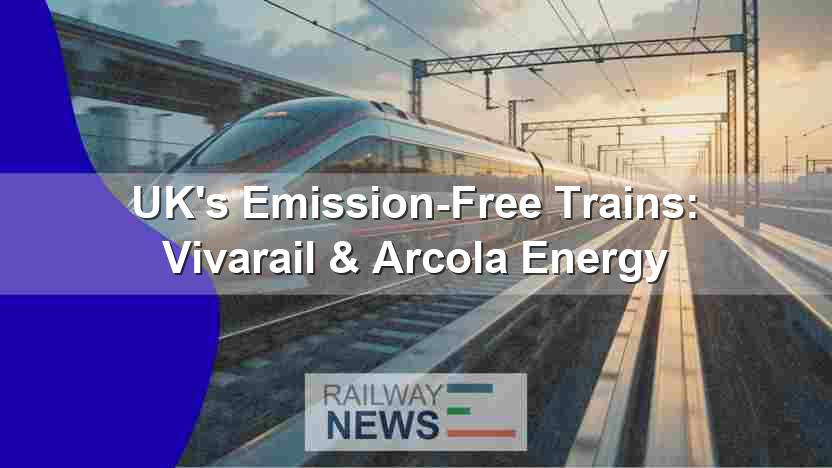
The burgeoning need for sustainable transportation solutions is driving significant innovation within the railway industry. This article explores the collaborative effort between Vivarail, a leading designer of sustainable rail solutions, and Arcola Energy, a prominent hydrogen fuel cell manufacturer, to develop emission-free trains for the United Kingdom. The partnership marks a crucial step towards decarbonizing the UK’s railway network and achieving ambitious carbon reduction targets. We will explore the technological advancements underpinning this initiative, the design and functionality of the proposed hybrid train, the anticipated impact on the rail sector, and the broader implications for sustainable transportation globally. The successful implementation of this technology holds the potential to revolutionize railway operations worldwide, paving the way for a greener and more environmentally responsible future for rail travel. The collaboration is not merely a technological leap, but also a strategic response to growing environmental concerns and the urgent need to reduce greenhouse gas emissions from the transportation sector. This partnership showcases the power of collaboration and innovation in tackling some of the most pressing challenges of our time.
Hydrogen/Battery Hybrid Train Technology
The core of the collaboration lies in the development of a hydrogen/battery hybrid train. This innovative approach combines the strengths of both hydrogen fuel cell technology and battery electric technology to create a truly emission-free solution. Arcola Energy’s expertise in hydrogen fuel cell systems, which convert hydrogen into electricity with water as the only byproduct, is complemented by Vivarail’s proficiency in designing and manufacturing battery electric multiple units (BEMUs). The resulting hybrid system leverages the high power density of fuel cells for extended range and the rapid charging capabilities of batteries for increased operational flexibility. The proof-of-concept train will consist of two carriages: one equipped with battery modules and the other with a fuel cell system and hydrogen tanks. This configuration allows for the testing and optimization of both power sources within a single unit, providing valuable data for future production models.
Design and Functionality of the Prototype
The prototype train, based on Vivarail’s Class 230 battery train platform, serves as a crucial stepping stone towards full-scale production. This design choice allows for leveraging existing infrastructure and expertise, expediting the development process. The two-carriage prototype, with its distinct battery and fuel cell compartments, will facilitate a detailed evaluation of system performance and integration. Data gathered during testing will inform the design of the four-carriage production model. The production model will comprise two battery-powered driving motor cars and two intermediate cars housing the fuel cell and hydrogen storage tanks. This configuration ensures optimal weight distribution and performance across the entire trainset, maximizing efficiency and range.
Fast Charging and Operational Efficiency
A key component of Vivarail’s contribution is its expertise in fast-charging systems. The successful demonstration of a fast-charging system for its Class 230 battery trains has already enhanced the practicality of battery electric trains, addressing concerns about range limitations. This technology directly benefits the hybrid train development by minimizing downtime and improving operational efficiency. The integration of fast-charging capabilities enhances the overall system flexibility and maximizes its operational capabilities. Combining rapid battery charging with the extended range provided by the hydrogen fuel cell creates a powerful and versatile solution for a variety of rail applications.
Environmental Impact and Future Outlook
The successful development and deployment of this hydrogen/battery hybrid train have significant implications for the UK’s rail network and beyond. The reduction in greenhouse gas emissions from rail transport will contribute substantially to the UK’s commitment to carbon reduction targets. Additionally, the technology holds the potential to be adapted for use in other countries, helping to reduce global reliance on fossil fuels within the rail sector. The collaboration between Vivarail and Arcola Energy serves as a testament to the growing importance of sustainable transportation solutions and the innovative approaches being used to achieve a greener future for the railway industry. The success of this project will not only benefit the UK but can serve as a blueprint for other nations seeking to transition to a more environmentally friendly rail system. This project showcases the feasibility of adopting cleaner technologies on a large scale, driving innovation and collaboration across the industry.
Conclusions
The partnership between Vivarail and Arcola Energy to develop emission-free trains represents a landmark achievement in the pursuit of sustainable transportation. The development of a hydrogen/battery hybrid train, combining the advantages of both technologies, addresses crucial challenges in range and operational efficiency. The prototype train, built upon Vivarail’s existing Class 230 platform and incorporating their advanced fast-charging technology, will undergo rigorous testing to optimize performance and system integration. The successful implementation of this technology will have profound environmental benefits, significantly reducing greenhouse gas emissions from rail transport and contributing to the UK’s carbon reduction targets. The project’s potential extends beyond national borders, offering a viable model for other countries striving to decarbonize their railway networks. This initiative highlights the transformative potential of industry collaboration and technological innovation in creating a more environmentally responsible and sustainable future for rail travel globally. The successful culmination of this partnership marks not merely a technological advancement but a significant stride toward building a cleaner and greener transportation landscape for generations to come. The project serves as a powerful example of how private industry collaboration can drive change and address major global challenges. The combined expertise of Vivarail and Arcola Energy, in battery technology and hydrogen fuel cells respectively, promises to create a truly revolutionary and sustainable transportation solution.

Railway infrastructure, rolling stock and transport technologies specialist focused on global rail industry developments, high-speed rail systems, signaling technologies and freight transportation. Covering railway investments, public transport modernization, rail operations and international mobility projects across Europe, Asia and North America.
RELATED POSTS
September 6, 2026 5:19 am
Hitachi delivered Taiwan's first N700ST high-speed train from Japan in...
September 6, 2026 1:17 am
Hitachi Toshiba Supreme Consortium confirmed the first of 12 N700ST...

September 5, 2026 4:19 pm
CPK launched formal tender talks with four consortia to design...
September 6, 2026 6:17 am
Hungary ordered a national ban on most freight trains from...

September 6, 2026 4:12 am
Alstom delivered the first of 100 new G Class trams...

September 5, 2026 7:14 pm
HS2 Ltd signed renegotiated civils contracts with EKFB and Align...