
UK-Germany Rail Link: Shaping Europe’s Sustainable Transport Future
UK and Germany to forge direct rail link, boosting cross-border travel and trade. Taskforce formed to assess feasibility.
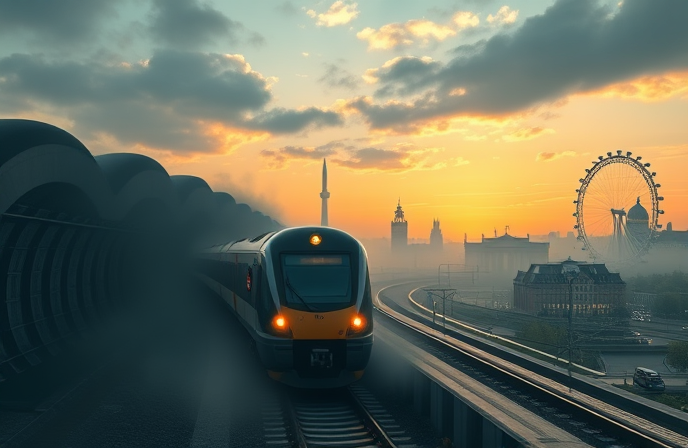
UK and Germany Forge Ahead with Direct Rail Link: A New Era for Cross-Border Travel
The United Kingdom and Germany are poised to revolutionize cross-border travel. A joint taskforce, announced as part of a new Bilateral Treaty scheduled for signing on July 17th, will investigate the feasibility of a direct rail link between the two nations. This initiative, driven by the UK Government’s broader Plan for Change, aims to significantly enhance tourism, foster economic growth, and substantially improve international rail connectivity within the next decade. The project raises critical questions of infrastructure, collaboration, and regulatory frameworks. This article will examine the key objectives, challenges, and potential impact of this ambitious undertaking on both the railway industry and broader European connectivity.
Taskforce Formation and Objectives
The newly established taskforce, composed of transport specialists from both the UK and Germany, will concentrate on removing obstacles to establishing long-distance international passenger rail services. This includes addressing critical issues such as safety standards, border control procedures, and security protocols – vital elements for seamless cross-border operation. The UK’s Transport Secretary, Heidi Alexander, views this agreement as a pivotal step towards “a new era of European rail connectivity”. The ambitious goal is to provide a faster, more convenient, and environmentally friendly alternative to air travel, offering direct access to iconic destinations like the Brandenburg Gate, Berlin Wall, and Checkpoint Charlie.
Environmental and Economic Impact
A direct rail link is projected to deliver considerable reductions in carbon emissions, offering a sustainable travel option aligned with both countries’ decarbonization goals. Beyond environmental benefits, the rail project promises a boost to trade between the UK and Germany, supporting job creation and cultural exchange. The taskforce will be evaluating the specifics to allow UK businesses better access to European markets while simultaneously facilitating investment and operations from German companies within the UK. This underscores the project’s potential to reinforce economic ties and stimulate growth in both nations.
Strategic Alignment and International Collaboration
This initiative is consistent with recent government efforts to strengthen relationships with key European partners. The agreement builds on a Memorandum of Understanding signed earlier this year between the UK and Switzerland, which explored potential commercial rail services between the two countries. These developments reveal a strategic vision to bolster the UK’s integration into the European rail network, providing passengers with more direct international routes and encouraging a shift towards sustainable travel methods. The current project also recognizes the underutilized capacity of existing infrastructure, such as the Channel Tunnel, suggesting room for passenger number and freight haulage growth.
Challenges and Future Outlook
The UK-Germany taskforce will now proceed to assess the practical steps necessary for the implementation of direct rail services. This encompasses a thorough evaluation of infrastructure requirements, the possibilities for operator collaboration, and the legal frameworks governing international train travel. While a specific timeline for service commencement has not been established, officials have expressed the ambition to make significant progress within the next ten years. Industry experts, such as Michael Solomon Williams of the Campaign for Better Transport, have welcomed the announcement, highlighting the appeal of international rail travel and its potential to support the UK economy.
Conclusion
The proposed direct rail link between the UK and Germany represents a major strategic advancement in European rail connectivity. By addressing key technical, economic, and environmental considerations, the joint taskforce can overcome operational and infrastructural challenges. The initiative’s success is predicated on international cooperation, smart planning, and investment in future rail infrastructure. If realized, this rail project promises to streamline cross-border travel, reduce carbon emissions, and bolster both economies. The long-term effects could also encourage further investment in other lines across Europe and strengthen the United Kingdom’s position as a connected player in the continent’s public transport landscape.
RELATED POSTS
June 23, 2025 10:33 am
Berlin's U-Bahn gets new trains, entering testing. Modernized trains...

March 21, 2025 4:28 am
Network Rail’s CP7 Plan: Prioritizing Climate Resilience and Infrastructure Renewal...

October 13, 2020 6:03 pm
The Resilient Rail Industry: Navigating Pandemic and Pursuing Growth The...
December 27, 2015 4:38 pm
Alstom has been awarded a contract worth €36 million by...
September 13, 2019 3:12 am
This article explores the significant contract awarded to Stadler, a...
July 19, 2017 1:02 am
Here are a few voiceover-friendly excerpts for railway professionals, based...