
UK Freezes Rail Fares for First Time in 30 Years: GBR Reforms in Focus
UK announces a historic **rail fare freeze**, the first in 30 years, aiming to ease financial burdens and boost **rail** passenger growth, impacting millions of travelers.
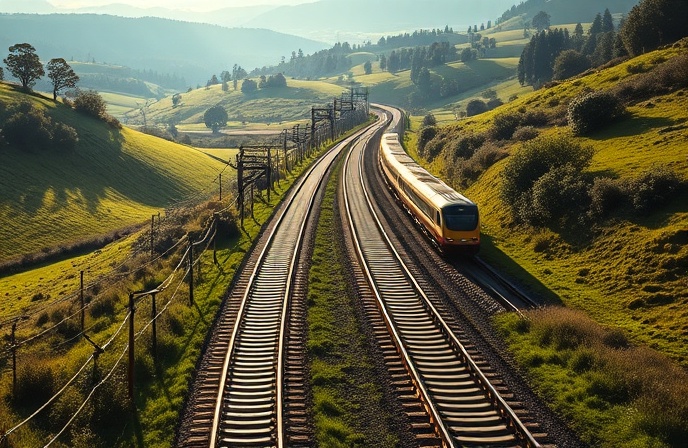
The UK government has announced a historic freeze on regulated rail fares, marking the first such measure in three decades, aimed at alleviating financial pressure on households and stimulating passenger growth. This significant decision, confirmed by the Chancellor, is expected to save millions of travellers substantial amounts annually and forms a key part of broader reforms for Great British Railways.
| Key Entity | Critical Detail |
|---|---|
| UK Government | Freezes regulated rail fares for the first time in 30 years. |
| Chancellor Rachel Reeves | Confirms freeze as part of a budget focused on cutting costs and priorities. |
| Millions of Passengers | Expected to benefit from savings on season tickets, peak returns, and off-peak intercity travel. |
| Estimated Annual Savings | Over £300 for commuters on the most expensive routes, e.g., £315 for Milton Keynes to London flexi-season. |
| Timeline | Effective from the next fare adjustment period; announcement made 25 November 2025. |
| Strategic Link | Integral to wider Great British Railways (GBR) reforms for network management and customer experience. |
The UK government’s confirmation of a national rail fare freeze, the first in 30 years, is poised to deliver significant financial relief to millions of passengers across the nation. This policy, affecting over a billion passenger journeys annually, applies to a wide range of tickets including season tickets, peak commuter returns, and off-peak fares between major cities. The Department for Transport (DfT) asserts that this measure will not only support working households and mitigate inflationary pressures but also act as a catalyst for increased rail utilization, a critical objective as the industry continues its post-pandemic recovery.
Easing the Pressure on Household Finances
Chancellor Rachel Reeves articulated the freeze as a cornerstone of the government’s Budget, aligning with core national priorities to reduce NHS waiting lists, national debt, and the overall cost of living. “That’s why we’re choosing to freeze rail fares for the first time in 30 years, which will ease the pressure on household finances and make travelling to work, school or to visit friends and family that bit easier,” she stated. Illustrative savings highlight the tangible impact, with commuters on expensive routes set to save over £300 annually. For example, those using flexi-season tickets for three days a week between Milton Keynes and London could see savings of £315, while commuters from Woking to London might save £173, and travellers between Bradford and Leeds could benefit from £57 in reduced costs.
Driving Economic Growth and Rail Reform
The government anticipates that the fare freeze will directly contribute to economic growth by lowering transport expenditure, which currently represents 14% of total household spending. By making town centre travel more accessible and cost-effective, the initiative aims to attract more passengers to the rail network. This policy is intrinsically linked to the ambitious reforms designed to establish Great British Railways (GBR), a unified, publicly owned entity responsible for managing both infrastructure and services. The proposed Railways Bill, currently progressing through Parliament, will cement GBR’s role as the central authority for network oversight, ticketing systems, customer service standards, and long-term strategic planning.
Last June 2025, we published an article about Renfe’s Aranjuez maintenance hub. Click here to read – Future of Rail: Renfe’s Railway Technology Hub, Aranjuez: Essential Guide
Future of Rail Travel Under GBR
Under the purview of GBR, significant digital transformation is planned for the network. Key initiatives include the nationwide implementation of tap-in, tap-out ticketing, the development of a new integrated app and website, expanded Pay As You Go travel options, and crucial upgrades such as “superfast WiFi.” Ben Plowden, CEO of Campaign for Better Transport, welcomed the fare freeze, emphasizing that cost remains the primary barrier for potential rail users. “As well as helping households with the cost of living, this will enable more people to choose rail, reducing traffic on our roads, benefitting the economy, helping the environment, and connecting communities across the country,” Plowden remarked. He further noted that the fare freeze aligns with GBR’s objective of ensuring affordable rail travel, signalling a positive commitment to passenger needs.

Railway infrastructure, rolling stock and transport technologies specialist focused on global rail industry developments, high-speed rail systems, signaling technologies and freight transportation. Covering railway investments, public transport modernization, rail operations and international mobility projects across Europe, Asia and North America.
RELATED POSTS
August 4, 2026 1:11 pm
Hitachi Rail Canada secured a $407.7M contract to install CBTC...
August 11, 2026 11:13 am
Hungary confirmed the €2.5B Hungarian rail upgrade will not see...
August 4, 2026 11:12 am
MBTA confirmed a $150.8 million overhaul of the 85-year-old Green...
August 1, 2026 7:14 pm
€205 billion funding shortfall threatens the TEN-T rail network's completion...
August 1, 2026 7:56 am
BMZ delivered two new TEM18DM diesel shunting locos to RZD...
August 5, 2026 7:11 pm
JR Central secured Shizuoka governor approval July 7, 2026 for...