
Uganda’s Railway Revival: €241M Investment for Growth

Revitalizing Uganda’s Railway Network: A Necessary Investment for Economic Growth
Uganda’s aging railway infrastructure, a legacy of British colonial rule, presents a significant challenge to the nation’s economic development. For over a century, the 1,266km meter-gauge railway line has served the country, initially designed to transport copper. However, years of neglect due to economic instability and political upheaval have left much of the network in disrepair. This article will explore the current state of Uganda’s railway system, the planned €241 million ($267 million) revitalization project, the challenges faced in securing funding, and the crucial role a modernized railway plays in boosting cargo transport and overall economic prosperity. The project’s success hinges on effective planning, efficient execution, and long-term maintenance strategies, ensuring a sustainable and impactful transformation of Uganda’s transport sector. The comparison to the more ambitious, but ultimately stalled, Standard Gauge Railway (SGR) project provides valuable insights into the challenges of large-scale infrastructure development in East Africa. Ultimately, this revitalization presents a critical step in Uganda’s pursuit of sustainable economic growth and regional connectivity.
The Deteriorating State of Uganda’s Railway Network
Decades of underinvestment and a lack of consistent maintenance have severely impacted the functionality of Uganda’s meter-gauge railway network. Sections of track have been damaged, vandalized, or rendered unusable. The aging rolling stock, including approximately 500 freight wagons, is in dire need of repair and modernization. This deterioration has significantly hampered the efficient movement of goods, contributing to increased transportation costs and hindering economic growth. The current situation necessitates a comprehensive overhaul to restore the railway’s capacity and reliability. The existing infrastructure simply cannot meet the demands of a growing economy, placing a strain on alternative transportation methods and further hindering development.
The €241 Million Revitalization Project
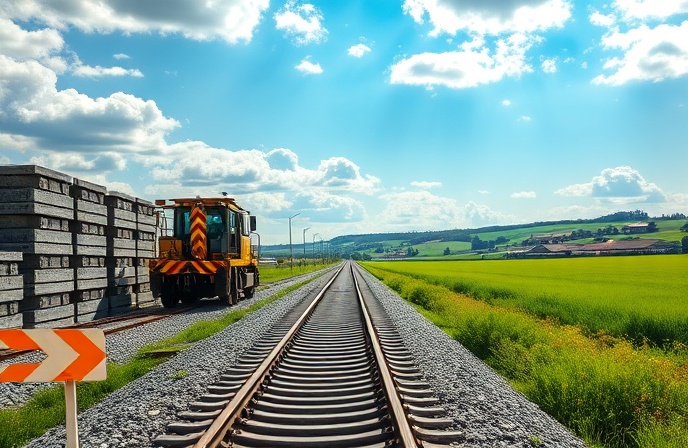
The Ugandan government, recognizing the critical need for railway modernization, has embarked on a phased revitalization project with a total investment of €241 million (approximately $267 million). This project, partly funded by a €21.5 million grant from the European Union (EU), will focus on key areas, including track renewal and ballast replacement, track leveling, and the repair of freight wagons. The selection of Sogea-Satom, a French engineering firm, to oversee these works signifies a commitment to employing international expertise and ensuring high standards of quality. The project’s phased approach allows for manageable implementation and facilitates continuous monitoring of progress and resource allocation.
Funding Challenges and the Standard Gauge Railway (SGR) Contrast
The project’s funding demonstrates the complexities of securing international investment for large-scale infrastructure projects in developing countries. While securing EU funding is a significant achievement, it underscores the challenges faced in securing complete funding for such substantial undertakings. The failure to secure the previously sought $2.2 billion from China for the regional Standard Gauge Railway (SGR) project highlights the potential obstacles. The delay in Uganda’s oil production was cited as a contributing factor to the failed SGR funding attempt. This contrast illustrates the importance of diversified funding sources and the need for robust economic strategies to support large-scale infrastructure investments.
Conclusion and Future Outlook
The revitalization of Uganda’s railway network represents a crucial step towards improving the country’s transport infrastructure and fostering economic growth. The €241 million project, while significantly smaller than the ambitious SGR plan, offers a more pragmatic and achievable approach to addressing the immediate needs of Uganda’s railway system. The phased implementation, combined with the expertise of Sogea-Satom, increases the likelihood of successful completion. However, long-term success hinges on not only the completion of the current project but also on the implementation of robust maintenance strategies to prevent future deterioration. The lessons learned from the stalled SGR project—including the importance of diverse funding sources and strong economic indicators—should inform future large-scale infrastructure development in Uganda. Continued investment in maintenance and potential future expansions of the railway network will be critical for sustaining economic growth, improving regional connectivity, and ensuring the long-term success of this vital infrastructure investment. The project’s success will serve as a model for other developing nations facing similar infrastructural challenges, demonstrating the potential for focused investment to significantly impact economic development.
RELATED POSTS
May 2, 2020 3:55 am
Essential Upgrades to Victoria’s Regional Rail Network This article examines...
July 27, 2017 7:43 am
Transform Chhattisgarh's railway lines for greater efficiency and safety. ...
August 12, 2019 2:11 pm
This article examines the significant development of the California High-Speed...
September 14, 2023 3:40 am
This article examines the strategic acquisition of Ecebs by Unicard,...
December 21, 2016 4:20 pm
Rail Vikas Nigam Limited (RVNL) wins a ₹179.79 crore contract...
October 6, 2025 9:54 pm
Track laying commences on the Rail Baltica section in Lithuania!...