
U.S. Rail Volumes Dip: Economic Headwinds & Environmental Concerns
US rail volumes dipped 1.4% due to economic headwinds and challenging comparisons. Intermodal faces pressure, while environmental scrutiny looms over the industry’s future.
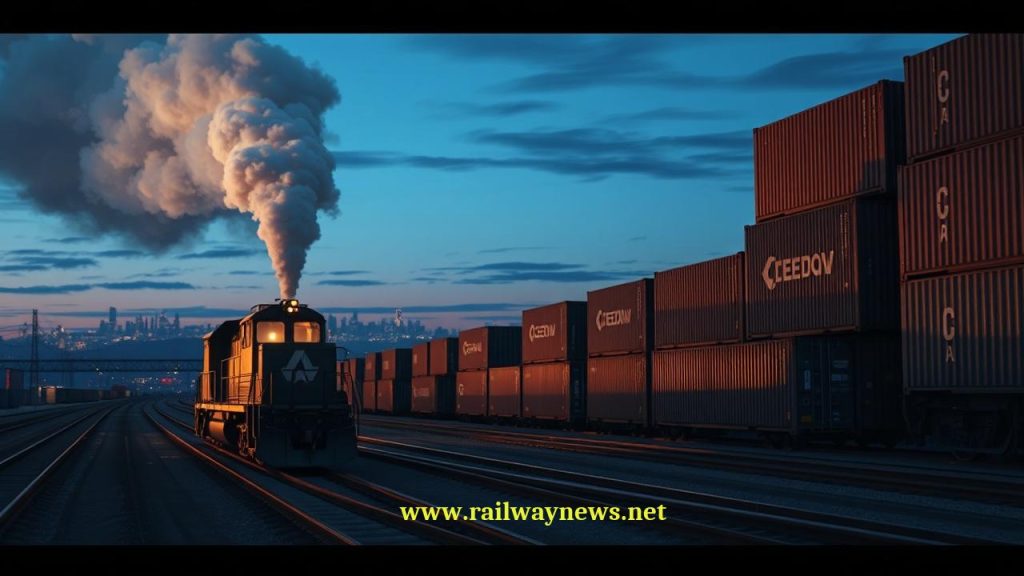
U.S. freight railroads reported a 1.4% year-over-year decline in total traffic for the week ending December 13, a downturn reflecting a sluggish industrial economy and challenging volume comparisons from the previous year. The latest data from the Association of American Railroads (AAR) shows persistent softness in both carload and intermodal segments as the industry grapples with shifting import levels and long-term environmental pressures.
| Category | Details |
|---|---|
| Reporting Period | Week Ending December 13 |
| Total U.S. Rail Traffic | 518,904 carloads & intermodal units (-1.4% vs. prior year) |
| U.S. Intermodal Volume | 294,284 containers & trailers (-1.2% vs. prior year) |
| Primary Cause of Intermodal Decline | Challenging volume comparisons, import shifts, sluggish industrial economy (Source: IANA) |
| Top Performing Commodity | Miscellaneous carloads (+8.7%) |
Main Body:
According to the Association of American Railroads (AAR), total U.S. rail volume for the week ending December 13 stood at 518,904 carloads and intermodal units. The breakdown reveals a broad-based, albeit modest, decline. Carloads totaled 224,620, down 1.7% from the same week in 2024, while intermodal volume, comprising containers and trailers, fell 1.2% to 294,284 units. Of the 10 major carload commodity groups, only three posted gains: miscellaneous goods surged 8.7% to 9,514 carloads, metallic ores and metals grew 2.7% to 19,269, and coal edged up 0.6% to 61,733. Significant decreases were seen in nonmetallic minerals (-6.5%), grain (-5.4%), and chemicals (-2.6%). North American partners showed a mixed performance, with Canadian railroads reporting nearly flat carload volumes (-0.02%) and a 1.4% drop in intermodal, while Mexican railroads saw a sharp 11.6% fall in carloads but a robust 15% increase in intermodal units.
The dip in intermodal traffic, a key indicator of consumer goods movement and import activity, is attributed to a confluence of economic factors. According to analysis from the Intermodal Association of North America (IANA), the sector is facing “challenging volume comparisons” against stronger periods last year. Additionally, ongoing shifts in U.S.-bound import levels, partly driven by tariff policies and front-loading of shipments, have created uneven demand. This is compounded by a “sluggish industrial economy,” which tempers the outlook for freight transportation despite intermodal’s close ties to consumer spending. The broader logistics environment remains volatile, with the trucking sector, rail’s primary competitor, also facing uncertainty despite four consecutive weeks of falling national diesel prices.
Beyond the weekly economic fluctuations, the U.S. freight rail industry is contending with significant long-term environmental and regulatory challenges. A recent Reuters analysis highlighted the industry’s substantial pollution footprint, calculating that U.S. freight railroads now emit more nitrogen oxide (NOx), a primary component of smog, than all of the nation’s coal-fired power plants combined. This issue is exacerbated by an aging locomotive fleet. Industry analysts note that with no federal requirement to retire old locomotives, railroads have been slow to invest in new, cleaner technology, partly due to fears that future regulations could render expensive new assets obsolete, creating a cycle of deferred modernization.
Key Takeaways
- Broad-Based Decline: The 1.4% drop in total U.S. rail traffic was driven by decreases in both carload (-1.7%) and intermodal (-1.2%) segments, indicating widespread economic softness.
- Intermodal Pressures: The decline in intermodal is not an isolated event but a symptom of difficult year-over-year comparisons, fluctuating import patterns, and a weak industrial manufacturing outlook.
- Looming Environmental Scrutiny: The industry faces a critical long-term challenge related to its environmental impact, particularly NOx emissions from its aging locomotive fleet, which could invite stricter regulatory oversight.
Editor’s Analysis
This week’s AAR report is more than a simple data point; it’s a snapshot of an industry at a crossroads. The modest volume decline reflects the persistent macroeconomic uncertainty that has defined 2025. However, the more compelling story lies beneath the numbers. The contrast between the weak U.S. performance and the 15% surge in Mexican intermodal traffic may signal strengthening nearshoring trends that could reshape North American supply chains. More critically, the growing scrutiny on the industry’s environmental record, as highlighted by the startling comparison to coal plant emissions, represents a fundamental threat and opportunity. Railroads must navigate the delicate balance of managing short-term profitability in a soft market while making the massive, long-term capital investments in cleaner technology necessary to secure their social license to operate and compete in a carbon-conscious future.
Frequently Asked Questions
- Why did U.S. rail freight volumes decrease this week?
- Volumes decreased by 1.4% due to a combination of factors, including a sluggish industrial economy, shifts in import shipment timing, and difficult comparisons to stronger volumes in the same period last year.
- Which rail commodity groups showed growth?
- Three commodity groups posted year-over-year increases: miscellaneous carloads (+8.7%), metallic ores and metals (+2.7%), and coal (+0.6%).
- What is a major long-term challenge for the U.S. freight rail industry?
- A significant long-term challenge is its environmental impact. According to a Reuters calculation, the industry’s nitrogen oxide emissions are now greater than those from all U.S. coal-fired power plants combined, placing its aging locomotive fleet under increasing scrutiny.

Railway infrastructure, rolling stock and transport technologies specialist focused on global rail industry developments, high-speed rail systems, signaling technologies and freight transportation. Covering railway investments, public transport modernization, rail operations and international mobility projects across Europe, Asia and North America.
RELATED POSTS

October 1, 2026 7:09 am
United States regulators confirmed a September 30 deadline for the...

October 8, 2026 1:15 pm
Alstom secured a €1bn contract to build 13 automated trains,...

October 4, 2026 5:14 pm
Alstom secured a CA$4.7 billion order from VIA Rail Canada...

October 1, 2026 12:13 am
Illinois approved $1.5 billion annually for the Northern Illinois Transit...

October 6, 2026 2:14 am
Union Pacific launched export rail shipments with Ferromex to deliver...

October 1, 2026 6:10 am
Amtrak approved a System Expansion Committee on July 30 to...