
U.S., Canada, Mexico Rail Traffic: Performance Insights for Professionals
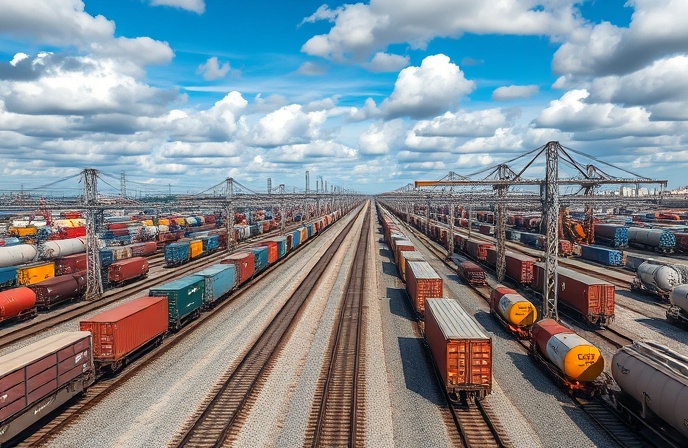
U.S. rail traffic saw a 3.6% rise with 503,538 carloads and intermodal units. Increases were varied across commodity groups and in North American **railroad** performance.
“`html
Introduction
U.S. freight-rail traffic increased by 3.6% to 503,538 carloads and intermodal units during the week ending October 4, according to data from the Association of American Railroads (AAR). This rise compared to the same week in 2024.
U.S. Rail Traffic Performance
U.S. railroads transported 224,972 carloads, reflecting a slight increase. Intermodal units, comprising containers and trailers, rose by 6.7% to 278,566.
Commodity-Specific Carload Trends
Of the ten carload commodities tracked weekly, six experienced growth. Nonmetallic minerals saw an increase of 6.9%, reaching 31,710 carloads. Chemicals rose by 5.9% to 32,919 carloads, and motor vehicles and parts increased by 5.3%, totaling 16,154 carloads.
Conversely, some commodity groups faced declines. Coal decreased by 7.7% to 56,252 carloads. Farm products, excluding grain and food, dropped by 2.1% to 17,658 carloads, and petroleum and petroleum products fell by 2.5% to 10,538 carloads.
Canadian and Mexican Rail Traffic
Canadian railroads reported 93,421 carloads for the week, a decrease of 1.4%, and 72,787 intermodal units, up 6%. Mexican railroads reported 12,463 carloads, a significant increase of 45.1%, and 14,909 intermodal units, up 82.9%.
Last June 2025, we published an article about Renfe’s cutting-edge Aranjuez maintenance hub. Click here to read – Future of Rail: Renfe’s Railway Technology Hub, Aranjuez: Essential Guide
Conclusion
In summary, U.S. freight-rail traffic experienced an overall increase, with varying performance across different commodities. Both Canadian and Mexican railroads reported mixed results in carloads and intermodal units.
Company Summary
Association of American Railroads (AAR): The Association of American Railroads is an industry trade group representing the interests of freight railroads in North America.
“`
RELATED POSTS

October 1, 2023 11:08 am
This article delves into the significant contract awarded to PESA...
October 24, 2016 7:34 pm
Due to financial issues, the DfT terminated the Virgin Trains...
February 26, 2020 6:24 pm
The following article delves into the comprehensive testing and deployment...

July 27, 2025 11:33 am
Congress probes soaring freight rail cargo theft, demanding DOT briefing....

April 16, 2025 7:46 am
This article explores the recent contract awarded to Alstom by...
April 7, 2017 5:26 am
Alstom is to supply SNCF Mobilités with 30 trains from...