
Tyseley Depot Upgrade: WMR Rail Infrastructure & Sustainability
West Midlands Railway’s Tyseley depot gets major upgrade, boosting operational capacity and accommodating growing fleet.
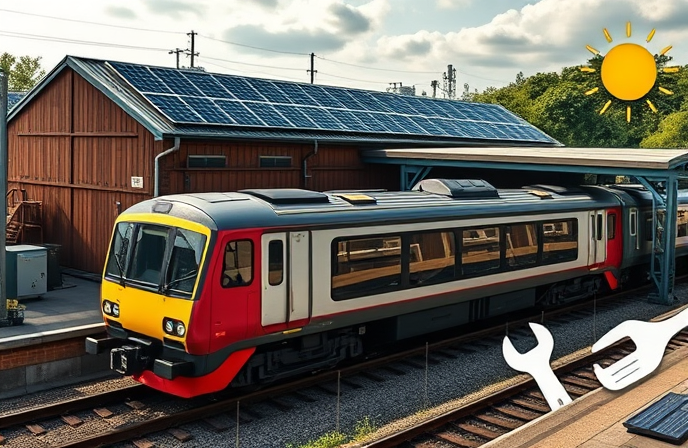
Tyseley Depot Transformation: Spencer Group Completes Major Upgrade for West Midlands Railway
In a significant boost to West Midlands Railway’s (WMR) operational capabilities, Spencer Group has successfully completed a comprehensive three-year project to upgrade and expand the Tyseley depot in Birmingham. The project, delivered ahead of schedule and under budget, represents a crucial investment in WMR’s infrastructure, directly addressing the need to accommodate its growing fleet and enhance maintenance capacity. The project, undertaken in partnership with Network Rail, addresses the pressing need for enhanced capacity to accommodate new rolling stock, improve operational efficiency, and future-proof the facility for long-term maintenance requirements. This article delves into the key aspects of this transformation, exploring the innovative solutions implemented and the far-reaching benefits for WMR and the broader rail network.
Expanding Capacity: Work Package 5’s Impact
The most recent and extensive phase of the project, Work Package 5, centered on expanding the depot’s footprint to meet the demands of WMR’s expanding fleet. This phase included a 100-meter extension to the existing depot building, providing stabling for six-car trains on two roads, numbers 11 and 12. This crucial expansion provides much needed space for the new Class 196 fleet. Moreover, the inclusion of new undercarriage maintenance pits on roads 11 and 12 dramatically improves maintenance capabilities, streamlining inspections and repairs. The installation of new train jacks, an overhead gantry crane, and two mobile gantries further broadens the scope of services offered at the depot. This will enable the depot to handle a wider range of maintenance tasks, ensuring the reliability and longevity of the WMR fleet.
Enhancing Maintenance Capabilities: Innovations in Depot Design
The project’s innovative approach to depot design reflects a commitment to operational efficiency and maintainability. Work Packages 3 and 4, completed earlier in the scheme, were foundational to the overall project. These packages addressed the need to reconfigure the depot, facilitating the expansion of the Underframe Cleaning (UFC) building by 30 meters. The removal of a significant section of existing track was a vital preliminary step to creating space for the new facility. Further enhancements were made through mechanical and electrical works, including improvements to ventilation, shore supplies and commissioning efforts. These improvements ensure a modern and reliable environment for maintenance personnel and machinery. These advancements streamline maintenance processes and promote a safer working environment.
Environmental Sustainability: Reducing the Carbon Footprint
Beyond the operational improvements, the Tyseley depot upgrade incorporates several sustainable initiatives to reduce the environmental impact of WMR’s operations. The implementation of new shore supplies allows for trains’ critical systems to be powered for testing and commissioning purposes without the need to run engines, thereby decreasing emissions and fuel consumption. Furthermore, the depot now features a large solar photovoltaic panel array, which is expected to generate 124,000 kilowatt-hours (Kw/h) of electricity per year. These environmental enhancements underscore WMR’s commitment to sustainable practices within the rail industry, contributing to both environmental preservation and operational cost savings.
Strategic Significance: Addressing Future Needs
The Tyseley depot expansion is an integral component of WMR’s GBP 1 billion investment into infrastructure and rolling stock. As John Doughty, Engineering Director for West Midlands Railway, stated, the upgrade was essential to accommodate the new four-car Class 196 fleet, which serves key routes between Birmingham, Worcester, Hereford, Shrewsbury, Leamington and Nuneaton. The project future-proofs the facility by accommodating the maintenance needs of trains throughout their lifecycle. The expansion is therefore vital for ensuring the long-term operational success of WMR, enhancing passenger service and minimizing disruptions.
Conclusion
The successful completion of the Tyseley depot upgrade marks a significant achievement for Spencer Group and West Midlands Railway. The project, finished ahead of schedule and under budget, provides much-needed operational capacity, streamlines maintenance procedures, and integrates crucial sustainability initiatives. By expanding the depot’s footprint, implementing advanced maintenance technologies, and investing in renewable energy, the project ensures that WMR is well-equipped to handle the demands of its growing fleet and to reduce its environmental impact. This investment in infrastructure highlights a positive commitment to enhancing passenger services in the Midlands and across the broader rail network. Looking ahead, the improvements at Tyseley are expected to support future growth in the region, while also setting a positive example for future rail infrastructure projects nationwide.
RELATED POSTS

September 29, 2015 8:03 pm
Azerbaijan will start receiving AZ8A freight locomotives developed by the...

March 30, 2008 11:03 pm
Scotland’s Glasgow Airport could get a new train station if...

October 22, 2025 8:54 am
Škoda Transtech contests its exclusion from the Helsinki tram tender....

September 27, 2019 4:47 pm
This article explores the significant investment by Deutsche Bahn (DB)...
February 12, 2017 4:23 am
"RMT union has announced industrial action impacting UK train operating...

February 21, 2025 10:32 am
Modernizing Portugal’s Rail Network: The Alstom Consortium Win and its...