
Turkey’s €1.2B High-Speed Rail: A Geopolitical Game Changer
Turkey’s €1.247B Yerköy-Kayseri high-speed rail: ECA-backed financing, geopolitical impact, Asia-Europe trade link & regional development.
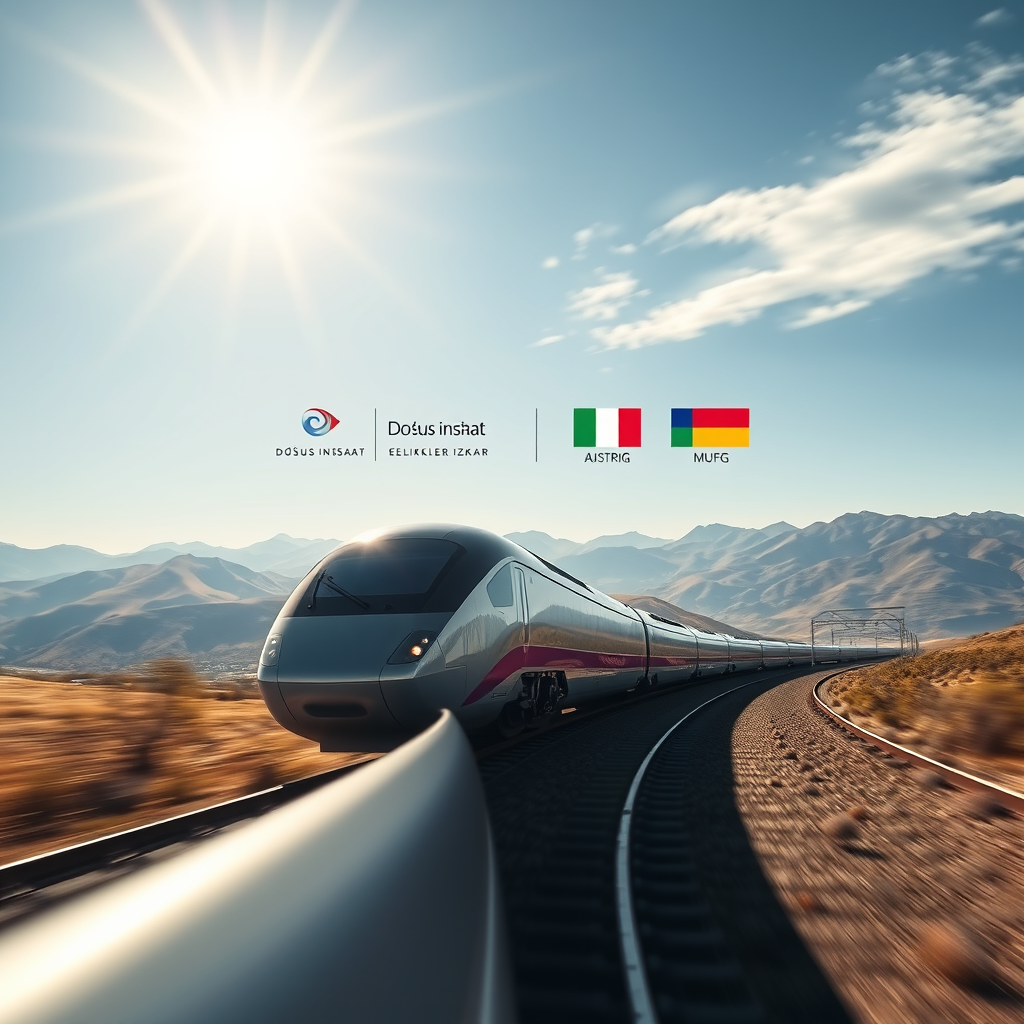
This article focuses the significant €1.247 billion ($1.351 billion) financing package secured for the construction of a new 140km high-speed rail line connecting Yerköy and Kayseri in central Anatolia, Turkey. This project represents a crucial step in Turkey’s ambitious expansion of its high-speed rail network, aiming to enhance connectivity, boost regional economies, and solidify its position as a key trade link between Asia and Europe. The financing structure, involving a blend of export credit agency (ECA) guarantees and commercial loans, highlights the international confidence in Turkey’s infrastructure development plans and the growing importance of sustainable finance in large-scale infrastructure projects. The project’s integration with existing and planned rail lines, such as the Ankara-Sivas line, underscores its strategic importance within the broader Turkish transportation network. We will delve into the specifics of the financing, the project’s economic implications, and its role within the context of Turkey’s broader transportation strategy and its geopolitical ambitions.
Financing and Project Structure
The €1.247 billion financing package is a testament to the international community’s belief in the economic viability of Turkey’s high-speed rail expansion. The funding comprises a €1.027 billion loan guaranteed by the export credit agencies (ECAs) of the UK, Italy, Austria, and Poland, demonstrating a significant level of international collaboration and risk-sharing. This is supplemented by a €220 million commercial loan facility partly supported by the Islamic Corporation for the Insurance of Investment and Export Credit (ICIEC). Mitsubishi UFJ Financial Group (MUFG) acted as the sole mandated lead arranger, coordinator, structurer, and agent bank, facilitating the complex financial arrangement and blending institutional investors with syndicate lenders. The successful structuring of this blended finance solution, aligning with Turkey’s Sustainable Finance Framework and the Green Use of Proceeds criteria, reflects a growing trend towards environmentally conscious infrastructure investment.
Economic Impact and Regional Development
The Yerköy-Kayseri high-speed rail line is expected to have a substantial economic impact on the central Anatolian region. By reducing travel times and improving connectivity, the project will stimulate economic activity, facilitate trade, and enhance the region’s competitiveness. The project’s integration with the Ankara-Sivas line, opened in April 2023, will create a crucial north-south corridor, connecting Kayseri and other central Anatolian cities to Ankara, the capital, and ultimately to Istanbul. This improved infrastructure will facilitate the movement of goods and people, reducing reliance on road transport and mitigating congestion, while improving the export potential of the region. The project will also create significant employment opportunities during its construction and operation phases.
Contractor Involvement and Project Delivery
The construction of the Yerköy-Kayseri line will be undertaken by a joint venture consisting of three prominent Turkish contractors: Doğuş İnşaat, Çelikler, and Özkar. These companies possess extensive experience in large-scale infrastructure projects, including the successful completion of the Ankara-Sivas high-speed rail line. This continuity in contracting ensures a degree of familiarity with the project requirements and a streamlined approach to execution. Their experience with similar projects also likely contributes to cost efficiency and timeliness of delivery, minimizing potential delays and cost overruns.
Geopolitical Context and National Strategy
Turkey’s ongoing investment in high-speed rail is not merely about domestic infrastructure development; it’s a strategic initiative designed to strengthen its geopolitical position. By enhancing its transportation network, Turkey aims to solidify its role as a critical link between Asia and Europe. This ambitious rail expansion complements Turkey’s broader efforts to become a major transit hub, particularly in light of initiatives like the India-Middle East-Europe Corridor (IMEC), which offers an alternative route bypassing Turkey. However, by investing in robust internal connectivity, Turkey continues to assert itself as a vital player in regional trade. The completion of the Yerköy-Kayseri line and other ongoing rail projects signals Turkey’s commitment to its national transportation strategy and its ambition to remain a pivotal actor in international trade and logistics.
Conclusions
The €1.247 billion financing secured for the Yerköy-Kayseri high-speed rail line underscores Turkey’s dedication to modernizing its infrastructure and its significance in the country’s overall economic and geopolitical strategy. The project, backed by a blend of ECA guarantees from the UK, Italy, Austria, and Poland, along with commercial loans partly supported by ICIEC and expertly structured by MUFG, showcases international confidence in Turkey’s infrastructure development and its alignment with sustainable finance principles. The involvement of experienced Turkish contractors like Doğuş İnşaat, Çelikler, and Özkar assures a high degree of project execution proficiency. Beyond the direct economic benefits of increased connectivity and reduced transportation costs, this project will stimulate regional development and enhance Turkey’s capacity to compete effectively in the global trade landscape. The integration of this new line into the existing Ankara-Sivas line strengthens Turkey’s North-South transport corridors, further enhancing its strategic position as a vital trade link between Asia and Europe. The success of this project serves as a model for future infrastructure development, showcasing the importance of blended finance, international collaboration, and a sustainable approach to large-scale infrastructure initiatives in achieving national strategic goals. Looking ahead, continued investment in high-speed rail and other crucial transportation infrastructure will be critical for Turkey to realize its ambitions as a key player in global trade and regional development, particularly in the face of alternative transit routes, such as the IMEC. The successful completion of this project will undoubtedly pave the way for future high-speed rail expansion in Turkey, further solidifying its place as a vital trade and transportation hub.

Railway infrastructure, rolling stock and transport technologies specialist focused on global rail industry developments, high-speed rail systems, signaling technologies and freight transportation. Covering railway investments, public transport modernization, rail operations and international mobility projects across Europe, Asia and North America.
RELATED POSTS
June 2, 2026 8:44 am
⚡ In Brief: The UK Office of Rail and Road...
June 2, 2026 10:31 am
⚡ In Brief: The UK’s Office of Rail and Road...
June 2, 2026 11:37 am
⚡ In Brief: The UK’s Office of Rail and Road...
June 4, 2026 6:22 pm
Network Rail and HS2 demolishes two strategic rail bridges, Saltley...
June 1, 2026 6:57 pm
Amtrak confirmed the delivery of its first Airo trainset for...
June 1, 2026 10:58 pm
MARTA completed 8 Atlanta station upgrades and new Breeze fare...