
Ravensthorpe Station Major Upgrade: Transpennine Route Targeted for
Ravensthorpe station’s major railway upgrade includes relocation, new infrastructure, and enhanced capacity. The Transpennine Route Upgrade targets greener operations and faster journeys by 2028.
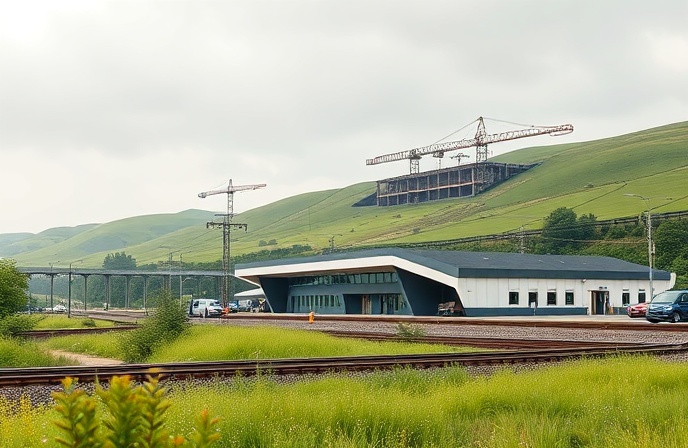
Ravensthorpe Station Undergoes Major Transformation: Enhanced Access, Increased Capacity, and Greener Operations Expected by Summer 2028. A significant upgrade to Ravensthorpe station is underway, involving a westward relocation and the construction of new infrastructure to accommodate longer trains and enable direct overtaking. This strategic development, part of the Transpennine Route Upgrade (TRU), promises improved journey times and a more sustainable electric rail future across the Pennines.
| Key Entity | Critical Detail |
|---|---|
| Ravensthorpe Station | Undergoing significant upgrade and relocation 200m west. |
| Core Action | Installation of a new four-track railway, footbridge with lifts, longer island platform, Baker Viaduct, and overhead line equipment. |
| Timeline | Station closure from Sunday, 14 December until the May 2026 timetable change for significant work; overall program intensification until summer 2028. |
| Key Stakeholders | TRU (Transpennine Route Upgrade), Northern. |
The transformation of Ravensthorpe station is a cornerstone of the Transpennine Route Upgrade (TRU), aiming to deliver a modernised and more efficient rail network. The station’s relocation 200 meters to the west is a critical element, paving the way for a new four-track railway. This expanded layout will not only allow for the installation of longer island platforms, accommodating longer trains with increased passenger capacity, but will also facilitate direct services to overtake stopping services. This infrastructure enhancement is designed to significantly reduce journey times between major hubs like Manchester, Leeds, and York, fostering greater connectivity and efficiency across the region.
Complementing the track and platform upgrades, a new footbridge equipped with lifts will ensure step-free access, enhancing accessibility for all passengers. The project also includes the development of a new forecourt and drop-off facilities, improving the overall passenger experience at the station. Additionally, the installation of overhead line equipment (OLE) throughout the area signals a clear commitment to a greener future, powering electric trains and reducing the carbon footprint of rail travel. The construction of the new Baker Viaduct is also integral to this complex realignment, contributing to smoother and more reliable journeys across the Pennines.
Andrew Campbell, TRU Sponsor, highlighted the intensifying work schedule, with significant progress expected until summer 2028. He noted that the “Ravensthorpe triangle,” a key civil-engineering site, has already seen substantial advancements, including the installation of concrete beams for the Calder Road bridge and piers for the Baker Viaduct. These efforts are crucial for enabling major track realignments, ultimately leading to more dependable and comfortable cross-Pennine travel. Campbell expressed gratitude to the local community for their understanding during this period of essential upgrades.
During the station’s closure, from Sunday, 14 December until the May 2026 timetable change, rail replacement bus services will operate between Ravensthorpe and Dewsbury stations. Northern, in conjunction with TRU, is coordinating these services to minimise disruption to passenger journeys. Andrew Allwright, TRU Programme Delivery Lead for Northern, emphasised that the work at Ravensthorpe and its surrounding vicinity is fundamental to the broader modernisation of the Pennine rail corridor. He reiterated the benefits of a modern station with enhanced facilities, a greener railway infrastructure, and ultimately, faster and more reliable services for commuters and travellers.
Last June 2025, we published an article about Renfe’s cutting-edge Aranjuez maintenance hub. Click here to read – Future of Rail: Renfe’s Railway Technology Hub, Aranjuez: Essential Guide
Industry Context
The detailed upgrade of Ravensthorpe station and its associated infrastructure represents a substantial investment in the UK’s rail network, particularly within the critical Transpennine corridor. For industry leaders, this project underscores the ongoing drive towards electrification and increased capacity to meet rising passenger demand and sustainability targets. The successful delivery of such complex, multi-faceted upgrades showcases the capabilities of major engineering programmes like the TRU, signalling a commitment to improving national rail resilience, operational efficiency, and inter-city connectivity. The focus on enhanced accessibility and greener operations aligns with broader strategic goals for the rail sector, making this a benchmark development for future network enhancements.

Railway infrastructure, rolling stock and transport technologies specialist focused on global rail industry developments, high-speed rail systems, signaling technologies and freight transportation. Covering railway investments, public transport modernization, rail operations and international mobility projects across Europe, Asia and North America.
RELATED POSTS

October 1, 2026 7:09 am
United States regulators confirmed a September 30 deadline for the...

October 8, 2026 1:15 pm
Alstom secured a €1bn contract to build 13 automated trains,...

October 4, 2026 5:14 pm
Alstom secured a CA$4.7 billion order from VIA Rail Canada...

October 1, 2026 12:13 am
Illinois approved $1.5 billion annually for the Northern Illinois Transit...

October 6, 2026 2:14 am
Union Pacific launched export rail shipments with Ferromex to deliver...

October 1, 2026 6:10 am
Amtrak approved a System Expansion Committee on July 30 to...