
US Rail Merger: Transcontinental Railroad & Supply Chain Revolution
Union Pacific and Norfolk Southern to merge, creating America’s first transcontinental railroad. The $85B deal aims to boost efficiency and US supply chains.
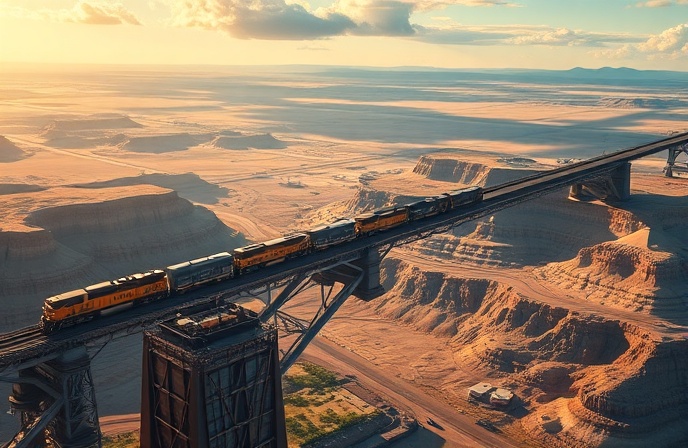
Union Pacific and Norfolk Southern to Forge America’s First Transcontinental Railroad
In a landmark deal poised to reshape the North American freight landscape, Union Pacific (UP) has announced its intention to acquire Norfolk Southern (NS) in a stock and cash transaction. The acquisition, unveiled on July 30, 2025, will create the first modern transcontinental railroad in the United States, spanning over 50,000 route miles across 43 states and connecting approximately 100 ports. This strategic move, valued at an enterprise value of $85 billion and resulting in a combined enterprise worth over $250 billion, aims to transform the US supply chain, stimulate economic growth, and enhance workforce opportunities. This article will delve into the specifics of the acquisition, examining its implications for the railway industry, shippers, and the overall economy. Key questions to be addressed are: Who are the key players? What is the nature of the deal? When is the target completion date? Where will the combined network operate? Why is this merger happening? And how will it be implemented?
The Acquisition: A Detailed Examination
The agreement, unanimously approved by both companies’ boards, will see UP acquire NS in a stock and cash transaction. NS shareholders will receive one UP common share and $88.82 in cash for each share they hold, valuing NS at $320 per share, a 25% premium over its recent average price. UP will issue approximately 225 million shares to NS shareholders, granting them a 27% ownership stake in the merged entity on a fully diluted basis. This arrangement allows NS shareholders to benefit from the growth and synergies expected from the combined company. The deal is structured without a voting trust and includes a reverse termination fee of $2.5 billion. The transaction is subject to Surface Transportation Board (STB) review and shareholder approval, with a target closing by early 2027. The STB, an independent federal agency, regulates the economic regulation of the freight rail industry.
Network Expansion and Operational Efficiencies
The creation of a transcontinental railroad promises significant operational efficiencies. By minimizing interchange delays and introducing new routes, the merged entity anticipates offering quicker and more extensive freight services to US shippers. The enhanced network will provide streamlined intermodal services and, crucially, shorten distances and transit times on key rail corridors. The combined network will provide a more truck-competitive solution, reducing highway congestion and supporting annual infrastructure investments of approximately $5.6 billion. The improved efficiency aims to create a more reliable and cost-effective freight system, enabling businesses to optimize their supply chains and better serve customers.
Impact on the Workforce and Community
The acquisition is expected to have a positive impact on the workforce. Union employees are assured of job security, with the potential for expanded employment opportunities due to anticipated rail volume growth. The focus on safety and community investment will continue with a goal of zero incidents. The merged entity is also committed to investing in safety and development initiatives for local communities. The merger aims to not only improve service and efficiency but also create value for employees and communities served by both railways.
Financial Synergies and Future Prospects
The transaction promises substantial shareholder value, with more than $30 billion of potential value creation anticipated from synergies. These synergies will likely stem from optimized resource allocation, reduced operational costs, and increased revenue opportunities. Financial advisors for UP include Morgan Stanley & Co and Wells Fargo, with legal advice provided by Skadden, Arps, Slate, Meagher & Flom and Covington & Burling. BofA Securities advises NS, with legal counsel from Wachtell, Lipton, Rosen & Katz and Sidley Austin. The ultimate success of the merged entity will hinge on effective integration, successful STB review, and the ability to realize the projected financial benefits.
Conclusion
The proposed merger of Union Pacific and Norfolk Southern represents a pivotal moment in the history of the US railway industry. By creating a transcontinental railroad, the deal aims to enhance operational efficiency, improve service for shippers, generate significant financial synergies, and contribute to economic growth. The merger’s success is reliant on overcoming potential regulatory hurdles, integrating operations, and realizing projected cost savings and revenue enhancements. This initiative has the potential to reshape the American supply chain, enhance the competitiveness of rail against trucking, and foster sustainable growth. While challenges such as integration and regulatory approval remain, the merger’s potential impact on the railway industry and the broader economy is undeniably significant, promising a new era of efficiency and connectivity for freight transportation across the United States. This transcontinental railroad promises to bring a new era of efficient and interconnected freight solutions to America and will transform the industry in the years to come.
Company Summary
Union Pacific Railroad (UP): A leading freight rail carrier in the United States, operating a vast network across the western two-thirds of the country. UP transports a wide variety of commodities and offers a diverse portfolio of services, including intermodal, bulk, and industrial products. The company is known for its extensive network, strong financial performance, and commitment to safety and efficiency.
Norfolk Southern Corporation (NS): A prominent freight rail carrier in the Eastern United States, serving a significant portion of the eastern US. NS provides freight transportation services across a broad spectrum of goods, from agricultural products to intermodal shipments. NS is characterized by its focus on customer service and its strategic investments in infrastructure and technology.
RELATED POSTS
A. Stucki Co. acquires Wheelworx, expanding rail-car wheelset reconditioning services....
May 28, 2025 10:01 pm
Czech Republic to Kazakhstan: Nurminen Logistics Navigates New Rail Freight...

June 28, 2019 2:15 am
This article examines the significant contribution of Thales Group to...

February 24, 2017 4:59 pm
The first access contract was signed between TCDD and Railway...
March 7, 2025 1:23 am
The Rail Baltica project, a high-speed rail line connecting Poland,...
September 24, 2025 5:55 am
HS2 Innovation Accelerator's 8th round launches, seeking innovative solutions for...