
The Future of Rail: Australian Digital Twin Trends for Safety, Efficiency
Australian rail embraces digital twins for safety, efficiency, and sustainability. Virtual replicas optimize operations and reduce risks in rail projects.
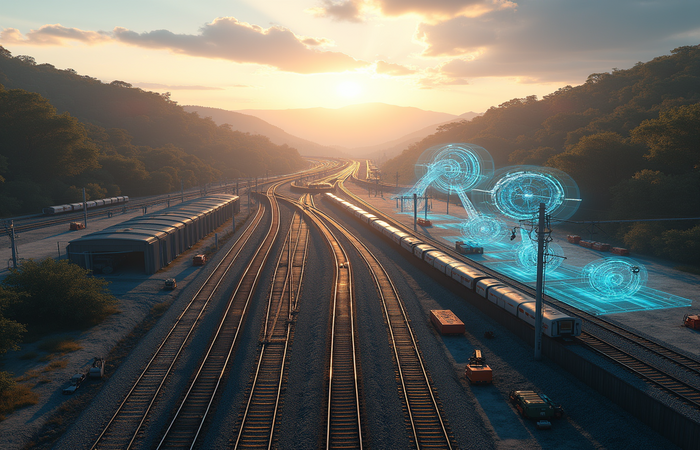
Australian Rail Industry Embraces Digital Twins for Enhanced Safety, Efficiency, and Sustainability
The Australian rail industry is navigating a complex landscape of increasing pressures. From bolstering safety protocols and optimizing operational efficiency to achieving ambitious sustainability goals, rail operators face multifaceted challenges. The rise of digital twin technology, specifically, is offering transformative solutions. This article explores the pivotal role of virtual twins in revolutionizing rail operations, examining their capabilities, benefits, and the 3DEXPERIENCE platform from Dassault Systèmes, which is emerging as a critical tool for stakeholders across the industry. We will delve into how digital twins are changing how rail projects are designed, built, and maintained, and how operators are leveraging them to improve safety, efficiency, and sustainability.
Collaborative Design and Project Delivery with Virtual Twins
At the core of this transformation lies the adoption of virtual twins, digital replicas that mirror physical assets, processes, and systems. “Collaborative is the key word here,” says Phil Barrett, AP South Rail Sales Expert for Dassault Systèmes. The 3DEXPERIENCE (3DX) platform enables internal and external stakeholders to collaborate on a centralized platform simultaneously. This fosters faster project delivery while mitigating risk and minimizing waste. This technology facilitates the creation and visualization of virtual twins, which in turn cover every phase, from initial design through manufacturing and maintenance. “You can design and build the project within a virtual environment before ‘turning any soil’,” says Barrett. The model allows for testing and refinement before physical construction. This approach is particularly beneficial for complex projects, such as building tunnels or railway lines, where numerous stakeholders are involved. The platform remains active during operation, allowing for ongoing updates and future requirement modeling.
Unlocking Data Insights and Optimizing Rail Operations
Tony Rakuljic, Senior Client Executive for Dassault Systèmes ANZ, highlights the platform’s flexibility, which allows users to selectively model elements, whether it’s the rail corridor, platforms, or operational aspects. Moreover, the 3DEXPERIENCE platform can integrate data from diverse sources, including digital engineering, Building Information Modeling (BIM), and existing systems such as Enterprise Resource Planning (ERP) and Enterprise Asset Management (EAM). Data from sources can be included to simulate scenarios and derive informed outcomes. Rakuljic gives the example of tunneling projects, using geological information to simulate potential knock-on effects. Data driven decision-making can be implemented across service planning, fleet planning, crew planning, terminal planning and more. Virtual twins are also instrumental in testing and simulation. As Barrett notes, “In a virtual environment, you can carry out tests without those repercussions.”
Enhancing Safety and Mitigating Risks
Safety remains a paramount concern in rail operations. Digital twins offer a crucial advantage by enabling proactive risk assessment and mitigation. Virtual twins help keep rail crews out of harm’s way by allowing changes and additions to be modeled and analyzed before implementation. “One of the parameters of the virtual twin could be the safety of the personnel that you’re sending out to do work on the tracks,” states Barrett. The 3DEXPERIENCE platform facilitates simulation of “what if” scenarios, including supply chain disruptions, service delays, or even train derailments. This capability allows operators to pre-emptively address potential hazards, minimize financial losses, and protect lives. By simulating real-world scenarios, operators can identify weaknesses, optimize emergency response plans, and proactively reduce the risk of incidents.
Toward Sustainable Rail Operations and Future Outlook
The industry’s move towards sustainability is another key benefit of the 3DEXPERIENCE platform. The ability to model and analyze different operational scenarios helps rail operators to evaluate and implement sustainable practices. Barrett notes that one of the emerging trends is fleet decarbonization, particularly for freight, which traditionally relies on diesel trains. Operators are exploring multiple possibilities, including acquiring battery-operated trains, adopting hybrid approaches, and using hydrogen batteries instead of diesel. By providing a single, unified source of truth across an organization, the 3DEXPERIENCE sets the stage for enhanced excellence in rail infrastructure management and end-to-end rail operations. As Barrett concludes, “Virtual twins are no longer an optional extra for rail operators – they are a must have.”
Conclusion
The Australian rail industry is at an inflection point, where technology offers a pathway to increased safety, efficiency, and sustainability. Digital twins, and in particular the 3DEXPERIENCE platform, are proving to be invaluable tools for rail operators. By enabling collaborative design, optimizing operational workflows, enhancing safety protocols, and supporting sustainable practices, virtual twins empower the industry to overcome its current challenges and realize future ambitions. The transition to digital twin technology involves an initial investment, the benefits, in terms of improved safety, reduced costs, and enhanced operational performance, far outweigh the expenses. As the rail industry continues to evolve, the integration of virtual twins will be crucial in shaping a safer, more efficient, and sustainable future for rail transport. The industry is rapidly moving towards fully integrated operations, which digital twins will enable by connecting various components that often function in silos. The future outlook for rail in Australia is dependent on the continued advancement and adoption of these technologies.
RELATED POSTS
February 28, 2025 9:42 pm
This article examines the significant investment by Koleje Małopolskie (KM),...
February 28, 2025 7:08 am
The European railway signaling landscape is undergoing significant transformation, driven...
October 30, 2025 10:54 am
ORR approves Temple Mills access, unlocking £700 million investment for...

May 25, 2015 11:37 am
Alsace region and SNCF Alsace inaugurated a new multi-series maintenance...
November 20, 2025 9:54 pm
U.S. rail traffic saw a 4.5% dip in combined carloads...
April 18, 2025 12:52 am
This article analyzes the UK’s recent budget concerning the transport...