
Thales ETCS: Bangkok Red Line Capacity Boost
Bangkok’s Red Line now boasts Thales’ ETCS, boosting capacity by 40% and significantly enhancing safety. Discover how this cutting-edge system transforms railway operations!
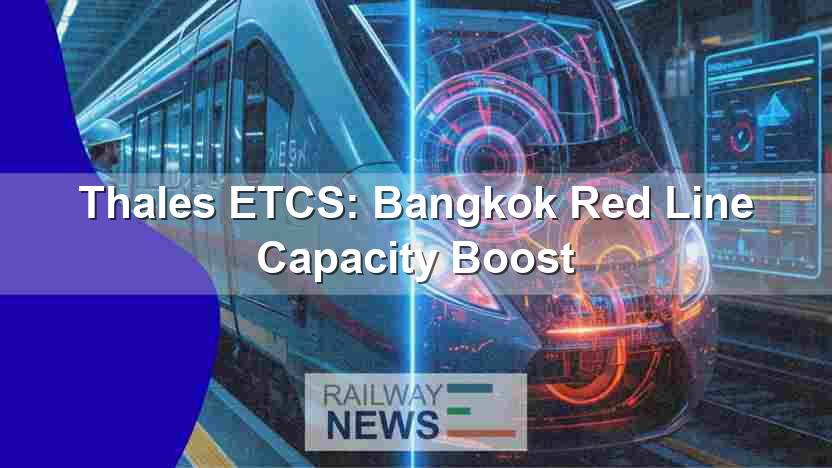
This article examines the significant contribution of Thales in upgrading Bangkok’s Red Line suburban rail network with the European Train Control System (ETCS). The implementation of ETCS on this crucial commuter line represents a major step forward for Thailand’s railway infrastructure, addressing increasing passenger demand and enhancing safety standards. The project, undertaken in collaboration with Nippon Signal, showcases the growing global adoption of ETCS as a solution for modernizing and improving railway systems worldwide. We will delve into the technical aspects of the ETCS implementation, its projected impact on the network’s capacity and operational efficiency, and the broader implications for Thailand’s ongoing railway modernization efforts. The integration of ETCS into the existing SRT (State Railway of Thailand) network will also be analyzed, highlighting its importance for future interoperability and expansion.
ETCS Deployment and System Integration
Thales’ contract encompasses equipping 25 new electric multiple unit (EMU) trains and two existing non-electrified vehicles with the ETCS onboard system. These trains will initially operate under ETCS Level 1, which provides train protection through fixed trackside signals, offering a significant safety improvement over older signaling systems. Importantly, the system is designed for future upgradeability to Level 2, enabling more advanced train control functionalities and potentially greater capacity gains through Moving Block operation. The deployment covers 41km of the Red Line, which features a four-track alignment in certain sections and double-track lines elsewhere, maximizing operational flexibility. The integration of ETCS with the existing SRT mainline network is a crucial aspect, laying the groundwork for future interoperability and seamless passenger transfers.
Capacity Enhancement and Operational Efficiency
The projected 40% increase in network capacity is a direct result of ETCS’s advanced train control capabilities. ETCS enables closer headways between trains, reducing delays and improving overall punctuality. This is achieved through precise train positioning and speed monitoring, minimizing the risk of collisions and human error. Additionally, the improved reliability facilitated by ETCS translates to a more efficient and cost-effective operation. Reduced delays and maintenance requirements contribute to better overall operational efficiency, benefiting both the operator and the passengers.
Safety and Reliability Improvements
Safety is paramount in any railway system, and ETCS offers significant improvements in this area. By providing automatic train protection, ETCS significantly reduces the risk of human error-related accidents, such as overspeeding or signal passing. The system’s continuous monitoring of train speed and position ensures that trains always operate within safe limits, protecting both passengers and railway staff. This enhanced safety contributes to increased public confidence in the railway system, leading to higher ridership and a more positive overall image.
Thailand’s Railway Modernization Strategy
The Red Line project represents a crucial step in Thailand’s wider railway modernization strategy. The adoption of ETCS signifies a commitment to deploying state-of-the-art technology to address the growing demand for efficient and safe urban transportation. The successful integration of ETCS on the Red Line sets a precedent for future deployments on other lines, potentially paving the way for a nationwide network using consistent, interoperable signaling technology. This not only improves safety and efficiency but also promotes the seamless operation of future rail expansion projects.
Conclusion
The Thales ETCS implementation on Bangkok’s Red Line is a significant undertaking with far-reaching implications for Thailand’s railway infrastructure. The project showcases the successful integration of a cutting-edge signaling system designed to improve safety, efficiency, and capacity. The upgrade from Level 1 to Level 2 ETCS offers scalability and future-proofing for the system. The projected 40% capacity increase is a substantial improvement, addressing the current challenges of growing urban populations and their transportation needs. Additionally, the emphasis on safety highlights the commitment to protecting passengers and staff. This project serves as a model for future railway modernization efforts in Thailand and other developing nations, demonstrating the benefits of adopting modern signaling technologies like ETCS for enhancing urban rail networks and boosting operational efficiency.
The successful integration of ETCS into the existing SRT mainline network is a testament to Thailand’s proactive approach to modernizing its rail infrastructure. This interoperability feature is crucial for future expansion and seamless passenger journeys across different lines. The long-term benefits extend beyond immediate capacity enhancements, encompassing improved safety records, reduced operational costs, and enhanced public trust in the railway system. The collaboration between Thales and Nippon Signal underlines the importance of international partnerships in deploying complex railway signaling systems, demonstrating a successful transfer of knowledge and technological expertise. This initiative sets a positive example for other nations looking to upgrade their railway networks and meet the evolving demands of a growing and increasingly interconnected world.

Railway infrastructure, rolling stock and transport technologies specialist focused on global rail industry developments, high-speed rail systems, signaling technologies and freight transportation. Covering railway investments, public transport modernization, rail operations and international mobility projects across Europe, Asia and North America.
RELATED POSTS
September 6, 2026 5:19 am
Hitachi delivered Taiwan's first N700ST high-speed train from Japan in...

September 5, 2026 4:19 pm
CPK launched formal tender talks with four consortia to design...

September 5, 2026 7:14 pm
HS2 Ltd signed renegotiated civils contracts with EKFB and Align...

September 6, 2026 4:12 am
Alstom delivered the first of 100 new G Class trams...
September 6, 2026 1:17 am
Hitachi Toshiba Supreme Consortium confirmed the first of 12 N700ST...
September 6, 2026 6:17 am
Hungary ordered a national ban on most freight trains from...