
TfL Takeover: Reshaping London’s Suburban Rail
London’s suburban rail needs an upgrade. TfL’s proven expertise promises faster, more reliable commutes – discover how!
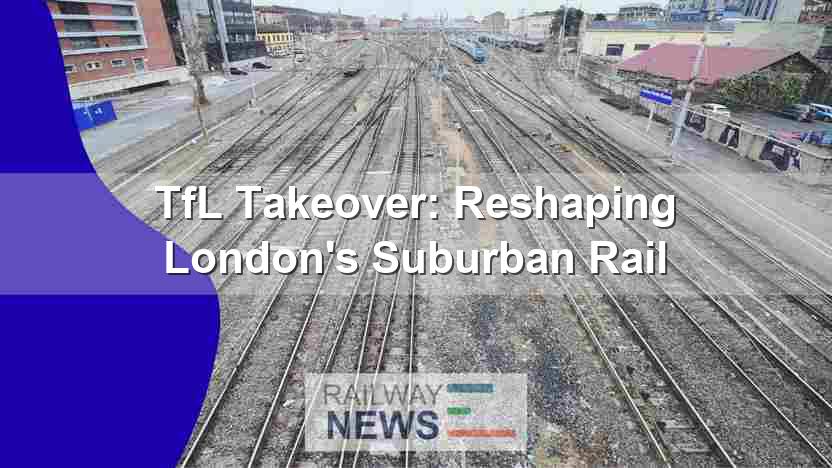
This article examines the proposal by the Mayor of London, Sadiq Khan, to transfer control of suburban rail infrastructure in London from Network Rail (NR) to Transport for London (TfL). This significant policy shift aims to address persistent issues plaguing London’s suburban rail network, namely, a lack of coordination between infrastructure providers and train operating companies (TOCs), leading to unreliable and infrequent services. The core argument centers on the potential benefits of integrating infrastructure management under TfL’s purview, leading to improved efficiency, increased capacity, and a more seamless passenger experience. We will explore the current state of London’s suburban rail system, the rationale behind the proposed transfer, the potential benefits and challenges of such a transition, and the broader implications for London’s transportation landscape. This analysis will draw upon the strategic case for “metroisation” presented by TfL, which underpins the Mayor’s call for change, and critically evaluate the feasibility and long-term impacts of this ambitious plan.
The Current State of Suburban Rail in London
Currently, London’s suburban rail network operates under a fragmented system. Network Rail (NR), a publicly owned company, is responsible for maintaining and upgrading the rail infrastructure, including tracks, signaling, and stations. Separate TOCs (Train Operating Companies) operate the trains and are responsible for ticketing and customer service. This division of responsibilities often results in a lack of coordination, leading to delays, cancellations, and a sub-optimal passenger experience. Additionally, the existing franchising system for TOCs has been criticized for its inefficiency and lack of long-term strategic planning, hindering investment in infrastructure improvements and service enhancements. The complex and often disparate ticketing systems further complicate the passenger journey, creating confusion and potentially deterring the use of public transport.
The Rationale for TfL Control
The Mayor’s proposal to transfer control of suburban rail infrastructure to TfL is rooted in the belief that integrated management will lead to significant improvements. TfL, already responsible for London’s Underground (the Tube) and bus networks, has a proven track record of efficient infrastructure management and service delivery. Consolidating control under a single entity would streamline decision-making, facilitate better coordination between infrastructure maintenance and train operations, and allow for a more holistic approach to network planning and investment. This integration would pave the way for a “metroisation” of the suburban rail network, leading to more frequent, reliable, and integrated services, akin to the efficiency of the London Underground system.
Potential Benefits and Challenges
The anticipated benefits of transferring control to TfL are substantial. This includes increased capacity, reduced journey times, improved reliability, and a more user-friendly ticketing system. The integration could enable significant service frequency improvements, for example, increasing services to up to 18 trains per hour on key routes. This would enhance the overall passenger experience. However, the transition also presents challenges. The transfer of such a large and complex infrastructure would require substantial financial investment and careful planning. Negotiations with NR, TOCs, and the UK Government would be crucial to ensure a smooth transition and minimize disruption to services. Moreover, concerns about the potential impact on employment and the need for effective workforce integration need to be addressed.
The Broader Implications for London’s Transport Network
The successful implementation of this proposal could significantly impact London’s broader transportation landscape. It would contribute to a more integrated and efficient public transport system, benefiting commuters and supporting economic growth. Improved connectivity would stimulate economic activity in previously underserved areas, supporting job creation and residential development. A more reliable and convenient suburban rail system would encourage greater reliance on public transport, reducing congestion and improving air quality. Ultimately, this integration could solidify London’s position as a leading global city with a truly world-class transport network.
Conclusions
The Mayor’s proposal to transfer control of suburban rail infrastructure from Network Rail to TfL represents a bold and potentially transformative initiative for London’s transport system. The current fragmented system, characterized by a lack of coordination between infrastructure providers and TOCs, results in sub-optimal service delivery. TfL’s proven track record in managing London’s Underground and bus networks makes it a strong candidate to oversee this transition. While the transfer presents challenges, including substantial financial investment and logistical complexities, the potential benefits are significant. Improved reliability, increased capacity, reduced journey times, and a more seamless passenger experience would drastically improve the commuter experience, contributing to a more efficient and integrated transport network. The long-term success of this proposal hinges on careful planning, effective collaboration between all stakeholders, and adequate funding. The “metroisation” of London’s suburban rail lines could not only transform daily commutes but also significantly contribute to London’s economic growth and enhance its global competitiveness as a leading metropolis. If successfully implemented, this initiative could serve as a model for other major cities grappling with similar challenges in their suburban rail networks. This transition, though complex, presents a significant opportunity to reshape London’s public transport system for the better, creating a more efficient, reliable, and user-friendly network capable of supporting the city’s continued growth and prosperity.

Railway infrastructure, rolling stock and transport technologies specialist focused on global rail industry developments, high-speed rail systems, signaling technologies and freight transportation. Covering railway investments, public transport modernization, rail operations and international mobility projects across Europe, Asia and North America.
RELATED POSTS

October 8, 2026 1:15 pm
Alstom secured a €1bn contract to build 13 automated trains,...

October 1, 2026 7:09 am
United States regulators confirmed a September 30 deadline for the...

October 8, 2026 12:18 pm
Siemens Mobility signed an agreement with VinSpeed to supply 350...

October 4, 2026 5:14 pm
Alstom secured a CA$4.7 billion order from VIA Rail Canada...

October 5, 2026 6:12 pm
AECOM and Jacobs secured a contract in September 2026 to...

October 1, 2026 12:13 am
Illinois approved $1.5 billion annually for the Northern Illinois Transit...