
Texas High-Speed Rail Project: Dallas to Houston
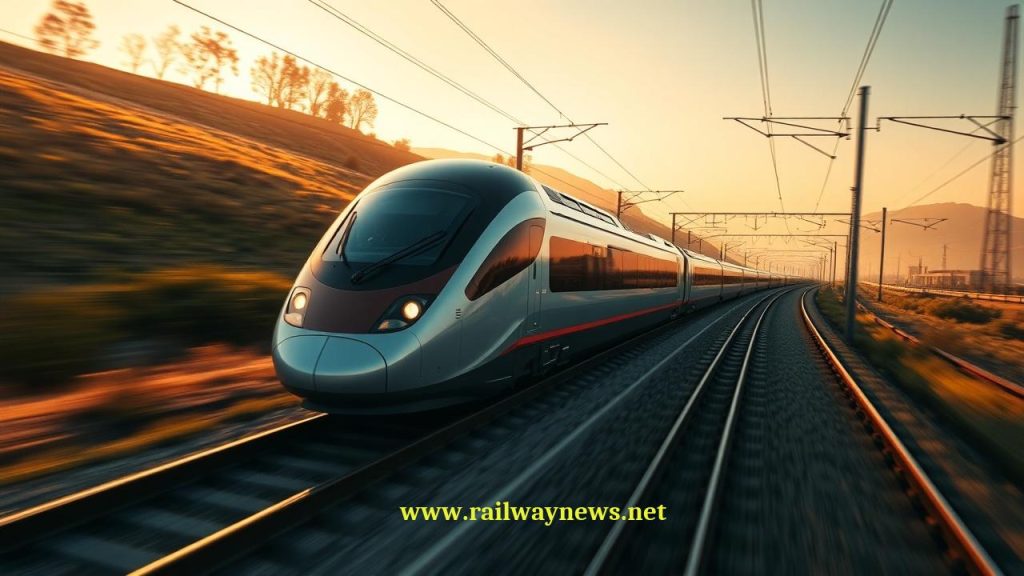
Texas Central Railway’s high-speed rail project connecting Dallas and Houston is underway, promising a 90-minute journey using Japan’s N700-I bullet train technology. Private investment funds this $10 billion endeavor.

Dallas to Houston High-Speed Rail: A Technological and Economic Analysis
This article examines the proposed Dallas to Houston high-speed rail (HSR) project in Texas, a significant undertaking aiming to revolutionize intercity travel in the state. The project’s scope extends far beyond simply connecting two major cities; it represents a substantial investment in advanced rail technology, economic development, and environmental sustainability. This analysis will delve into the project’s technological aspects, focusing on the chosen rolling stock and infrastructure, exploring the financial model underpinning its development, and assessing its potential environmental impact. Finally, we will evaluate the project’s feasibility and overall impact on the Texas economy and transportation landscape. The ultimate goal is to provide a comprehensive overview of this ambitious project, weighing its potential benefits against inherent challenges.
Technological Specifications and Implementation
The Dallas to Houston HSR, spanning approximately 386 kilometers (240 miles), promises a journey time of under 90 minutes, with frequent departures – every 30 minutes during peak hours and hourly during off-peak periods. The project leverages the N700-I bullet train system from Central Japan Railway Company (JR Central), a proven technology boasting a remarkable safety record of over 50 years of operation in Japan with zero passenger fatalities or injuries attributable to train accidents. The N700-I, based on the fifth-generation Tokaido Shinkansen technology, comprises the complete system: passenger trains, overhead catenary system (OCS), tracks, signaling, and comprehensive maintenance procedures. Its operational efficiency and reduced susceptibility to service disruptions were key factors in its selection. The train’s top speed of 205 mph (330 km/h) is integral to achieving the targeted travel time.
The line is designed as a dedicated, independent route, avoiding the complexities and delays associated with shared infrastructure. This ensures optimal operational efficiency and safety. The project includes two stations, one in Dallas and one in Houston, with no intermediate stops along the route. The selection of station locations in Dallas involved considering connectivity to future rail projects linking Dallas, Arlington, and Fort Worth.
Financial Model and Investment
Unlike many publicly funded transportation projects, the Dallas to Houston HSR relies entirely on private investment. Texas Central Railway (TCR), the project proponent, is responsible for securing the necessary funding. Texas Central Partners (TCP), the development arm, is managing the project’s design, financing, construction, operation, and maintenance. The project’s estimated construction cost is $10 billion. While TCP has already secured $75 million in private investment from Texan investors, securing the remaining funds remains a crucial challenge. The economic viability of the project hinges on attracting significant private investment and demonstrating a robust return on investment (ROI) through passenger revenue.
Environmental Considerations and Mitigation
The project’s environmental impact has been thoroughly evaluated in an Environmental Impact Statement (EIS) prepared by the U.S. Federal Railroad Administration (FRA). The EIS analyzes potential environmental and social impacts, considering the effects of stations, fueling stations, and maintenance facilities. The project aims to minimize its footprint by using elevated tracks and culverts to minimize wetland disruption. Additional environmental mitigation measures include silt fences, straw bales, and site restoration practices like re-vegetation and erosion control. The use of high-speed rail itself is expected to contribute to environmental benefits through significantly reduced emissions per passenger-mile compared to automobile travel, leading to improved air and water quality.
Project Summary and Conclusion
The Dallas to Houston HSR project presents a compelling vision for transforming intercity travel in Texas. Its utilization of advanced technology, coupled with a focus on environmental responsibility and private funding, sets it apart from traditional transportation projects. However, the project faces significant challenges, primarily the need to secure substantial private investment and navigate the complexities of large-scale infrastructure development. The success of this endeavor will depend heavily on effective project management, robust financial planning, and continued public support. The project’s potential benefits, including reduced travel times, increased economic activity, and enhanced environmental sustainability, are substantial, but realization requires careful execution and ongoing risk management.
| Project Attribute | Value |
|---|---|
| Project Length | 386 km (240 miles) |
| Project Budget | $10 Billion |
| Project Type | High-Speed Rail |
| Connecting Cities | Dallas & Houston |
| Number of Stations | 2 (Dallas & Houston) |
| Travel Time | <90 minutes |
| Funding Source | Private Investment |
Company Information:
- Texas Central Railway (TCR): The project proponent responsible for securing regulatory approvals.
- Texas Central Partners (TCP): The development arm responsible for design, finance, construction, operation, and maintenance.
- Central Japan Railway Company (JR Central): Provider of the N700-I bullet train system.
- Matthews Southwest: Real estate development company collaborating on the Dallas station development.
- Dallas to Houston Constructors (DHC): A joint venture between Archer Western Construction and Ferrovial Agroman US (FAUS), providing design-build services.
- U.S. Federal Railroad Administration (FRA): Responsible for the Environmental Impact Statement (EIS).
RELATED POSTS
March 29, 2004 9:15 pm
Germany's Nuremberg-Munich high-speed rail line opens, slashing travel times and...
May 11, 2018 3:42 am
Copenhagen's new Sydhavn Metro Line (Line 4) opens, boasting 4.4km...
September 29, 2022 2:18 am
Amsterdam's new North-South metro line opens, boosting railway connectivity and...
September 23, 2019 3:59 pm
Ulm's new tram line, Line 2, opened in 2018,...
January 12, 2012 6:17 pm
Queensland's Goonyella to Abbot Point rail expansion project boosted coal...
February 24, 2026 4:52 am
A pan-Baltic survey finds two-thirds of 3,016 respondents link Rail...