
Swanage Railway: WiFi on a Steam Train!
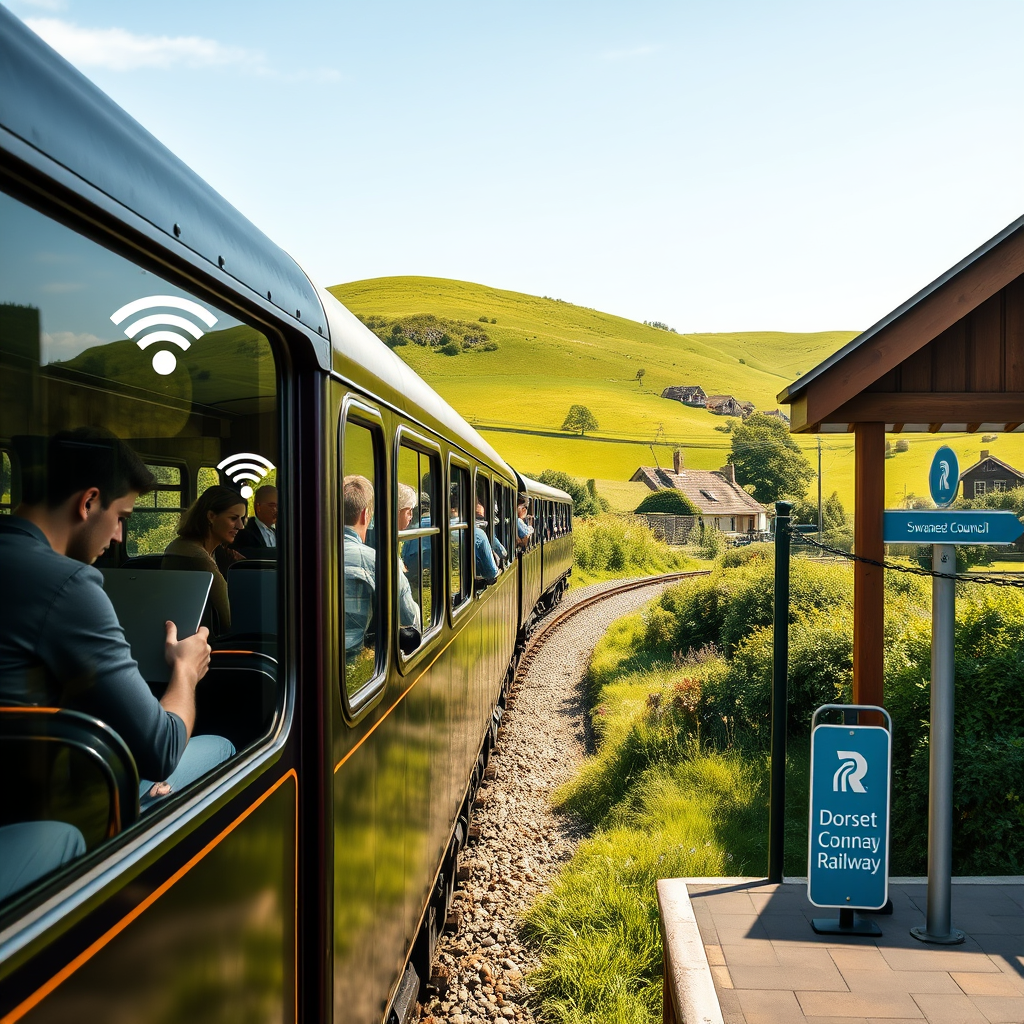
This article explores a groundbreaking initiative undertaken by Dorset Council in the UK: the implementation of WiFi connectivity on a heritage steam train operating on the Swanage Railway. This project, funded by the Department for Science, Innovation and Technology (DSIT), aims to address the persistent challenge of digital connectivity in rural areas, demonstrating the potential of advanced technologies to bridge the digital divide. The integration of satellite-powered WiFi on a historic steam train not only enhances the visitor experience but also serves as a valuable case study for replicating similar solutions in other remote locations across the UK. The initiative’s success hinges on the collaboration between Dorset Council, Excelerate Technology UK, and the Swanage Railway, combining public sector funding with private sector expertise in deploying cutting-edge connectivity solutions. The broader implications for rural economic growth and improved tourism are also examined.
A Rural Connectivity Challenge: Bridging the Digital Divide
The Swanage Railway, a significant contributor to Dorset’s economy, (£15m annually), faces the common issue plaguing many rural areas: unreliable internet connectivity. Traditional network operators often struggle to provide consistent coverage in areas with challenging terrain and dispersed populations. This lack of connectivity hampers economic development and limits access to essential digital services. The Swanage Railway, despite its historical significance and tourist appeal, is not immune to this issue. This project directly addresses this challenge by leveraging satellite technology to deliver reliable WiFi access.
The Swanage Railway WiFi Initiative: A Technological Leap
Dorset Council secured £163,000 in funding from the DSIT (Department for Science, Innovation and Technology) to pilot a novel approach: equipping the Swanage Railway’s steam train with satellite-powered WiFi. This initiative, in partnership with Excelerate Technology UK, will deploy Low Earth Orbit (LEO) satellite technology to overcome the limitations of terrestrial networks. The project’s scope also includes installing WiFi at Purbeck Park car park and Norden train station, further expanding digital access for visitors and local residents.
This represents a significant technological leap for heritage railways and rural connectivity, demonstrating the adaptability of modern technology to even the most challenging environments. The use of LEO satellites offers a reliable, high-bandwidth connection, independent of terrestrial infrastructure limitations.
Economic and Societal Benefits: Beyond Connectivity
The improved connectivity provided by this project extends beyond simply providing internet access. The enhanced digital infrastructure will enable the Swanage Railway to implement cashless payment systems, improving operational efficiency and enhancing the visitor experience. This modernization directly contributes to the railway’s continued economic success and its role as a major tourist attraction. Furthermore, the project’s success serves as a powerful demonstration of the potential for similar initiatives in other rural areas across the UK. The benefits extend to local businesses, residents, and the overall economic vitality of the region.
Collaboration and Future Implications: A Model for Success
The successful implementation of this project hinges on the effective collaboration between Dorset Council, Excelerate Technology UK, and the Swanage Railway. This public-private partnership demonstrates a pragmatic approach to addressing the digital divide in rural areas. Excelerate Technology UK brings its expertise in deploying advanced satellite communication technologies, while Dorset Council provides the funding and regulatory support. The Swanage Railway, as the beneficiary, actively participates in the project’s implementation and future management. This collaborative model should serve as a blueprint for future initiatives aimed at improving digital infrastructure in other remote and underserved communities.
- Successful replication of this model could lead to significant economic growth in other rural areas.
- Improved connectivity can attract new businesses and tourism, stimulating local economies.
- Enhanced digital access improves the quality of life for residents, bridging the digital divide.
Conclusions: A Vision for Connected Rural Communities
The Dorset Council’s initiative to bring WiFi connectivity to the Swanage Railway represents a significant step towards bridging the digital divide in rural areas. The project, a collaboration between the council, Excelerate Technology UK, and the Swanage Railway, successfully leverages cutting-edge satellite technology (LEO satellites) to overcome the limitations of traditional terrestrial networks. This innovative approach not only enhances the visitor experience at the heritage railway, but also demonstrates the feasibility and potential economic benefits of deploying advanced connectivity solutions in challenging rural environments. The successful implementation of WiFi on a steam train, coupled with expanded access points at the station and car park, showcases the adaptability of modern technology. This project offers several key takeaways: Firstly, it highlights the crucial role of public-private partnerships in addressing infrastructure challenges in underserved areas. Secondly, it emphasizes the importance of considering innovative technological solutions, like LEO satellite technology, to overcome geographical barriers to connectivity. Finally, it demonstrates the significant economic and social benefits that can be derived from improved digital infrastructure in rural communities, stimulating tourism, improving business operations, and enhancing the overall quality of life. The success of this pilot project could lead to widespread adoption of similar strategies across the UK, transforming rural connectivity and fostering economic growth in previously underserved regions. The long-term implications are substantial, suggesting a paradigm shift in how rural areas engage with and benefit from modern technology. The Swanage Railway project serves as a powerful example, demonstrating that technological advancement and heritage preservation can coexist and mutually benefit a community.
RELATED POSTS

November 8, 2025 6:54 am
Alstom's Crewe Works unveils a new HVAC overhaul facility, boosting...

September 9, 2023 3:17 pm
This article delves into the preliminary report released by the...
August 30, 2022 9:17 pm
The Impact of Rail Worker Strikes: A Case Study of...
July 31, 2025 9:33 am
New Pacific Northwest plant boosts rail traffic. Eco Material Technologies'...

DART's Silver Line commuter rail opens October 25th, connecting major...
December 12, 2024 12:18 pm
This article delves into the significant Intercity Eixo Norte rail...