
Stadler Valencia, TramCamp: Sustainable Rail in Catalonia
Catalonia gets battery-electric trams from Stadler Valencia. New TramCamp network will boost regional transport.
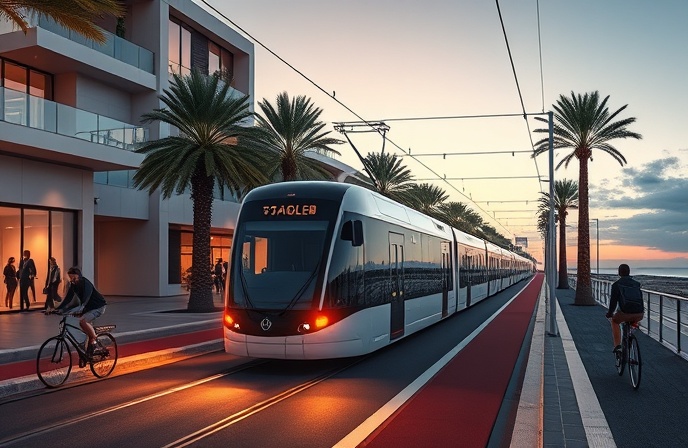
Stadler Valencia Awarded Contract to Supply Battery-Electric Trams for Catalonia’s New TramCamp Network
In a significant development for regional public transport in Catalonia, Stadler Valencia has secured a contract from Ferrocarrils de la Generalitat de Catalunya (FGC) to provide seven TRAMLINK V3 trams for the new TramCamp light rail network. This agreement, announced on [Insert a realistic date based on the information given – e.g., recently], encompasses the supply of spare parts and a comprehensive 15-year full-service maintenance contract. The battery-electric trams will operate on the Cambrils–Salou–Vila-seca corridor, offering enhanced connectivity for residents and tourists alike. This deployment exemplifies a wider initiative to promote sustainable mobility solutions within the Camp de Tarragona region. The article will delve into the key technological features of the new trams, examine the strategic importance of this project within the context of regional development, and assess its impact on the future of public transport in the area.
Revolutionizing Regional Connectivity: The TRAMLINK V3 Advantage
The TRAMLINK V3 trams, specifically designed and manufactured at Stadler Valencia’s Albuixech facility, represent a leap forward in light rail technology. A key innovation is their battery-electric propulsion system. Each tram will be equipped with two lithium-titanate (LTO) battery modules, enabling autonomous operation over distances of up to 9.9 kilometres. This capability eliminates the need for overhead electrification across the entire network, offering increased route flexibility and reduced infrastructure costs. The bi-directional trams, accommodating up to 211 passengers across five carriages per unit, are designed for accessibility. This is achieved via step-free access throughout, ensuring ease of use for all commuters.
Design and Engineering: Adaptability for the Mediterranean Environment
The design of the TRAMLINK V3 trams takes into account the specific environmental conditions of the Camp de Tarragona region. Both interior and exterior design elements are tailored to the Mediterranean climate, emphasizing comfort and user-friendliness. Each tram features six double doors per side for efficient boarding and alighting, driver cabins equipped with heated windscreens and triple-speed wipers for enhanced safety, and dedicated multifunctional areas suitable for bicycles, pushchairs, and wheelchair users. The inclusion of real-time passenger information systems and air conditioning further enhances the overall passenger experience.
Maintenance and Support: A Long-Term Commitment
A crucial aspect of the contract is the 15-year full-service maintenance agreement, supported by a new dedicated maintenance facility in Vila-seca, located near the TramCamp route. This facility will ensure the long-term operational reliability of the vehicles and is critical for supporting the efficient service of the entire system. The infrastructure will also ensure proactive maintenance measures. This approach guarantees the ongoing performance of the trams, offering considerable advantages in terms of operational efficiency and asset management.
Strategic Significance: Decarbonizing Regional Mobility
The TramCamp project is a central component of a broader initiative to modernize and decarbonize regional mobility in the Camp de Tarragona area. By linking key urban and tourist destinations with a clean, efficient transport system, FGC and Stadler Valencia aim to reduce reliance on private vehicles and promote sustainable travel practices. The project’s success will hinge on its ability to integrate seamlessly with existing public transport networks and provide a reliable and attractive alternative to car travel, contributing significantly to a reduction in emissions and improving the environmental footprint of the region.
Conclusion
The contract between Stadler Valencia and FGC represents a substantial investment in the future of public transportation in Catalonia. By deploying cutting-edge battery-electric TRAMLINK V3 trams, the project not only enhances regional connectivity but also sets a new standard for sustainable mobility solutions. The emphasis on operational efficiency, passenger comfort, and long-term maintenance underscores a holistic approach to public transport provision. The successful implementation of the TramCamp network will have implications beyond Catalonia, potentially serving as a model for other regions looking to modernize their public transport infrastructure and adopt cleaner, more efficient technologies. The 15-year service agreement also secures jobs in the Vila-seca region.
Company Summary
Stadler Valencia is a leading global manufacturer of railway vehicles, offering a comprehensive portfolio of products including high-speed trains, regional trains, trams, and locomotives. The company is well known for its innovative approach to rail vehicle design and commitment to sustainability. Stadler focuses on providing tailored solutions for various rail systems worldwide, collaborating closely with transit authorities to meet evolving passenger transport requirements. Their commitment extends beyond rolling stock to life-cycle service, ensuring the reliability and longevity of their vehicles.
RELATED POSTS

July 11, 2018 4:04 pm
SNCF Réseau's ARGOS initiative modernizes French railway signaling with next-generation...

July 10, 2025 11:34 am
OCTA holds public meetings to bolster Southern California's coastal rail...

June 10, 2016 8:33 am
Thales has begun installing new signalling equipment between Edgware Road...
August 4, 2017 4:17 pm
Revolutionizing rail safety and efficiency is achievable! Learn how...
February 14, 2026 10:27 pm
Lumo reports a 49% visitor increase for its enhanced 3D...
July 12, 2017 11:03 pm
Here are a few voiceover-friendly excerpt options tailored for railway...