
Stadler-technotrans: Cooling Tech Boosts Middle East Intercity Rail
Stadler orders advanced cooling systems from technotrans for Middle Eastern intercity trains. The systems, crucial for desert operation, will be installed in 10 trains.
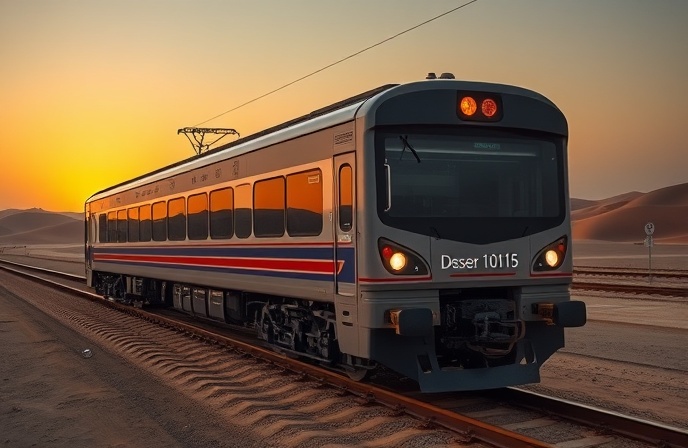
Stadler Selects technotrans for Advanced Cooling Systems in Middle Eastern Intercity Trains
In a significant development for railway technology, Stadler has awarded technotrans a contract to supply custom cooling systems for ten intercity trains destined for the challenging desert environments of the Middle East. This partnership, announced in late July 2025, represents a key step in enhancing the operational reliability and passenger comfort of these new trains. The contract, valued in the mid-single-digit million-euro range, includes an option for an additional ten trains, potentially doubling the impact of this collaboration. The project addresses the critical need for robust thermal management solutions in regions experiencing extreme temperatures and sand exposure. The “how” involves technotrans’s specialized converter cooling system, vital for maintaining functionality. The “why” is to ensure reliable operation in extreme heat, and the “when” deliveries commence in early 2026. The “who” involves Stadler and technotrans. The focus of this article is on the innovative cooling solution and its implications for railway operations in harsh environments.
Adapting to Extreme Desert Conditions: The Challenge
The intercity trains, each approximately 179 meters long and designed to accommodate 313 passengers, must adhere to the latest European and international standards. However, the intense heat and sandstorms prevalent in the Middle East pose a significant challenge to the trains’ electronic and mechanical systems. Traditional, passive cooling methods prove insufficient in these extreme conditions. To overcome this, technotrans was tasked with developing a tailored solution that could efficiently dissipate heat and maintain operational integrity. This called for a highly engineered approach, focusing on weight optimization and durability to ensure long-term reliability.
Technotrans’s Innovative Thermal Management Solution
technotrans responded to Stadler’s requirements by developing an active 50kW converter cooling system equipped with a compressor refrigeration unit. This advanced system is pivotal for maintaining the operational efficiency of the trains in high ambient temperatures. The technology is further enhanced by integrating converter cooling with active cooling for diesel fuel and sensitive electronic components. This integrated approach ensures the longevity of the trains components. Furthermore, technotrans conducted thorough in-house wear assessments and verification processes to optimize maintenance intervals and maximize equipment uptime. The system’s design is specifically engineered to withstand the harsh environmental conditions common in the Middle East, including the high levels of sand exposure.
Collaboration and Implementation
The project benefits from a strong collaborative relationship between Stadler and technotrans. Stadler’s commercial project manager, Tobias Arnold, highlighted the constructive and innovative approach taken by technotrans, particularly during the tender phase. This collaboration proved essential in delivering a solution that meets the specific challenges of the project. The manufacturing and delivery of the cooling systems are slated to commence in early 2026, with the potential for expansion based on the option for additional trains. The success of this partnership hinges on the seamless integration of the cooling systems into the new intercity trains, ensuring their optimal performance in the demanding Middle Eastern climate.
Company Summary
technotrans is a German-based company specializing in thermal management solutions. While they have a diverse portfolio, their focus is on systems for various industrial applications, including railway technology. Their railway solutions are built for optimal performance in the harshest environments. Stadler is a Swiss manufacturer of railway rolling stock, with a global presence and a strong reputation for producing high-quality trains. Stadler is also investing heavily into greener rail travel via the RS ZERO that will replace diesel vehicles.
Conclusion
The partnership between Stadler and technotrans exemplifies a forward-thinking approach to railway engineering. By selecting technotrans’s specialized cooling solutions, Stadler is proactively addressing the challenges posed by extreme environments, and thus, setting a new standard for reliability and passenger comfort in intercity rail travel. The intelligent integration of the converter cooling system, combined with the proactive assessment by technotrans, reflects a commitment to extending maintenance intervals and improving operational efficiency. This project represents a significant step forward in the global rail market. The implications of this project are clear: it underscores the importance of customized thermal management in challenging environments, opening doors for further innovation and collaboration within the railway industry. The future outlook is promising, with the potential for further deployments of similar solutions and for continued advancements in railway technology that prioritizes robustness, efficiency, and reliability.
RELATED POSTS

November 5, 2013 1:47 pm
CNR Equipment Engineering, a subsidiary of CNR Dalian, has contracted...
July 23, 2025 1:33 pm
Belgium loans €61M to Lineas, boosting rail freight. Government...
September 6, 2025 7:24 pm
Greater Manchester secures £6 million to expand tram and tram-train...

July 22, 2007 8:22 pm
A new UK Government White Paper promising improved rail infrastructure,...

Polish PESA wins the tender to provide the country’s capital...

Bucharest underground train network operator Metrorex has received bids from...