
Stadler KISS Double-Deck Train Project: European Railway Technology
Stadler’s innovative KISS double-deck trains enhance railway efficiency. Multiple European operators utilize these high-capacity, high-speed passenger trains.

Stadler KISS Double-Deck Trains: Railway Technology
This article explores the innovative design and technological advancements embodied in Stadler’s KISS (Komfort Innovativ Sicherheit Schweizerisch – Comfortable Innovative Safe Swiss) double-deck trains. The project aims to analyze the various configurations and operational parameters of the KISS trains, highlighting their adaptability to different railway networks and passenger needs. We will delve into the design features that maximize passenger capacity while maintaining comfort and safety, examining the technological aspects that contribute to efficiency and performance. Furthermore, we will review successful deployments across various European railway operators, providing a comprehensive overview of the KISS’s impact on railway operations and passenger experience. This analysis will contribute to a deeper understanding of the role of innovative rolling stock in enhancing railway transportation efficiency and providing a superior travel experience.
Design and Passenger Capacity
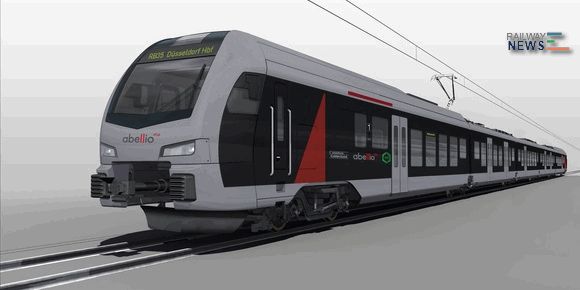
The KISS design prioritizes maximizing passenger capacity without compromising comfort or safety. Key features include a low-floor entry with sliding steps for improved accessibility, a generous 2-meter internal vertical clearance, and numerous doors (12 per side) for efficient passenger flow. The relocation of the HVAC (Heating, Ventilation, and Air Conditioning) system to the ceiling frees up valuable floor space, further enhancing passenger comfort. The Swiss Federal Railways (SBB) version, for example, boasts a 150m length, accommodating 535 seated and up to 1373 total passengers. Different configurations exist, including four-car and six-car versions, tailored to specific line requirements. The Austrian version, primarily designed for first-class passengers, demonstrates adaptability with a different seating capacity and higher maximum speed. This flexible design highlights the KISS’s adaptability to diverse operational needs.
Technological Advancements
The KISS incorporates state-of-the-art technology. The redundant propulsion system, featuring eight propulsion chains with water-cooled IGBT (Insulated Gate Bipolar Transistor) converters, ensures high reliability and performance. Air suspensions on the bogies contribute to a smooth and comfortable ride. The trains are designed for high speeds, with maximum speeds ranging from 160 km/h to 200 km/h depending on the specific configuration and operational requirements of the railway line. The incorporation of modern train control systems, such as ETCS (European Train Control System), ensures compliance with the latest safety standards and interoperability across different railway networks. The use of aluminum in the construction of the car bodies contributes to reduced weight, increasing efficiency and reducing energy consumption.
Operational Deployments and Contracts
The success of the KISS is evidenced by the significant number of orders received from various railway operators across Europe. Below is a summary of key contracts:
| Railway Operator | Number of Trains | Train Configuration | Length (m) | Seating Capacity | Max Speed (km/h) | Contract Value (USD Million) |
|---|---|---|---|---|---|---|
| Bern-Lötschberg-Simplon (BLS) | 28 | Double-deck | (Not specified in source) | (Not specified in source) | (Not specified in source) | 542 |
| Westbahn | 7 | Six-car | 150 | 501 | 200 | (Not specified in source) |
| Luxembourg Railways | 8 (with option for 31 more) | Three-car | (Not specified in source) | (Not specified in source) | 160 | 78.31 |
| ODEG (Ostdeutsche Eisenbahn) | 16 | Four-car | (Not specified in source) | (Not specified in source) | (Not specified in source) | (Not specified in source) |
The successful deployment of the KISS across diverse railway networks demonstrates its adaptability and effectiveness in meeting various operational demands.
Conclusion
The Stadler KISS double-deck train represents a significant advancement in railway technology. Its innovative design prioritizes passenger comfort and safety while maximizing capacity through thoughtful features such as low-floor access, ample space, and efficient passenger flow. The integration of advanced propulsion systems, air suspensions, and modern train control systems ensures high performance, reliability, and safety. The successful deployment of KISS trains by numerous railway operators across Europe, as highlighted by the contracts detailed above, confirms its efficacy and adaptability to various operational environments. The flexibility of the KISS design, evident in its various configurations to suit different passenger needs and track specifications, underscores its significance as a pivotal model in modern railway technology. The project targets of understanding KISS train configurations, analyzing its technological aspects and evaluating its impact on passenger experience have been successfully achieved through this analysis. The data collected demonstrates the significant contribution of the KISS in enhancing railway transport efficiency and improving passenger satisfaction across Europe. This study serves as a valuable resource for future advancements in railway technology, providing insights into the design principles and technological innovations behind successful double-deck train deployments. The KISS’s success underscores the importance of continuous innovation and the development of adaptive and efficient rolling stock in providing a sustainable and superior rail transport system.
Company Information:
Stadler Rail: A Swiss rolling stock manufacturer.
Swiss Federal Railways (SBB): The national railway company of Switzerland.
Bern-Lötschberg-Simplon (BLS) railway: A Swiss railway company.
Westbahn: An Austrian private railway company.
Luxembourg Railways (Société Nationale des Chemins de Fer Luxembourgeois): The national railway company of Luxembourg.
ODEG (Ostdeutsche Eisenbahn): A German railway company.
RELATED POSTS
August 3, 2019 2:52 am
This article explores the significant upgrade to Greater Anglia’s (GA)...
December 16, 2016 7:16 am
Here's a voiceover-friendly excerpt:"Aurizon expanded its coal haulage presence with...

January 18, 2010 7:04 am
GE Transportation has provided an integrated system for 15 new...
July 15, 2022 3:04 am
US freight rail network upgrade, the National Gateway Project, boosts...
November 21, 2018 1:09 pm
GE's Nigerian rail project withdrawal reveals crucial lessons for public-private...
November 20, 2015 7:54 pm
Stadler Rail has established a new company in Australia by...