
Stadler Appeals SBB Double-Decker Train Contract Award in Switzerland
Stadler appeals SBB’s double-decker train contract award, challenging the decision for 116 new trains. Concerns arise over evaluation process transparency within the railway sector.
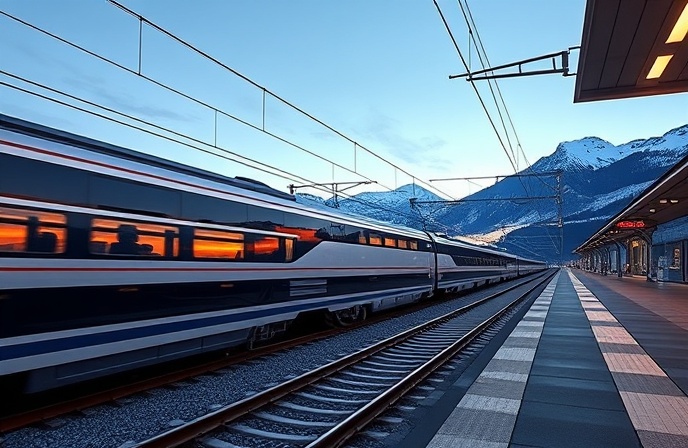
Swiss Rolling Stock Manufacturer Stadler Appeals SBB Double-Decker Train Contract Award
Stadler has officially lodged an appeal with the Swiss Federal Administrative Court, challenging the recent decision by Swiss Federal Railways (SBB) to award a substantial contract for 116 double-decker trains to a competitor. The company asserts that an independent review is crucial to ensure the transparency expected by the public in such significant procurement processes.
| Key Entity | Critical Detail |
|---|---|
| Stadler | Lodged an appeal against SBB’s decision |
| SBB | Awarded contract for 116 double-decker trains to Siemens Mobility |
| Contract Value | €2.1 billion |
| Appeal Date | November 27, 2025 |
| Award Date | November 7, 2025 |
Stadler Questions Evaluation Process and Transparency
Following SBB’s November 7, 2025, decision to award the contract, Stadler conducted a thorough analysis of the evaluation matrix. The company claims significant discrepancies in the assessment, particularly highlighting a narrow price difference of only 0.6% between its bid and the winning offer. Stadler’s bid was based on an existing, proven double-decker train model, of which SBB has operated 153 units since 2012 with an exceptional maximum availability of 99%. Stadler has a global track record with over 700 such trains sold across 14 countries.
Peter Spuhler, CEO of Stadler, expressed bewilderment at the evaluation outcome, stating, “After careful examination of the decision, we still cannot understand the evaluation. Therefore, we have decided to appeal to the Federal Administrative Court in accordance with the procedure. This institution, as an independent judicial authority, should verify the correctness of the decision.” Stadler indicated that the documentation provided by SBB did not adequately address numerous questions regarding the evaluation, and clarification discussions with SBB were unsatisfactory.
Discrepancies in Sustainability and Operational Provenance
A key point of contention for Stadler lies in the sustainability category, where it reportedly received only half the score of the winning bidder. This is despite Stadler’s commitment to producing the entire train within Switzerland, minimizing transport routes and sourcing components, including aluminum profiles from Valais, from Swiss companies. Stadler questions the plausibility of a train that “exists only on paper” scoring higher than its proven double-decker model, which has demonstrated reliable operational data for many years.
Contract Details and Strategic Implications
The awarded contract, valued at €2.1 billion, to Siemens Mobility for 116 double-decker trains aims to replace SBB’s aging fleet serving the S-Bahn network in Zurich and western Switzerland, which has been in operation for over three decades. The new 150-meter-long trains will boast a capacity of 540 seats and eight multifunctional areas. When operated in double-decker mode, at 300 meters, they will offer 585 seats with a 30% increase in multifunctional areas. The new rolling stock is scheduled to commence operations in 2030, with 95 trains assigned to the Zurich S-Bahn network and 21 trains deployed on regional express routes in western Switzerland, including Vaud, Valais, and Annemasse, France.
Last June 2025, we published an article about Renfe’s cutting-edge Aranjuez maintenance hub. Click here to read – Future of Rail: Renfe’s Railway Technology Hub, Aranjuez: Essential Guide
This framework agreement, which includes a firm order for 116 trains and an option for an additional 84, represents a significant investment in Switzerland’s rail infrastructure. Stadler, a substantial contributor to the Swiss economy with approximately 80% of added value generated domestically and collaborations with over 200 local suppliers, many of which are SMEs, has reiterated its commitment to the Swiss market and its partnership with SBB. The appeal casts a spotlight on the rigorous scrutiny and competitive landscape within the European rail manufacturing sector, underscoring the importance of robust and transparent procurement processes for major public transport contracts.
RELATED POSTS

August 20, 2015 4:13 am
Japan has a drinking problem. So prevalent is the act...

March 30, 2017 5:00 pm
On March 28 in Moscow, President of Russian Railways Oleg...

December 12, 2021 6:22 am
The Construction of Birmingham Curzon Street Station: A Case Study...
August 21, 2020 10:37 am
The Stonehaven Derailment: A Case Study in Rail Safety The...
July 31, 2022 5:04 am
Caltrain’s Electrification Project: A Milestone Achieved This article delves into...
April 16, 2023 2:53 am
This article explores the significant shift towards sustainable railway transportation,...