
SRMA Australia: Next-Gen Rail Grinding Improves Track Lifespan
New rail grinding machine boosts Aus rail maintenance, boosting efficiency and lifespan. SRMA’s innovation promises a revolution in track upkeep.
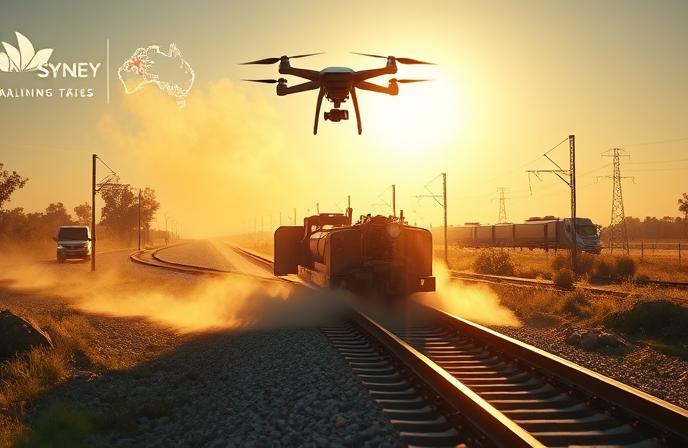
Speno Rail Maintenance Australia Unveils Next-Generation Rail Grinding Machine, Revolutionizing Track Maintenance
In the heart of Australia’s railway network, a technological leap is underway, promising to reshape how tracks are maintained and improve the efficiency and lifespan of railway infrastructure. Speno Rail Maintenance Australia (SRMA) is leading the charge with the development of a cutting-edge rail grinding machine. This innovation, which prioritizes real-time data processing and enhanced precision, is poised to deliver significant gains in efficiency, safety, and cost-effectiveness. This article delves into the details of this groundbreaking machine, exploring its advanced capabilities, the local expertise behind its creation, and the benefits it brings to the Australian railway industry. The “who” is SRMA; the “what” is a next-generation rail grinding machine; the “when” is now, with the first machine already in operation; the “where” is across Australia, beginning in Sydney; the “why” is to improve rail maintenance and extend rail life; and the “how” is through real-time data analysis and precise grinding techniques.
Innovations in Track Maintenance
The SRMA next-generation machine represents a significant advancement in track maintenance technology. Unlike conventional methods, this machine processes rail data instantly, allowing expert operators to make immediate, precise adjustments. This real-time capability ensures the rail grinding profile is managed with extreme accuracy. According to Mark Green, SRMA’s Managing Director, “This machine is an absolute game changer for the rail industry.” The machine’s design incorporates multiple levels of redundancy, including gensets (a combination of an engine and electrical generator) for power supply and traction, ensuring maximum uptime. The integrated system measures rail conditions as they enter the machine. This immediate feedback loop allows operators to optimise grinding parameters, ensuring the rail emerges fully compliant with client specifications. SRMA’s machine also has measuring systems on the front and rear, providing constant data flow to the operator, enabling data-driven decisions and ensuring consistent quality.
The Power of Real-Time Data and Precision Grinding
A critical aspect of the new machine’s design is its ability to measure and manage the rail condition in real-time. Green explains that this is where the true value lies: “We manage the rail grinding profile live.” By measuring the grind live, SRMA ensures accurate grinding data, thus extending the life of the rail. This precision is essential, as improper grinding can accelerate rail defects. Over-grinding or under-grinding can exacerbate defects, creating more maintenance requirements and increased costs. The machine allows for accurate grinding with the appropriate speed, load control, and motor angle to ensure that the appropriate amount of metal is removed. The advanced technology ensures optimal metal removal and helps prevent the creation of additional rail defects, reducing the need for costly repairs and extending the overall lifespan of the track infrastructure.
Australian Expertise and Local Manufacturing
The success of this new machine is also attributed to SRMA’s commitment to local expertise and manufacturing. The company designs, manufactures, and operates the machines entirely within Australia. This commitment includes the sourcing of components locally and an in-house engineering team based in Perth. This allows for quick adaptation, continuous improvement, and the application of learnings from previous projects. Additionally, SRMA’s team includes a PhD-level expert in wheel/rail interface who provides specific expertise tailored to different networks. This focus on understanding how the rail responds to the wheel/rail interface is critical for developing bespoke strategies suited to each unique Australian network.
Optimized Design: Ergonomics and the ‘Ecosystem’ Approach
SRMA’s dedication to continuous improvement is evident in its holistic approach to design and manufacturing. This includes optimizing the machine’s ergonomics. Ergonomic considerations have been a priority. Working with researchers at a leading university in Perth, SRMA has developed a user-friendly solution for operators, leading to significantly better grind quality and operator comfort. This design consideration further extends to the ‘ecosystem’ of the machine itself. SRMA incorporates various aspects such as the stones supplied through ASI, direct input into the manufacturing of the stones ensures that they can design and manufacture a stone that gets the appropriate surface condition, life extension of the stone, and metal removal on that network. SRMA designs all key components, including trolleys, dust extraction systems, and even heat management, ensuring that all parts work in harmony.
Conclusion
Speno Rail Maintenance Australia’s next-generation rail grinding machine represents a significant step forward in track maintenance technology. By leveraging real-time data analysis, precision grinding techniques, and local expertise, SRMA is revolutionizing how rail networks are maintained. The impact of this innovation extends beyond the operational efficiencies and cost reductions it offers; it also reflects a commitment to safety, infrastructure longevity, and environmental sustainability. The machine’s capability to measure and manage the rail condition in real-time and its adaptability, as highlighted by the custom sizing and design for the Sydney network, sets it apart in the industry. As Australia’s rail infrastructure continues to grow, innovations like SRMA’s new machine will be vital. SRMA’s commitment to local design, manufacturing, and its understanding of the unique needs of each Australian network, it is well-positioned to meet the demands of a rapidly evolving rail industry. SRMA continues to demonstrate how a deep understanding of rail dynamics, coupled with advanced technology, can lead to safer, more efficient, and more sustainable railway networks for the future.
RELATED POSTS
September 6, 2025 8:48 pm
Appenzeller Bahnen seeks Swiss approval for a fully automated rail...

July 16, 2019 1:08 am
This article explores the significant contract awarded to Systra for...

May 10, 2009 8:53 am
Bombardier Transportation and Alstom Transport have bagged a €452m ($605m)...
December 11, 2017 8:57 pm
Optimize your railway for seamless connectivity and maximum efficiency. ...
December 14, 2021 5:39 pm
The China-Laos Railway: A Case Study in Cross-Border Rail Cooperation...
July 23, 2019 10:06 am
This article examines the significant €200 million contract awarded to...