
SNCF Deploys Alstom RER NG: Boosts Paris RER D Capacity
SNCF launches Alstom’s RER NG on Paris’s RER D line, boosting capacity for 630,000 daily riders. A €1.7 billion investment modernizes the vital commuter line.
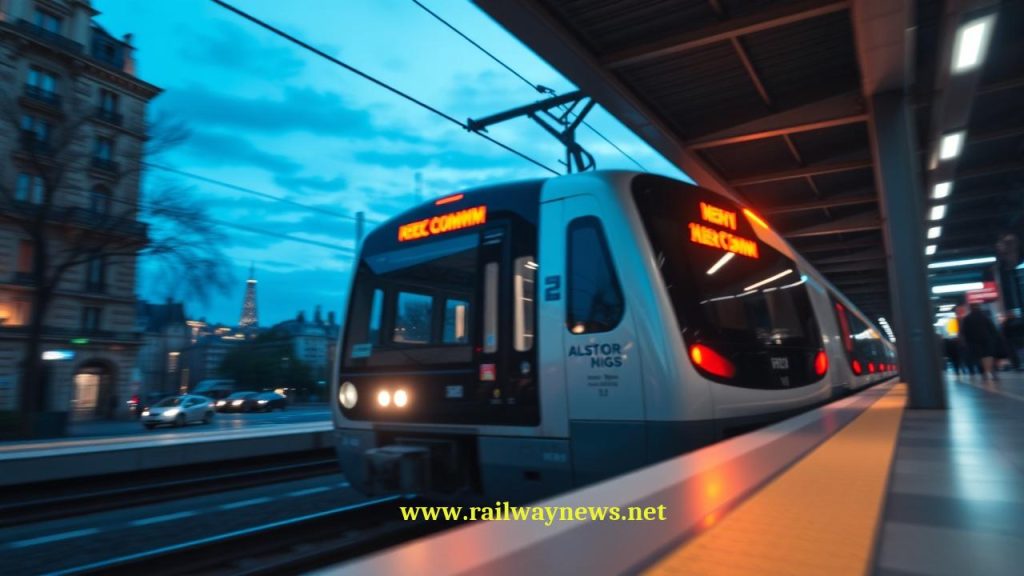
PARIS, FRANCE – SNCF Voyageurs has officially introduced the new-generation RER NG train on the Goussainville–Melun corridor of the RER D line, marking a significant advancement in the multi-billion-euro modernization of the Île-de-France region’s busiest and longest commuter rail line. This deployment is a cornerstone of a broader strategy to enhance service reliability and passenger comfort for the more than 630,000 people who use the 194-kilometer line daily.
| Category | Details |
|---|---|
| Project | RER New Generation (NG) Fleet Introduction |
| Line | RER D (Goussainville–Melun & Creil–Corbeil-Essonnes) |
| Key Stakeholders | SNCF Voyageurs (Operator), Île-de-France Mobilités (Financing), Alstom (Manufacturer) |
| Recent Order Value | €1.7 billion for 96 additional RER NG trains |
| Key Technical Feature | “Boa” open-gangway design for optimized capacity and passenger flow |
| Deployment Goal | 100 RER NG trains in daily operation by January 2026 |
The introduction of the RER NG on the Goussainville–Melun section follows its initial launch on the Creil–Corbeil-Essonnes section in December 2024. This new rolling stock, the fourth generation to serve the RER network, is central to transforming the RER D line. The deployment is the culmination of extensive preparation by SNCF Réseau, which undertook major infrastructure upgrades to accommodate the technologically advanced trains. These works included reinforcing the line’s electrical power supply with a new substation in Cesson and modifying platforms at eight stations to provide level boarding, significantly improving accessibility for all passengers.
Manufactured by Alstom at its Valenciennes-Petite Forêt and Crespin facilities, the RER NG has been meticulously designed to handle the high-density traffic of the Paris metropolitan area. Its most prominent feature is the “boa” architecture, a fully open-gangway design that allows passengers to move freely between carriages. This layout enhances onboard security, optimizes passenger distribution, and increases overall capacity, which is critical during peak hours. Before entering service, the fleet underwent a rigorous 20-month dynamic testing program, covering over 12,000 kilometers and validating performance across 34 stations and 170 platforms.
The project is backed by a substantial investment from Île-de-France Mobilités, which is 100% financing the fleet renewal. In June 2025, the transport authority solidified its commitment with a €1.7 billion order for an additional 96 RER NG trains from Alstom. To date, 30 multiple units have been delivered, with an ambitious target to have 100 RER NG trains operating daily across the RER D line by January 2026. This accelerated delivery schedule aims to rapidly improve the passenger experience and operational regularity on a line that serves as a vital north-south artery for the entire Île-de-France region.
Key Takeaways
- Major Fleet Overhaul: The RER NG’s introduction is a critical step in modernizing the RER D, the longest and one of the most frequented lines in the Paris network.
- Passenger-Centric Design: The train’s open “boa” configuration and improved accessibility features are designed to directly address issues of crowding and passenger flow.
- Infrastructure-Led Modernization: The successful deployment relied on significant prerequisite upgrades to the line’s power grid and station platforms, highlighting a systemic approach to network improvement.
Editor’s Analysis
The rollout of the RER NG on Paris’s RER D line is more than a simple fleet replacement; it serves as a global benchmark for modernizing high-capacity urban rail systems. The project underscores a critical lesson for transport authorities worldwide: new rolling stock is only as effective as the infrastructure that supports it. By coupling the train procurement with essential upgrades to power and station accessibility, Île-de-France Mobilités and SNCF are ensuring the full benefits of Alstom’s technology are realized. This holistic strategy, focused on enhancing capacity, reliability, and the passenger experience through integrated design and infrastructure investment, is a model that other megacities grappling with aging commuter rail networks will be watching closely.
Frequently Asked Questions
- What is the RER NG?
- The RER NG (New Generation) is the latest generation of commuter train for the Île-de-France RER network. Manufactured by Alstom, it features a fully open-gangway “boa” design to maximize capacity and improve passenger comfort and movement.
- Which RER line is receiving the new trains first?
- The RER D line is the first to receive the RER NG trains. They are being deployed on the Creil–Corbeil-Essonnes and Goussainville–Melun sections, which together form the entire 194 km north-south line.
- What infrastructure upgrades were required for the RER NG?
- SNCF Réseau carried out major works, including increasing the line’s electrical power with new substations and raising platforms at eight stations to align with the train floor, enabling seamless, level boarding for all passengers.

Transport and railway industry editor covering global rail infrastructure, sustainable mobility, urban transit systems and next-generation railway technologies with a focus on accessible and industry-focused reporting.