
SMRT-McLaren: F1 Tech Revolutionizes Rail
Revolutionizing rail with Formula 1 tech! SMRT and McLaren’s predictive maintenance system boosts safety and efficiency; discover how!
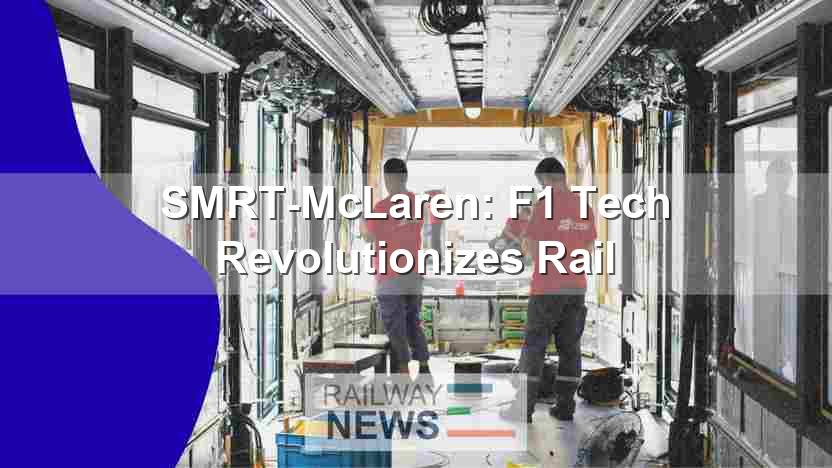
This article explores the innovative partnership between SMRT Trains, a Singapore-based transport operator, and McLaren Applied Technologies, a UK-based technology company specializing in high-performance data analysis. Their collaboration focuses on adapting Formula 1 condition-monitoring technology for application within Singapore’s Mass Rapid Transit (MRT) system. The aim is to significantly improve the reliability, safety, and efficiency of the MRT network through predictive maintenance and real-time performance monitoring. This initiative represents a significant leap in the application of cutting-edge technology from the motorsport industry to the public transportation sector, showcasing the potential for cross-industry innovation to address real-world challenges. This article will delve into the specifics of the technology transfer, the implementation strategy, and the potential long-term benefits for both SMRT and its commuters.
Condition Monitoring in Formula 1 and its Applicability to Rail
Formula 1 racing teams rely heavily on sophisticated condition monitoring systems to ensure optimal vehicle performance and prevent catastrophic failures during races. These systems utilize a network of sensors to collect real-time data on various parameters, such as engine temperature, tire pressure, brake wear, and aerodynamic forces. This data is then analyzed using advanced algorithms to provide immediate insights into the vehicle’s condition, allowing for proactive maintenance and strategic adjustments during the race. This same principle can be applied to rail systems, where early detection of potential failures in critical components such as train motors, brakes, pneumatic systems, and gearboxes can significantly improve operational reliability and passenger safety.
SMRT’s Approach: A Proof-of-Concept Study
SMRT’s collaboration with McLaren involves a phased approach, starting with a proof-of-concept study on a single train. The goal is to adapt and integrate McLaren’s condition-monitoring technology into a test train, customizing the system to monitor the specific components and operational parameters relevant to the MRT system. This initial phase will allow SMRT to evaluate the technology’s effectiveness, identify any necessary adjustments, and refine the data analysis techniques specific to the railway environment. The success of the proof-of-concept will determine the subsequent implementation across the wider MRT fleet.
Data Analysis and Predictive Maintenance
The core value proposition of this collaboration lies in the potential for predictive maintenance. By continuously monitoring the condition of critical train components, SMRT can identify potential problems before they lead to failures. This proactive approach can minimize unscheduled downtime, reduce the frequency of delays and disruptions, and ultimately enhance passenger experience. The data analysis capabilities of McLaren’s technology will play a crucial role in identifying subtle patterns and anomalies that may indicate impending failures. Advanced algorithms can predict maintenance needs with greater accuracy, optimizing maintenance schedules and minimizing costs associated with reactive repairs.
Expected Benefits and Future Implications
Successful implementation of McLaren’s technology on the SMRT network has the potential to yield numerous benefits, including:
- Improved Safety: Early detection of potential failures can prevent accidents and enhance overall safety for passengers and staff.
- Enhanced Reliability: Predictive maintenance will minimize service disruptions and improve the punctuality of train services.
- Optimized Performance: Real-time monitoring enables adjustments to train operations to optimize energy efficiency and overall performance.
- Reduced Maintenance Costs: Proactive maintenance reduces the need for expensive emergency repairs and minimizes overall maintenance costs.
- Improved Passenger Experience: Reliable and punctual services contribute directly to a more positive passenger experience.
The success of this initiative could serve as a model for other rail operators globally, demonstrating the value of applying cutting-edge technology from other sectors to improve rail transportation systems. It underscores the potential of cross-industry collaboration to drive innovation and solve complex challenges within the railway industry. The focus on data-driven insights and predictive capabilities represents a significant step towards a more efficient, reliable, and safe public transportation future.
Conclusions
The partnership between SMRT and McLaren Applied Technologies marks a significant development in the application of advanced technology to enhance railway operations. The transfer of Formula 1 condition-monitoring technology to the MRT system represents a pioneering approach to predictive maintenance and real-time performance optimization. The project, beginning with a proof-of-concept study on a single train, aims to leverage the power of data analytics to improve safety, reliability, and overall passenger experience. The integration of sensors, telemetry, and sophisticated software allows for proactive identification and mitigation of potential failures in critical train components, leading to a reduction in unscheduled downtime and maintenance costs. The anticipated benefits include improved safety, enhanced reliability, optimized performance, and a more positive passenger experience. The success of this initiative not only benefits SMRT and its commuters but also sets a precedent for the wider adoption of similar technologies across the global railway industry, signifying a significant step forward in the pursuit of safer, more efficient, and sustainable public transport systems. The long-term implications of this collaboration extend beyond immediate operational improvements, highlighting the potential for inter-industry knowledge sharing and technological innovation to address common challenges in various sectors. The data-driven approach to maintenance, enabled by this technology, paves the way for a more proactive and cost-effective approach to managing complex railway infrastructure.

Railway infrastructure, rolling stock and transport technologies specialist focused on global rail industry developments, high-speed rail systems, signaling technologies and freight transportation. Covering railway investments, public transport modernization, rail operations and international mobility projects across Europe, Asia and North America.
RELATED POSTS

September 6, 2026 5:19 am
Hitachi delivered Taiwan's first N700ST high-speed train from Japan in...

September 5, 2026 4:19 pm
CPK launched formal tender talks with four consortia to design...

September 5, 2026 7:14 pm
HS2 Ltd signed renegotiated civils contracts with EKFB and Align...

September 6, 2026 4:12 am
Alstom delivered the first of 100 new G Class trams...

September 6, 2026 1:17 am
Hitachi Toshiba Supreme Consortium confirmed the first of 12 N700ST...

September 6, 2026 6:17 am
Hungary ordered a national ban on most freight trains from...