
Skanska’s Bergen Light Rail: Sustainable Urban Transit
Skanska’s Bergen light rail project: Sustainable innovation in urban rail, delivering efficient solutions and setting a global standard. Discover how!
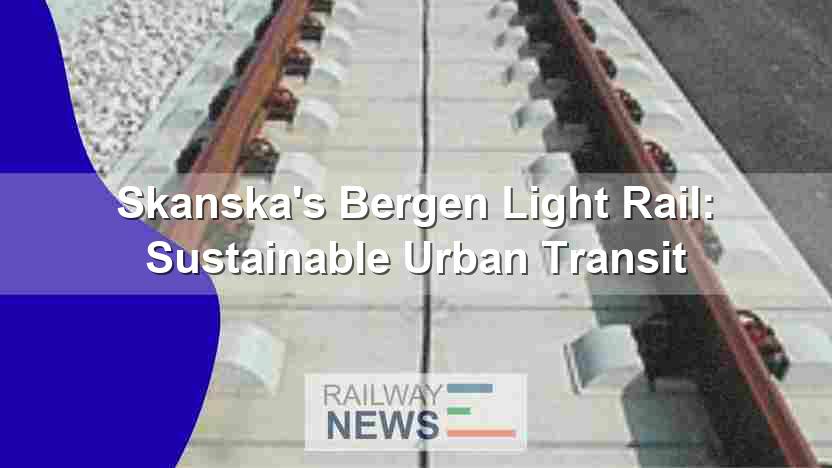
This article examines Skanska’s significant contribution to Bergen, Norway’s light rail expansion, focusing on the challenges and innovations involved in constructing a modern, sustainable urban transit system. The project, awarded to Skanska in June 2019 for approximately Nkr982m ($113.4m), represents a crucial step in improving Bergen’s public transport infrastructure and reducing reliance on private vehicles. We will analyze the project’s scope, the technological advancements employed, the commitment to sustainability, and the broader implications for urban planning and the light rail industry. The case study provides valuable insights into the complexities of large-scale urban infrastructure projects, highlighting the importance of meticulous planning, innovative engineering solutions, and a strong focus on environmental responsibility. We will also briefly compare this project to similar undertakings undertaken by Skanska in other regions, emphasizing the company’s global expertise in light rail construction.
The Bergen Light Rail Expansion: Project Scope and Challenges
Skanska’s contract with the Hordaland municipality encompassed the construction of a crucial section of Bergen’s light rail network, linking Fyllingsdalen to the city center. This involved the construction of a 1200-meter tunnel, a new station hall, and extensive supporting infrastructure. The project presented several engineering challenges, including navigating complex urban environments, minimizing disruption to existing infrastructure and daily life, and ensuring the timely and efficient execution of tunneling operations. The creation of multiple large concrete foundations required advanced engineering and logistical planning to ensure structural integrity and stability.
Sustainability and Environmental Considerations
Skanska’s commitment to sustainability was a key aspect of the Bergen project. The company implemented several strategies to reduce the project’s carbon footprint, including the utilization of biofuels in machinery, the adoption of electric-powered equipment, and the use of low-carbon concrete. This dedication to environmentally friendly practices aligns with growing global concerns regarding the environmental impact of construction activities and highlights the increasing importance of sustainable urban development in the rail sector. The project’s certification under Ceequal (Construction Excellence Environmental Quality Assessment and Rating System) further underlines Skanska’s commitment to responsible construction practices.
Technological Advancements and Engineering Solutions
The Bergen project showcased Skanska’s expertise in deploying advanced technologies and engineering techniques to overcome project challenges. Precise tunneling methods, along with sophisticated monitoring and control systems, were implemented to ensure safety and precision throughout the tunnel construction phase. Advanced planning and project management tools were also critical in coordinating the various stages of the project, ensuring efficient resource allocation and timely completion.
Comparison with other Skanska Light Rail Projects
Skanska’s experience in the light rail sector extends beyond the Bergen project. The company’s involvement in the Lynnwood Link L300 light-rail expansion project in Washington, USA, exemplifies their broader expertise. This project, worth $57 million, involved significant enabling works including demolition, utility relocation, and extensive earthworks across a 6km stretch. These projects, while geographically diverse, highlight Skanska’s consistent approach to combining technological innovation, sustainability, and efficient project management in delivering complex light rail infrastructure.
Conclusion
The Skanska-led light rail project in Bergen stands as a testament to the company’s expertise in delivering large-scale, sustainable urban infrastructure projects. The successful completion of the project, connecting Fyllingsdalen to the city center via a 1200-meter tunnel and a new station, significantly enhances Bergen’s public transport system. The project’s focus on sustainability, through the use of biofuels, electric machinery, and low-carbon concrete, exemplifies a growing trend towards environmentally responsible construction practices within the rail industry. The implementation of advanced engineering solutions and meticulous project management were critical to overcoming the complexities inherent in constructing a light rail line within an existing urban environment. Additionally, comparison with Skanska’s work on projects like the Lynnwood Link L300 highlights the company’s consistent approach and substantial experience in this specialized sector. The Bergen project serves as a valuable case study for other municipalities seeking to develop or expand their light rail networks, emphasizing the importance of careful planning, innovative engineering, and a robust commitment to sustainability. The successful integration of cutting-edge technologies and environmentally conscious practices will be critical for future light rail projects seeking to meet the demands of a growing urban population while minimizing their environmental impact. The project’s overall success strengthens Bergen’s position as a leader in sustainable urban transport, offering lessons for global light rail development.

Railway infrastructure, rolling stock and transport technologies specialist focused on global rail industry developments, high-speed rail systems, signaling technologies and freight transportation. Covering railway investments, public transport modernization, rail operations and international mobility projects across Europe, Asia and North America.
RELATED POSTS

October 1, 2026 7:09 am
United States regulators confirmed a September 30 deadline for the...

October 1, 2026 12:13 am
Illinois approved $1.5 billion annually for the Northern Illinois Transit...

October 1, 2026 6:10 am
Amtrak approved a System Expansion Committee on July 30 to...
October 1, 2026 4:10 am
DART launched two public ridership dashboards in March 2026 to...
October 1, 2026 3:12 am
Greenbrier confirmed Brian Comstock as new president and CEO effective...
October 1, 2026 5:14 am
Siemens confirmed delivery of the first new S200 train to...