
Siemens & Railpool to Build €20M Locomotive Hub in Italy for Alpine Freight
Siemens Mobility and Railpool are building a €20 million **locomotive maintenance hub** in Verona, Italy. This boosts capacity for **rail** freight operations, especially post-Brenner Tunnel opening.
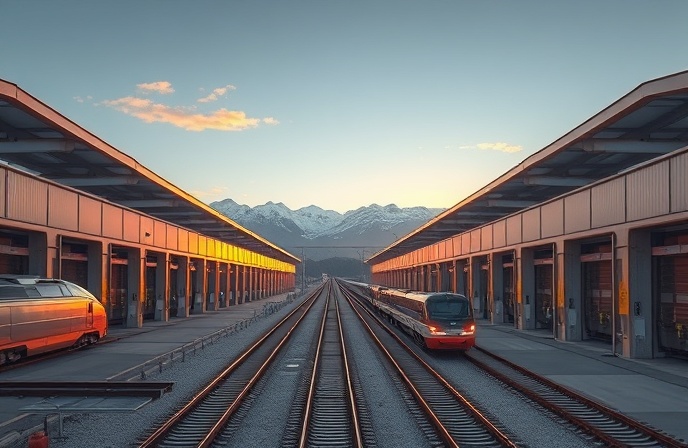
Siemens Mobility and Railpool are set to jointly construct a €20 million open-access locomotive maintenance hub in Verona, Italy. This strategic development aims to bolster capacity for cross-Alpine freight operations and cater to anticipated demand surges, particularly following the forthcoming opening of the Brenner Base Tunnel.
| Key Entity | Critical Detail |
|---|---|
| Companies Involved | Siemens Mobility, Railpool |
| Project | €20 million open-access locomotive maintenance hub |
| Location | Verona Interporto logistics complex, Verona, Italy |
| Timeline | Preliminary deal signed; facility to support demand expected by 2032. Project announced 11 December 2025. |
| Investment Value | Approximately €20 million |
Siemens Mobility and Railpool have formalized plans to develop a significant locomotive maintenance hub in Verona, Italy. The joint venture, anchored by a preliminary deal to acquire a 15,000m² plot within the Verona Interporto logistics complex, will see an investment of approximately €20 million. This new facility is designed as an “open access” depot, significantly expanding maintenance capacity for various locomotive types and is strategically positioned to support the anticipated substantial growth in cross-Alpine freight volumes. The project is expected to be operational in time to meet rising demand by 2032, a period that will coincide with the opening of the Brenner Base Tunnel, set to double Alpine rail freight capacity.
Supporting Evolving Industry Needs
The Verona maintenance hub is engineered to address the dynamic requirements of the European rail freight sector. It will feature five tracks dedicated to light maintenance and a specialized wheel-lathe track, enabling comprehensive testing of multisystem and DC locomotives. Crucially, the facility will support all major European signalling systems. Siemens Mobility emphasizes that the design focuses on optimizing lifecycle performance, facilitating routine inspections, adjustments, and rapid-turnaround maintenance. This capability is vital for maximizing fleet uptime for operators navigating one of Europe’s most critical and congested freight corridors.
This Verona project represents a significant expansion of Siemens Mobility’s operational footprint within Italy. It will serve as a complementary asset to the company’s established Novara Rail Service Center, which has been providing full service for over 120 locomotives on the Rhine–Alpine TEN-T route since 2015. With one of the world’s most extensive rail service networks, comprising over 100 locations in more than 30 countries and employing around 7,000 specialists, Siemens Mobility is well-positioned to integrate and manage such high-capacity facilities.
For Railpool, the integration of the Verona hub into its existing European maintenance network signifies a strategic enhancement of its operational capabilities. This collaboration builds upon a robust framework agreement established in 2024, which includes the delivery of up to 250 Siemens locomotives. These locomotives are specified as multisystem Vectron variants, capable of operating across 16 countries and multiple key European rail corridors, underscoring the growing need for cross-border interoperability and advanced maintenance support.
Last June 2025, we published an article about Renfe’s cutting-edge Aranjuez maintenance hub. Click here to read – Future of Rail: Renfe’s Railway Technology Hub, Aranjuez: Essential Guide
Industry Context
The announcement underscores a proactive response from key industry players to the projected surge in rail freight demand across the Alps, particularly driven by the imminent completion of the Brenner Base Tunnel. By investing in advanced, open-access maintenance infrastructure, Siemens Mobility and Railpool are not only securing their own operational efficiency but also facilitating a broader modal shift towards rail for freight transport. This development is critical for European logistics executives aiming to de-carbonize supply chains and enhance the resilience and capacity of transcontinental cargo movements, anticipating a transformative impact on intermodal connectivity and sustainability goals.
RELATED POSTS

January 11, 2019 9:47 pm
China's investing 6,800km in new railway lines—a massive undertaking impacting...
June 28, 2025 4:33 am
Barcelona Airport rail access project, 80% complete, nears completion. ...

May 1, 2017 1:00 pm
Alstom and the RATP have successfully completed an initial experiment...
April 1, 2018 11:17 pm
Rotterdam's Theemsweg freight line upgrade is underway! The SaVe...
August 24, 2022 11:47 am
This article explores the significant advancements in Perth’s public transportation...
January 28, 2018 1:15 am
High-speed rail's future is here. Master the challenges, seize...