
Siemens Mobility, Sporveien Launch CBTC on Oslo Metro, Boosting
Siemens Mobility launches new CBTC system on Oslo Metro, boosting capacity by 30%. This railway project advances operational efficiency and supports emission-free goals.
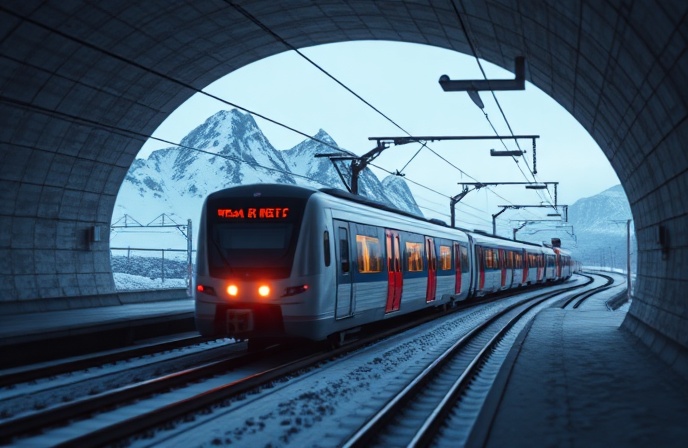
Siemens Mobility and Oslo’s public transport operator Sporveien have successfully launched a new Communications-Based Train Control (CBTC) system in passenger service on a 3km segment of the Oslo Metro. This milestone marks a significant advancement in the network’s operational capabilities and is a key component of a broader €270 million ($313 million) project aimed at modernizing Norway’s capital city transit.
| Key Entity | Critical Detail |
|---|---|
| Companies | Siemens Mobility, Sporveien, Bane NOR |
| Core Action | Deployment of new CBTC system, network-wide signalling upgrade |
| Budget/Value | €270 million ($313 million) project, €2 billion national rail infrastructure project |
| Date/Timeline | New CBTC now in passenger service (specific date not provided) |
| Location | Oslo Metro, Norway |
| Capacity Increase | From 28 to 36 trains per hour (approx. 30% rise), with potential for up to 40 trains per hour |
The deployment on the 3km Oslo Metro segment is the initial phase of a detailed network-wide upgrade managed by Siemens Mobility. The contract mandates the replacement of the entire 86-km legacy signalling system and the seamless integration of the new Fornebubanen line. This initiative is crucial for enhancing the efficiency and capacity of Oslo’s urban rail network, directly supporting the city’s ambitious environmental goals.
Strategic Impact
Sporveien highlights that these advancements are pivotal in achieving Oslo’s objective of becoming an emission-free city. By enabling more trains to operate safely and efficiently, the CBTC system reduces energy consumption per passenger and contributes to a more sustainable public transport offering. The upgrade will eventually cover the entire Oslo Metro network, including the 8km Fornebubanen extension with its six new stations, promising a significant boost in overall transit capacity and service reliability for the growing metropolitan area.
Operational Details
The newly implemented CBTC system operates at Grade of Automation Level 2 (GoA2), a standard that allows for increased train frequency while maintaining high safety levels. This upgrade has already boosted the line’s handling capacity from 28 to 36 trains per hour, representing an approximate 30% increase. The technical design of the CBTC solution is engineered for even greater potential, capable of supporting up to 40 trains per hour if fully utilized. This would translate to a total capacity increase of over 40% compared to previous operational levels.
Last June 2025, we published an article about Renfe’s cutting-edge Aranjuez maintenance hub. Click here to read – Future of Rail: Renfe’s Railway Technology Hub, Aranjuez: Essential Guide
Industry Context
This deployment by Siemens Mobility and Sporveien underscores the global trend towards the adoption of advanced train control systems to meet the demands of urban mobility and sustainability. The project aligns with larger infrastructure development efforts, such as Bane NOR’s €2 billion initiative to centralize control and monitoring of 4,200km of mainline tracks and over 350 stations. For railway operators and manufacturers, such projects represent significant opportunities to showcase technological prowess, enhance operational efficiency, and contribute to the decarbonization of public transport, a critical imperative for cities worldwide.

Railway infrastructure, rolling stock and transport technologies specialist focused on global rail industry developments, high-speed rail systems, signaling technologies and freight transportation. Covering railway investments, public transport modernization, rail operations and international mobility projects across Europe, Asia and North America.
RELATED POSTS
September 6, 2026 5:19 am
Hitachi delivered Taiwan's first N700ST high-speed train from Japan in...
September 6, 2026 1:17 am
Hitachi Toshiba Supreme Consortium confirmed the first of 12 N700ST...

September 7, 2026 8:16 am
Midea, Gree and TCL shipped air conditioners via China Railway...

September 19, 2026 11:19 am
China launched an experimental 1.11-tonne maglev test sled to 800...
September 7, 2026 11:16 pm
China Railway Tunnel Group completed the 11.3-km underwater Yangtze tunnel...
September 6, 2026 12:20 pm
Indian Railways ordered a probe after a fire destroyed 2...