
Siemens, LAN, Thales: Rail Infrastructure Advancements
Global railway modernization is accelerating! See how Siemens, LAN, and Thales are leading the charge with cutting-edge signaling and infrastructure projects, transforming rail networks worldwide.
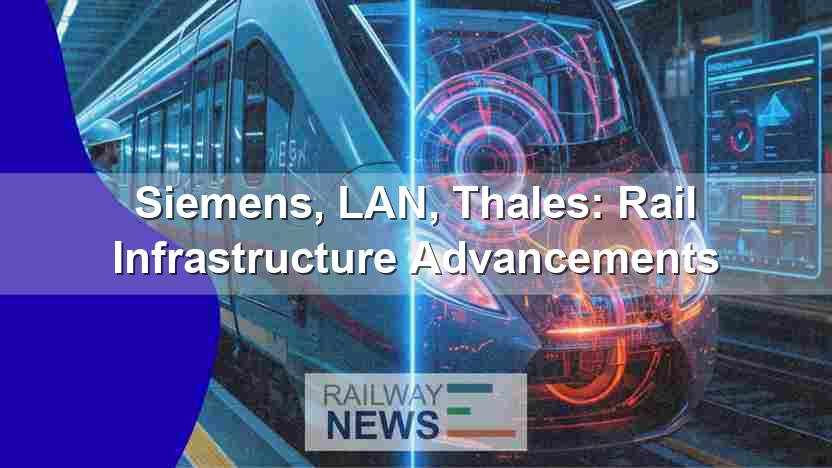
The global railway industry is experiencing a period of significant expansion and modernization, driven by increasing passenger demand and the need for improved efficiency and safety. This article examines several large-scale projects underway, focusing on the key technological advancements and the roles of major players like Siemens, Lockwood, Andrews & Newnam (LAN), and Thales. We will delve into the specifics of recent contracts awarded to these companies, exploring the technologies employed, the challenges faced, and the potential impact on the overall performance and capacity of the involved railway systems. The analysis will highlight the importance of sophisticated signaling systems, such as Communications-Based Train Control (CBTC), and the crucial role of robust infrastructure upgrades in enhancing the reliability and passenger experience of modern rail networks. This exploration will provide valuable insights into the current trends and future direction of railway technology development worldwide.
Siemens’ Contribution to Singapore’s Downtown Line Expansion
Siemens has secured a substantial €90 million ($111 million USD) contract from the Singaporean Land Transport Authority (LTA) for the Downtown Line 3 (DTL3) extension project. This project involves the deployment of Siemens’ cutting-edge Communications-Based Train Control (CBTC) system. CBTC is a crucial technology for automated train operation, enabling precise train spacing, increased capacity, and improved safety. The system will be implemented across two new stations and a depot, facilitating fully automated train operations and optimizing the overall efficiency of the line. Additionally, Siemens will be responsible for supplying platform screen doors (PSD) for these new stations, enhancing passenger safety and improving the overall passenger experience. This contract builds upon Siemens’ prior involvement in the DTL project, demonstrating the company’s consistent contribution to Singapore’s modern and efficient mass transit system.
Platform Extensions and Upgrades for Dallas Area Rapid Transit (DART)
Lockwood, Andrews & Newnam (LAN), a prominent US-based engineering firm, has been selected by DART to undertake a significant platform extension project across 28 stations in the Dallas-Fort Worth area. This $124 million project focuses on modifying existing platforms along the Red and Blue light rail lines to accommodate longer, three-car trains. This expansion will significantly increase the system’s passenger capacity and address growing ridership demands. The project involves a complex array of tasks, including increasing platform levels and extending platforms at various locations, encompassing aerial, at-grade, and below-grade stations. The successful completion of this project will dramatically improve the operational efficiency and passenger experience of DART’s light rail network.
Thales’ Role in Enhancing Metro Bilbao’s Control Center Capabilities
Thales, a leading technology company in the rail sector, is collaborating with Metro Bilbao to construct a new backup control center. This initiative aims to significantly improve the overall efficiency and resilience of the rail system. The new control center, located in Talleres de Ariz, will operate in parallel with the existing facility, providing redundancy and ensuring uninterrupted operations during unforeseen circumstances. Thales’ design will consider the network’s specific traffic density and passenger flow patterns, optimizing system performance and operational responsiveness. Beyond core operational support (communications, traffic management, and energy monitoring), the backup control center will integrate a driver management module, improving workforce allocation and operational efficiency. The project also includes enhancements to the security systems of the existing control center, reinforcing overall system security and data protection.
Conclusion
The projects discussed above highlight the ongoing modernization and expansion within the global railway sector. Siemens’ involvement in Singapore demonstrates the increasing reliance on advanced signaling technologies like CBTC to optimize automated train operations and enhance capacity. LAN’s work with DART underscores the importance of infrastructure upgrades to meet growing passenger demand and improve operational efficiency. Finally, Thales’ contribution to Metro Bilbao showcases the critical need for robust and resilient control systems to ensure the smooth and safe operation of railway networks. Each project showcases a different facet of modern railway development, from signaling technology and automation to infrastructure upgrades and enhanced control center capabilities. The success of these projects rests not only on technological advancements but also on effective project management, skilled engineering, and close collaboration between stakeholders. Moving forward, the railway industry will likely see an even greater emphasis on technological innovation, data-driven decision-making, and sustainable infrastructure development to meet the growing global demands for efficient and reliable passenger and freight transportation.
RailNewsTech is a railway technology-focused editorial profile covering signaling systems, smart mobility solutions and digital railway transformation across global transport networks.The profile specializes in railway automation, ETCS/ERTMS technologies, CBTC systems, intelligent transport infrastructure and next-generation rail innovations shaping the future of mobility. Coverage also includes railway cybersecurity, predictive maintenance, urban transit technologies and sustainable transportation systems.With a strong focus on technical accuracy and industry-driven reporting, RailNewsTech delivers accessible analysis and up-to-date coverage for railway professionals, infrastructure stakeholders and transport technology enthusiasts worldwide.
RELATED POSTS
September 6, 2026 5:19 am
Hitachi delivered Taiwan's first N700ST high-speed train from Japan in...

September 5, 2026 4:19 pm
CPK launched formal tender talks with four consortia to design...

September 6, 2026 4:12 am
Alstom delivered the first of 100 new G Class trams...
September 5, 2026 7:14 pm
HS2 Ltd signed renegotiated civils contracts with EKFB and Align...
September 6, 2026 1:17 am
Hitachi Toshiba Supreme Consortium confirmed the first of 12 N700ST...
September 6, 2026 6:17 am
Hungary ordered a national ban on most freight trains from...