
Siemens in Thailand: Modernizing Rail Transit
Introduction
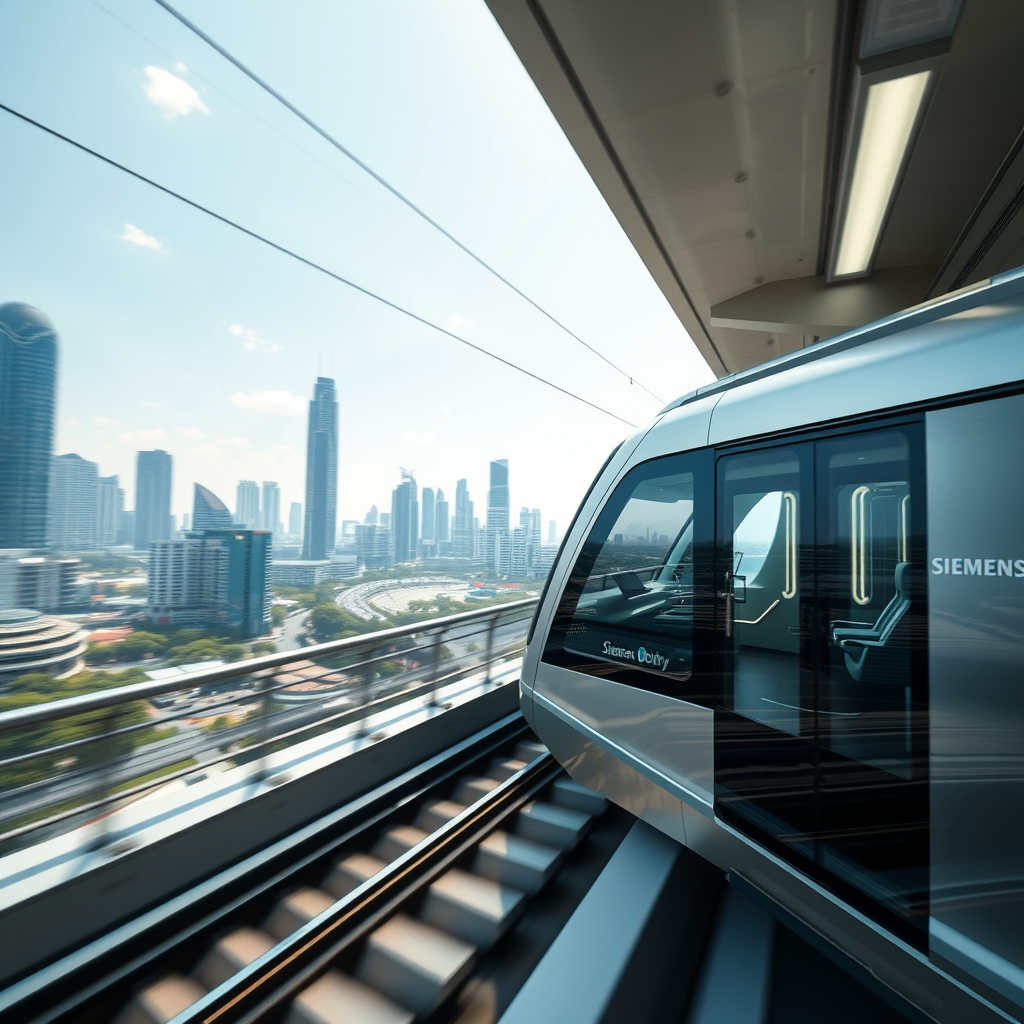
This article examines Siemens Mobility’s significant contribution to the expansion and modernization of Thailand’s railway infrastructure. The company’s involvement encompasses multiple projects, focusing on enhancing capacity, efficiency, and sustainability within Bangkok’s Metropolitan Rapid Transit (MRT) system and expanding intercity rail connectivity in Northern Thailand. These initiatives represent a substantial investment in upgrading Thailand’s public transportation network, employing cutting-edge technology and long-term maintenance strategies. We will delve into the specifics of the contracts awarded to Siemens and its consortium partners, analyzing the technological advancements implemented and the overall impact on Thailand’s transportation landscape. The scope of this analysis will cover the technical specifications of the projects, the strategic partnerships involved, and the long-term implications for both commuters and the country’s economic development.
Siemens Mobility’s Contribution to Bangkok’s MRT System
Siemens Mobility, in collaboration with Bozankaya and ST Engineering, has secured crucial contracts for both the Orange and Blue Lines of Bangkok’s MRT system. For the Orange Line (35.9 km), the project involves the supply of 32 three-car trains, encompassing the design, installation, and integration of complete mechanical and electrical systems. This includes not only the rolling stock but also signaling, communication systems, platform screen doors (PSD), and advanced passenger information systems (PIS). The integration of these systems is critical for ensuring seamless and efficient train operations. The company also commits to providing extensive long-term maintenance, guaranteeing reliable operations and minimizing service disruptions.
Similarly, the Blue Line project involves the delivery of 21 new trains and a comprehensive upgrade of the signaling and Supervisory Control and Data Acquisition (SCADA) systems. This 48km line, with its 38 stations, is a vital artery of Bangkok’s transportation network. Again, Siemens’ commitment extends to long-term maintenance encompassing rolling stock, communication, signaling systems, PSDs, and power supply, ensuring the continued smooth operation of this critical line until 2039.
Expanding Intercity Rail Connectivity in Northern Thailand
Beyond Bangkok, Siemens Mobility plays a pivotal role in enhancing intercity rail connectivity in Northern Thailand through the Den Chai–Chiang Rai–Chiang Khong double-track railway project. This project focuses on implementing advanced signaling and telecommunication systems, including Centralized Traffic Control (CTC) and Automatic Train Protection (ATP) systems. These systems are essential for improving safety, efficiency, and capacity on the railway line. The integration of Trackguard Westrace MKII interlocking technology further enhances safety and operational efficiency, showcasing Siemens’ commitment to utilizing state-of-the-art technology for this crucial infrastructure upgrade.
Siemens’ Technological Advancements and Global Impact
The technological advancements incorporated in these projects demonstrate Siemens Mobility’s commitment to providing sustainable and efficient railway solutions. The use of advanced signaling and control systems, coupled with modern rolling stock featuring spacious interiors, strong air conditioning, and advanced PIS, significantly improves the passenger experience. This commitment to innovation extends beyond Thailand. The recent planning permission obtained for a new £100 million rail technology facility in Chippenham, UK, highlights Siemens’ ongoing investment in research and development, driving the creation of next-generation rail signaling and control systems, solidifying their position as a leader in the global rail industry. The parallel deal to supply Vectron locomotives to Green Mobility Partners in Europe further demonstrates their global reach and commitment to sustainable transport solutions.
Conclusions
Siemens Mobility’s multifaceted involvement in Thailand’s railway projects represents a significant step forward in modernizing and expanding the country’s transportation infrastructure. The contracts secured for Bangkok’s MRT system, encompassing both the Orange and Blue Lines, demonstrate a commitment to enhancing capacity, efficiency, and passenger comfort through the integration of advanced technological solutions and long-term maintenance strategies. The upgrade of signaling, communication, and SCADA systems significantly improves safety and operational efficiency. Furthermore, Siemens’ contribution to the Northern Thailand intercity rail project underscores its role in connecting regional areas through the implementation of cutting-edge signaling and telecommunication systems. The company’s investment in a new state-of-the-art facility in the UK and its supply agreements for Vectron locomotives further highlight its dedication to research, development, and global expansion within the rail industry. In conclusion, Siemens Mobility’s work in Thailand not only modernizes the country’s transportation network but also establishes a model for sustainable and efficient railway development worldwide, demonstrating the potential for significant technological advancements in public transport systems to benefit both commuters and national economic growth.
RELATED POSTS

June 10, 2010 3:07 am
Kazakhstan has signed supply contracts and rail sector cooperation agreements...

October 14, 2019 9:15 pm
This article explores the strategic implementation of Infor’s Enterprise Asset...

October 8, 2025 4:54 am
Metra completes a $33.9M **station rehabilitation** on its Electric Line,...
October 27, 2023 5:53 am
The European Union’s Legal Challenge Against Spain’s Railway Infrastructure: A...
July 7, 2021 5:48 pm
This article examines the recent extensive refurbishment of Swansea railway...

January 16, 2017 6:07 am
Indonesia and Japan have agreed to an initial discussion for...