
Siemens, CAF Rail Innovations: Global Trends
Rail’s future is now! Billions are being invested in innovative high-speed rail and rolling stock upgrades – discover how these projects are transforming the industry.
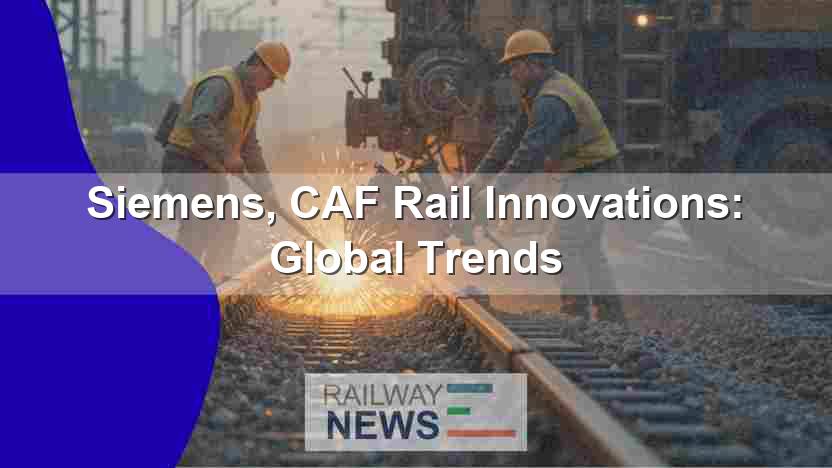
The global railway industry is experiencing a period of significant transformation, driven by technological advancements, increasing passenger demand, and a growing focus on sustainability. This article examines several recent major rail contracts awarded to various companies, highlighting the innovative technologies and infrastructure developments shaping the future of rail transport. These deals encompass a wide range of projects, from the procurement of new rolling stock for existing lines to the development of entirely new high-speed transportation systems utilizing cutting-edge tunneling technology. We will analyze these contracts to understand the trends impacting the industry, the technological leaps being made, and the implications for both passengers and the environment. The analysis will cover various aspects including the financial scope of the projects, the technological innovations implemented, and the long-term strategic impact on urban and intercity transportation.
Siemens Mobility’s Piccadilly Line Upgrade
Transport for London (TfL) awarded Siemens Mobility a £1.5 billion ($1.98 billion) contract for the design and construction of 94 new Tube trains for the Piccadilly line. This substantial investment represents a key component of TfL’s Deep Tube Upgrade program, aimed at modernizing the London Underground network. The project underscores the ongoing need for rolling stock replacement and upgrades to enhance passenger capacity, improve reliability, and integrate modern technologies for enhanced safety and efficiency. The establishment of a new Siemens Mobility manufacturing and commissioning facility in Goole, East Yorkshire, further signifies the economic impact of such large-scale infrastructure projects, contributing to job creation and regional development.
The Boring Company’s Chicago Express Loop
The Chicago Infrastructure Trust (CIT) selected The Boring Company to construct the Chicago Express Loop, a high-speed transportation link connecting Chicago with O’Hare International Airport. This project showcases the growing interest in innovative, high-speed transportation solutions to address urban congestion. The proposed system, utilizing battery-powered autonomous vehicles traveling at 150 mph (241 km/h) through tunnels constructed by The Boring Company, promises significantly reduced travel times compared to existing transportation options. The contract encompasses the design, construction, operation, and maintenance of the entire system, demonstrating a growing trend towards public-private partnerships in the delivery of large-scale infrastructure projects. The Boring Company’s approach emphasizes a departure from traditional mass transit methods, prioritizing speed and efficiency through a technologically advanced system.
CAF’s Oslo Tram Supply and other notable contracts
Sporveien, the Norwegian public transport operator, awarded CAF a €200 million ($231.5 million) contract for 87 new trams for Oslo’s rail network, with an option for an additional 60. This deal highlights the increasing demand for sustainable and environmentally friendly rolling stock. The emphasis on mitigating environmental impact throughout the trams’ operational life underscores the growing importance of sustainability in the rail industry. Other significant contracts, such as those awarded to Transtech Oy for ForCity Smart Artic trams in Helsinki and Alstom for Citadis trams in Frankfurt, further illustrate the global demand for modern, high-capacity trams designed to meet the needs of expanding urban areas.
Material Supply and Long-Term Partnerships
The extension of TfL’s rail supply contract with British Steel highlights the importance of long-term partnerships within the supply chain. The consistent supply of crucial materials like HP335 and Zinoco rails ensures the ongoing maintenance and upgrade of the London Underground network. These long-term agreements demonstrate the significance of reliable sourcing and supply chain management in supporting the effective delivery of major rail infrastructure projects. Securing consistent material supply chains is vital for predictable project timelines and cost control.
Conclusions
The rail industry is undergoing a period of significant growth and innovation, driven by the need for efficient, sustainable, and high-capacity transportation systems. The contracts discussed in this article illustrate key trends shaping the future of rail. The significant investments in new rolling stock, such as the Siemens Mobility contract for the Piccadilly line and CAF’s tram supply for Oslo, highlight the ongoing efforts to modernize existing networks and enhance passenger experience. The emergence of innovative technologies, exemplified by The Boring Company’s high-speed tunnel system, challenges traditional approaches to urban transport and offers promising solutions to alleviate congestion. The emphasis on sustainable practices, evident in the design of the new trams for Oslo and Helsinki, underlines the industry’s commitment to environmentally responsible development. Finally, the importance of strong and reliable supply chains, as demonstrated by the extended contract between TfL and British Steel, underscores the crucial role of effective collaboration in delivering successful rail infrastructure projects. The future of rail hinges on a combination of technological innovation, sustainable practices, and strategic partnerships to create efficient, resilient, and environmentally responsible transportation systems for the benefit of all.

Railway infrastructure, rolling stock and transport technologies specialist focused on global rail industry developments, high-speed rail systems, signaling technologies and freight transportation. Covering railway investments, public transport modernization, rail operations and international mobility projects across Europe, Asia and North America.
RELATED POSTS

October 1, 2026 12:13 am
Illinois approved $1.5 billion annually for the Northern Illinois Transit...
October 1, 2026 1:10 am
Georgia Ports Authority confirmed a $181 billion economic impact for...