
SICE’s Spanish Rail Security: System Advancements
Upgrade Spanish rail security with SICE’s Grade 3 system across 195 stations. Discover how this enhanced security boosts passenger safety and operational resilience!

Enhanced Security for Spanish Suburban Rail Networks: A Case Study of SICE’s Implementation
This article examines the significant upgrade in security infrastructure undertaken by Renfe (Spanish National Railway Company), Spain’s national railway operator, across its suburban rail networks in Madrid and Barcelona. The project, spearheaded by SICE Seguridad, focuses on the implementation of Grade 3 security systems at 195 stations, representing a substantial investment in enhancing passenger safety and operational security. This initiative demonstrates a commitment to improving security standards in line with the UNE-EN 50131-1 standard (a European standard for railway security systems), addressing potential vulnerabilities and mitigating risks within a high-traffic, public transportation environment. The implementation, encompassing closed-circuit television (CCTV) systems, access control, and intrusion detection system upgrades, showcases the complex integration required to achieve comprehensive security across a large-scale rail network. We will analyze the technical specifications, logistical challenges, and the broader implications of this significant security enhancement project.
System Design and Implementation
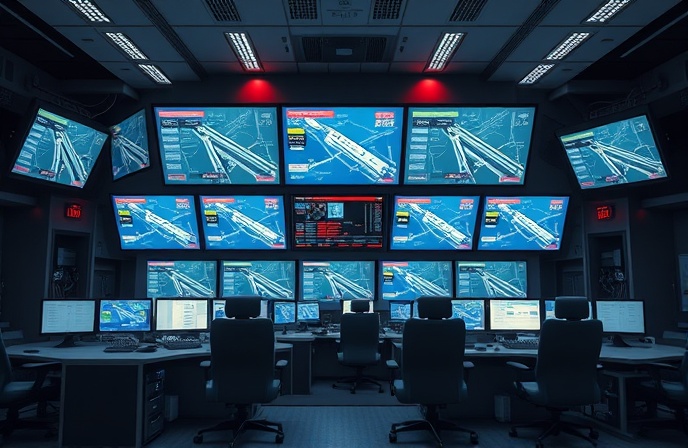
The core of the project involves the installation of Grade 3 security systems, as defined by UNE-EN 50131-1, across all Cercanías stations in Madrid and Barcelona. This grade signifies a medium/high-risk classification requiring robust security measures. The system integrates several key components: a comprehensive CCTV network utilizing 114 video recorders housed in 93 newly constructed technical rooms, ensuring wide-ranging surveillance coverage. Access control is enhanced through proximity readers installed in 70 technical rooms, restricting unauthorized entry to sensitive areas. Existing intrusion detection systems are modernized by replacing 185 central alarms and outdated components, aligning them with Grade 3 specifications. The project highlights the intricate coordination required for a large-scale deployment, encompassing the planning and construction of new technical rooms, the installation of numerous CCTV cameras and associated equipment, and the integration of all security systems into a centralized monitoring platform.
Technical Specifications and Compliance
The project’s success hinges on stringent adherence to the UNE-EN 50131-1 standard. This standard establishes four security grades based on risk assessment and dictates the necessary equipment and procedures for each grade. Grade 3, employed in this instance, mandates a robust and comprehensive security system capable of detecting and responding to a range of threats. The detailed specifications include the installation of specific CCTV equipment meeting performance standards, the integration of access control systems ensuring controlled entry, and the upgrade of intrusion detection systems to provide reliable threat detection and alarm management. All systems are linked to a central monitoring unit allowing for real-time surveillance and centralized response to any security incidents. The two-year warranty provided by SICE underpins the quality and reliability of the installed equipment and ensures ongoing support.
Logistical Challenges and Project Management
Implementing a project of this magnitude presents numerous logistical challenges. The coordination of work across 195 stations in two major metropolitan areas requires careful planning and precise execution. This involves managing multiple contractors, securing necessary permits, and coordinating work around ongoing railway operations to minimize disruption to services. The construction of 93 new technical rooms requires significant construction management, with considerations for building codes, electrical infrastructure, and environmental impact. Effective project management, employing robust scheduling and communication systems, is essential to ensure the timely and efficient completion of the project, within budget and to a high standard.
Broader Implications and Future Trends
The SICE project signifies a significant advancement in railway security in Spain. The enhanced security infrastructure provides improved passenger safety, deterring criminal activity and increasing the overall security of the rail network. This investment reflects a growing awareness of the importance of robust security systems in critical infrastructure. The project highlights the increasing adoption of integrated security systems, leveraging technological advancements to provide comprehensive protection. Future developments in railway security likely include advancements in video analytics, improved intrusion detection capabilities, and greater integration with other railway management systems. The trend towards greater automation and intelligent security solutions will continue to drive innovation in the field, improving the effectiveness and efficiency of security measures while enhancing passenger safety and operational resilience. The success of this implementation provides a valuable case study for other rail operators globally, demonstrating the feasibility and benefits of implementing advanced security systems in enhancing both security and passenger confidence.
RELATED POSTS

May 30, 2011 8:52 am
The Saudi Railway Company (SAR) of Saudi Arabia has completed...

July 5, 2025 2:33 am
Croatia's HŽPP orders 13 hybrid & battery trains, signaling a...
July 22, 2022 1:34 am
Introduction This article delves into the significant advancements and strategic...

September 7, 2025 8:30 pm
Kentucky allocates $7.5M in rail infrastructure grants, modernizing the state's...
July 23, 2025 6:33 pm
Amtrak's FMLA leave oversight is deficient, posing safety and operational...
February 1, 2021 8:43 pm
Revolutionize rail maintenance with i-RAMP's predictive power! AI-driven insights...