
Shenyang Metro Project: China Railway Technology
Shenyang Metro’s expansion showcases advanced railway technology, integrating international expertise to alleviate traffic congestion. Lines 1 & 2 are operational, with future lines planned.
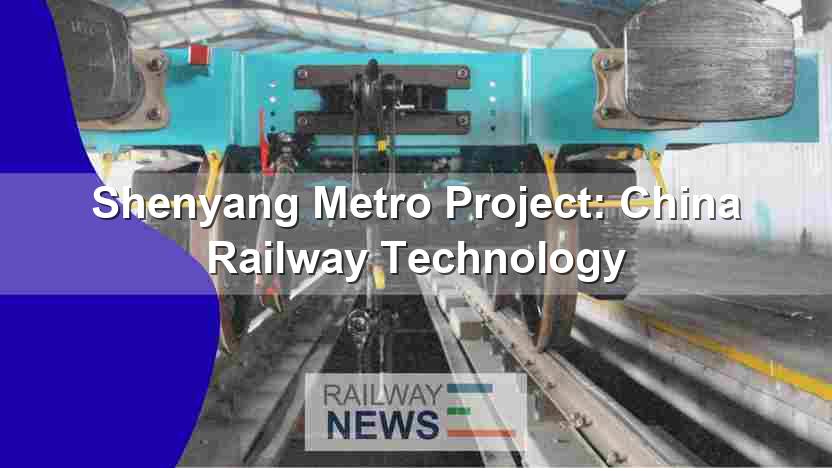
This article explores the technological advancements and infrastructural development of the Shenyang Metro system in China. The project, conceived to alleviate traffic congestion and provide a modern, efficient public transport solution for Shenyang’s burgeoning population, represents a significant investment in urban infrastructure. The ambitious scope includes the construction of multiple lines, integration with existing transportation networks, and the implementation of cutting-edge signaling and communication systems. Analyzing the project’s phases, technological choices, and future expansion plans reveals valuable insights into large-scale metro system development and the integration of international expertise within a rapidly growing urban environment. The article will delve into the specific technological choices made, the challenges faced during construction, and the long-term vision for the Shenyang Metro, demonstrating the complex interplay between engineering, finance, and urban planning.
Project Overview and Initial Stages
The Shenyang Metro, a long-envisioned project, finally gained momentum in the early 2000s following economic improvements in China. Initial plans, dating back to 1940, were hampered by financial constraints and political factors. However, the approval in 2005 paved the way for construction to begin on Line 1 in November of that year. The western section opened in September 2009, demonstrating the project’s ability to deliver phases despite inherent complexities. Simultaneously, Line 2 commenced construction in November 2006. This phased approach, prioritizing the initial core network before expanding outward, is a common strategy in large-scale metro projects, allowing for initial ridership data collection and iterative improvements in subsequent phases.
Technological Integration and Infrastructure
The Shenyang Metro’s development highlights the integration of international technology. Westinghouse provided Platform Screen Doors (PSD) for twelve stations on Line 1, enhancing passenger safety and environmental control. Fremator supplied elevator doors, contributing to overall accessibility. The communication and signaling systems employed showcase the city’s commitment to a modern, reliable system. EADS Secure Networks implemented a digital TETRA (Terrestrial Trunked Radio) radio communication system for Line 1, improving communication between control centers and trains. This system, combined with Ansaldo STS’s Communications-Based Train Control (CBTC) system, enhances operational efficiency, prevents collisions, and maintains safe speeds. The adoption of advanced technologies underscores Shenyang’s ambition to create a world-class metro system.
Line Specifications and Network Connectivity
The Shenyang Metro’s initial phase focused on Lines 1 and 2. Line 1, running east-west, connects Shisanhaojie and the Liming Cultural Museum, serving 22 underground stations. Line 2 runs north-south, connecting Shijiguangchang and Chongshanlu, with 19 underground stations. Crucially, the lines intersect at Qingniandajie station, improving connectivity and providing transfer opportunities for passengers. Future expansion plans aim to build Lines 3, 4, and 5, with the ultimate goal of an 11-line network. Integrating the metro with the city’s bus system is also under consideration, with plans for 20 strategically located bus stops to ensure seamless transitions between modes of transport. This integrated approach to public transportation is a key element of modern urban planning.
| Line | Length (km) | Stations | Orientation | Connection | Status |
|---|---|---|---|---|---|
| Line 1 | 28 | 22 | East-West | Shisanhaojie – Liming Cultural Museum | Operational |
| Line 2 | 22 | 19 | North-South | Shijiguangchang – Chongshanlu | Operational |
| Line 3-5 | To be determined | To be determined | To be determined | To be determined | Planned |
Conclusions and Future Prospects
The Shenyang Metro project exemplifies the transformative power of efficient public transportation in rapidly developing urban centers. The initial success of Lines 1 and 2, incorporating advanced technologies from international partners, sets a strong foundation for future expansion. The phased approach allows for continuous improvement and adaptation, based on real-world operational data. The strategic integration of various technological systems, including PSD, TETRA communication, and CBTC signaling, significantly enhances the system’s safety, efficiency, and reliability. The ultimate goal of an 11-line network, alongside the planned integration with the bus system, demonstrates a commitment to detailed urban mobility solutions. Additionally, the project’s success highlights the importance of international collaboration in developing large-scale infrastructure projects. Future challenges will likely involve addressing the complexities of expanding the network while minimizing disruption to the city and ensuring the long-term financial sustainability of the system. The Shenyang Metro’s journey offers a compelling case study for other cities undertaking similar ambitious transportation initiatives.
Company Information:
- MTR Corporation: A Hong Kong-based public transport operator.
- Westinghouse: A global supplier of railway systems and technologies. (Note: This refers to the Westinghouse Air Brake Company, which has since been acquired and reorganized, it’s crucial to clarify the specific entity involved.)
- Fremator: A company specializing in elevator door systems.
- EADS Secure Networks (now part of Airbus Defence and Space): A provider of secure communication systems.
- Ansaldo STS (now Hitachi Rail STS): A provider of signaling and train control systems.
- Shenyang Neusoft: A Chinese systems integrator.

Railway infrastructure, rolling stock and transport technologies specialist focused on global rail industry developments, high-speed rail systems, signaling technologies and freight transportation. Covering railway investments, public transport modernization, rail operations and international mobility projects across Europe, Asia and North America.