
Saudi Arabia’s Haramain HSR: Vision 2030’s Impact
The Haramain High-Speed Railway: A Saudi Arabian marvel, connecting pilgrims and boosting the economy with cutting-edge rail technology. Discover how!
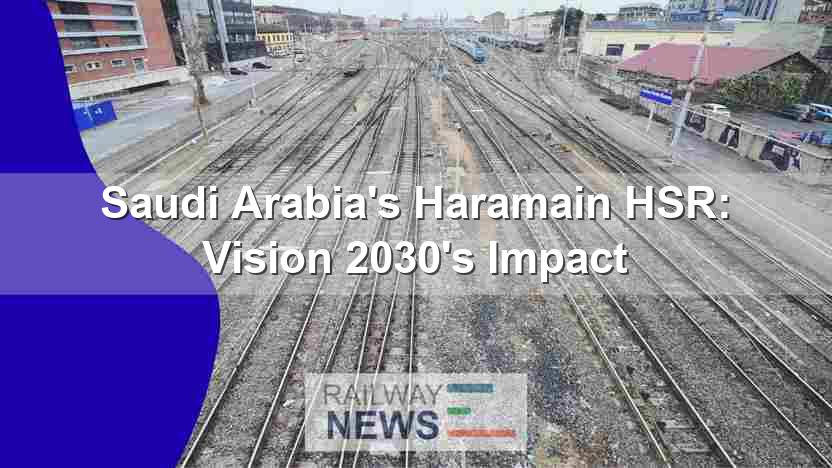
This article explores the significant engineering feat and economic implications of the Haramain High-Speed Railway (HHR) in Saudi Arabia. Opened in 2018 at a cost of $7.87 billion, this 450km line connects the holy cities of Mecca and Medina with Jeddah and King Abdullah Economic City (KAEC). The project represents a substantial investment in the Kingdom’s infrastructure, signifying a commitment not only to improved transportation but also to broader economic diversification and the facilitation of the annual Hajj pilgrimage. We will delve into the technical aspects of the railway, its socio-economic impact, and its potential for future expansion, examining the project’s success and challenges within the context of Saudi Arabia’s ambitious Vision 2030 plan.
Connecting the Kingdom: Infrastructure and Technology
The Haramain Railway is a technologically advanced high-speed rail system, employing Talgo 350 high-speed trains capable of reaching speeds of up to 300 km/h (186 mph). The line’s construction involved overcoming significant geographical challenges, requiring extensive civil engineering works, including the construction of viaducts and bridges to navigate diverse terrain. The project incorporated state-of-the-art signaling and communication systems to ensure safe and efficient operation. Integration with Jeddah’s King Abdulaziz International Airport, a crucial hub for Hajj pilgrims, further enhances the railway’s accessibility and strategic importance. The project’s successful completion showcases Saudi Arabia’s ability to execute complex large-scale infrastructure projects, using international partnerships to leverage expertise and technology.
Economic Diversification and Vision 2030
The HHR is more than just a transportation system; it’s a key component of Saudi Arabia’s Vision 2030, a national transformation plan aimed at reducing the country’s reliance on oil revenues and diversifying its economy. The project’s construction stimulated economic activity, creating jobs and opportunities within the construction, engineering, and tourism sectors. The improved connectivity facilitated by the railway is expected to boost tourism, both domestic and international, especially to the holy cities. Additionally, the efficient transportation of pilgrims contributes significantly to the smooth and safe conduct of the Hajj pilgrimage, minimizing logistical challenges. The expectation is that the HHR will contribute significantly to the Kingdom’s GDP through increased economic activity in related sectors.
Impact on Hajj and Umrah Pilgrims
The Haramain Railway significantly impacts the millions of pilgrims undertaking the Hajj and Umrah pilgrimages annually. Prior to the railway’s completion, travel between the holy cities and Jeddah was often time-consuming and congested, especially during peak pilgrimage seasons. The HHR has drastically reduced travel times, enhancing the pilgrim experience and improving overall efficiency. The integration with Jeddah airport simplifies the arrival and departure processes for international pilgrims, minimizing transit times and potential logistical bottlenecks. This improved accessibility not only benefits pilgrims but also relieves pressure on existing road infrastructure.
Future Expansion and Regional Connectivity
The HHR’s success has paved the way for potential future expansions. There are ongoing discussions regarding extending the line eastward to connect Riyadh, the capital city, with Jeddah, further enhancing national connectivity. Such an expansion would significantly improve the country’s intercity travel and logistics networks. Additionally, the potential for integrating the HHR with regional rail networks across the Middle East remains a possibility, contributing to enhanced cross-border transportation and economic integration. This potential for future expansion highlights the long-term strategic vision behind the HHR project.
Conclusion
The Haramain High-Speed Railway stands as a testament to Saudi Arabia’s commitment to infrastructure development and economic diversification. The project’s successful completion, despite its complexity and scale, showcases the Kingdom’s ability to undertake ambitious projects using advanced technology and international collaboration. Beyond its immediate impact on transportation, the HHR contributes significantly to Vision 2030 goals by stimulating economic growth, boosting tourism, and improving the efficiency of the Hajj pilgrimage. The potential for future expansion underscores the railway’s long-term strategic importance within the broader context of regional development. While challenges remain, the Haramain Railway serves as a powerful symbol of progress and a model for high-speed rail development in challenging geographical environments. Its success provides valuable lessons for other nations undertaking similar large-scale infrastructure projects, highlighting the importance of robust planning, technological innovation, and international partnerships in achieving ambitious goals. The economic impact, efficient pilgrim transport, and potential for future expansion solidify the Haramain High-Speed Railway as a pivotal element of Saudi Arabia’s ongoing modernization and economic transformation.

Railway infrastructure, rolling stock and transport technologies specialist focused on global rail industry developments, high-speed rail systems, signaling technologies and freight transportation. Covering railway investments, public transport modernization, rail operations and international mobility projects across Europe, Asia and North America.
RELATED POSTS
September 6, 2026 5:19 am
Hitachi delivered Taiwan's first N700ST high-speed train from Japan in...

September 6, 2026 4:12 am
Alstom delivered the first of 100 new G Class trams...
September 6, 2026 1:17 am
Hitachi Toshiba Supreme Consortium confirmed the first of 12 N700ST...
September 6, 2026 12:20 pm
Indian Railways ordered a probe after a fire destroyed 2...
September 7, 2026 4:11 am
ÖBB Rail Cargo Group leased 500 Eanos-y scrap-metal wagons from...
September 7, 2026 4:15 pm
Zimbabwe approved the EUR 3 billion Harare Light Rail project,...