
São Paulo’s $2.7B Rail Revolution: Eixo Norte Project

This article delves into the significant Intercity Eixo Norte rail project underway in São Paulo, Brazil. This ambitious undertaking, valued at $2.7 billion (BRL 14.2 billion), represents a substantial investment in the state’s infrastructure and aims to revolutionize intercity travel between São Paulo and Campinas. The project’s scope encompasses not only the construction of a high-speed express rail line but also the integration and modernization of existing rail networks. The project’s success hinges on effective planning, robust financing, and seamless integration with existing systems. This analysis will explore the project’s components, its economic implications, its potential impact on urban mobility, and the challenges involved in its execution. Furthermore, the article will analyze the technological advancements and sustainability measures incorporated into the design and operation of this crucial infrastructure project. The long-term effects on São Paulo’s transportation landscape and the broader Brazilian economy will also be considered.
The Intercity Eixo Norte Project: A Multifaceted Approach to Rail Modernization
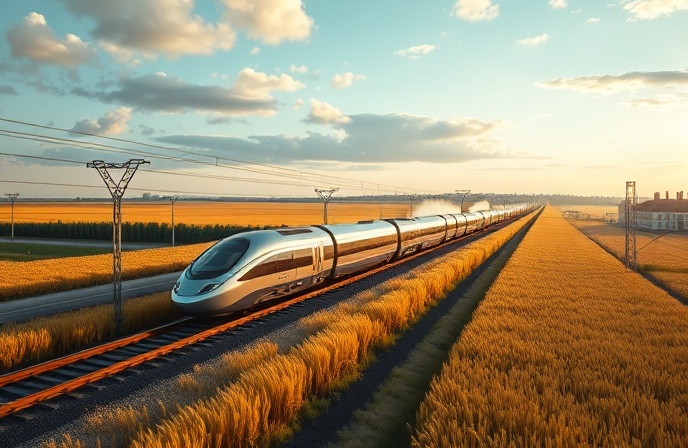
The Intercity Eixo Norte project is far more than just a single high-speed line. It comprises three key components working in synergy: a new 101km high-speed express rail line between São Paulo and Campinas via Jundiaí, a new 44km Intermetropolitan Train (TIM) line connecting Campinas and Jundiaí, and the integration and operational handover of the existing 57km Line 7 of the São Paulo Metro network (CPTM) from Jundiaí to São Paulo. This integrated approach leverages existing infrastructure while simultaneously introducing state-of-the-art technology and high-speed rail capabilities. The express line, designed for speeds up to 140 km/h, drastically reduces travel time between Campinas and São Paulo to an estimated 64 minutes. This contrasts sharply with current travel times, significantly enhancing the efficiency of intercity commutes.
Consortium and Financing: A Public-Private Partnership
The project is a testament to successful public-private partnerships (PPP). The C2 Mobilidade Sobre Trilhos consortium, a joint venture between Brazil’s Comporte Participações and China’s CRRC Hong Kong (China Railway Rolling Stock Corporation), won the concession contract. This partnership leverages both local expertise and international rail technology and financial resources. The $2.7 billion investment underscores the substantial commitment to modernizing São Paulo’s rail infrastructure. The concession agreement stipulates a 30-year operational period for the consortium, ensuring long-term project sustainability and maintenance. Securing the necessary financing and ensuring its efficient allocation throughout the project lifecycle is critical for success.
Technological Advancements and Sustainability: A Modern Rail System
The project incorporates modern technologies and sustainable practices. The high-speed express line introduces cutting-edge rail technology to Brazil, setting new standards for passenger rail. The use of electric locomotives minimizes environmental impact through reduced emissions. The centralized train control system (CTC) enhances operational efficiency and safety. The integration of these advancements reflects a commitment to building not just a fast and efficient system but also one that respects the environment and enhances passenger comfort and safety.
Project Timeline and Implementation Challenges
The project’s implementation will occur in phases, beginning with preliminary planning in 2024, followed by detailed financing, resettlement, and operational transition plans. Construction is projected to commence in June 2026, with the TIM line and Line 7 anticipated for completion by 2029. The high-speed line is expected to be operational by 2032, following a year of testing. Successfully navigating the complexities of large-scale infrastructure projects, managing potential construction delays, and ensuring effective stakeholder engagement are critical factors for timely completion. Potential challenges include land acquisition, community resettlement, and coordinating construction activities across multiple lines to minimize disruption.
Conclusion: Transforming São Paulo’s Transportation Landscape
The Intercity Eixo Norte project represents a transformative investment in São Paulo’s infrastructure, promising significant benefits to the state’s economy and its citizens. The project’s integrated approach, combining a high-speed express line with upgrades to existing networks, promises to significantly enhance connectivity and mobility between São Paulo and Campinas. The projected daily ridership of 672,000 passengers underscores the immense potential of this project to alleviate traffic congestion and provide a sustainable and efficient transportation solution. The adoption of advanced technologies, including electric locomotives and a centralized train control system, signifies a commitment to environmentally responsible and technologically advanced rail transport. However, the successful execution of this ambitious project requires meticulous planning, effective project management, secure financing, and ongoing collaboration among stakeholders. Overcoming the inevitable challenges inherent in such a large-scale undertaking will be crucial to realizing the project’s full potential. The successful completion of the Intercity Eixo Norte project will serve as a model for future rail infrastructure development in Brazil and beyond, showcasing the transformative power of strategic investment in high-speed rail and integrated transportation systems.
RELATED POSTS
March 8, 2023 1:34 pm
The Levenmouth Rail Link: A Case Study in Modern Rail...

October 17, 2025 6:54 pm
Helsinki seminar highlights Rail Baltica's strategic role. Discussions focused on...
September 23, 2021 5:24 pm
This article examines the significant financial contribution of the US...
October 21, 2019 4:50 am
This article delves into the significant €600 million contract awarded...
August 11, 2025 11:33 pm
Rail Baltica's Kaunas-Poland link, a key European rail project, boosts...
August 1, 2023 9:30 pm
This article examines the significant collaboration between Jacobs, a leading...