
Santiago Metro Line 2: A Technological Leap
Introduction
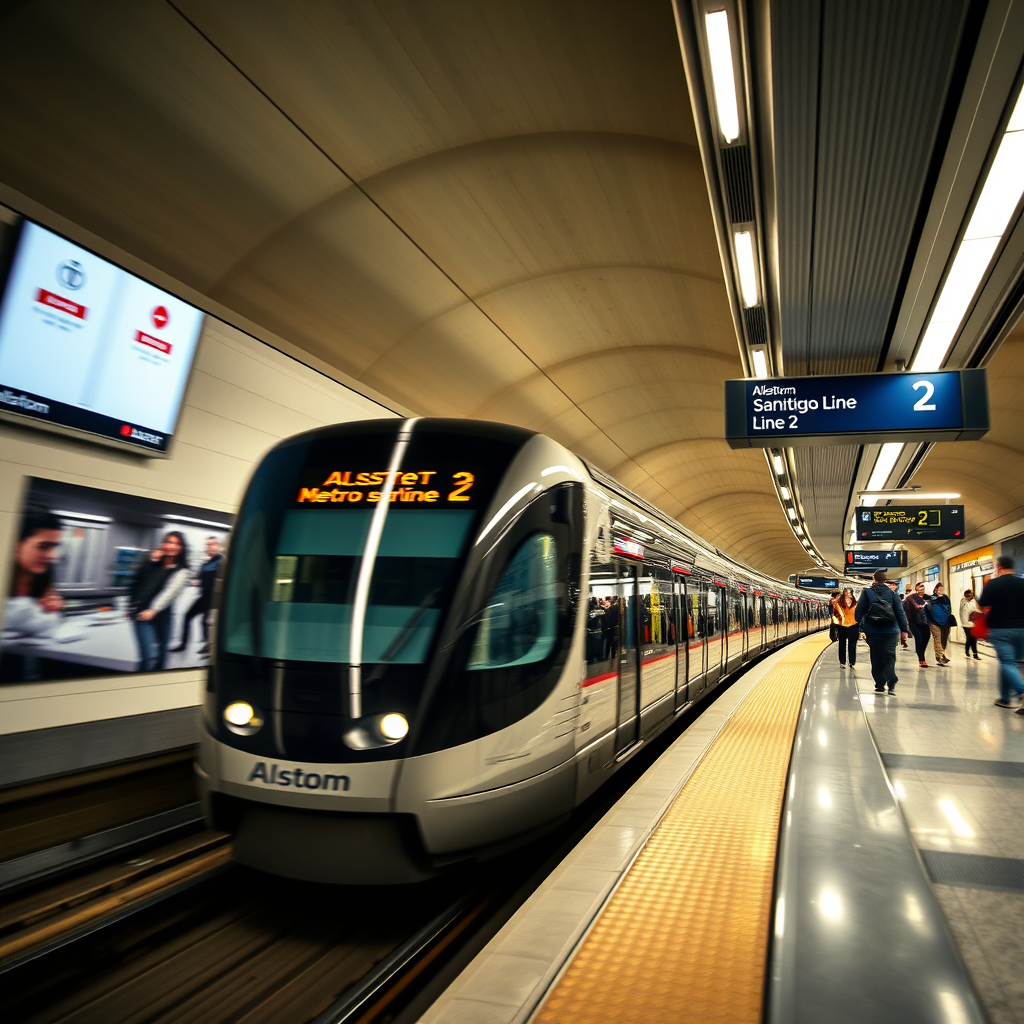
This article examines the recent expansion of Santiago, Chile’s Metro Line 2, focusing on the technological advancements and infrastructural improvements implemented. The 5km extension, a significant undertaking costing $409 million USD, showcases a commitment to modernizing the city’s public transportation system. This project highlights the integration of cutting-edge Intelligent Transportation Systems (ITS) and the collaboration between the Chilean government, Alstom (a leading global provider of rail transport solutions), and other engineering firms. We will explore the specifics of the new signaling and train control systems, assess their impact on passenger experience and operational efficiency, and discuss the broader implications of this expansion for Santiago’s sustainable urban development. Furthermore, the article analyzes the ongoing expansion efforts within the Santiago Metro system, examining the role of technology in shaping future projects and the challenges faced in modernizing large-scale rail networks.
Line 2 Extension: A Technological Leap
The Line 2 extension represents a notable enhancement to Santiago’s metro system. The addition of four new stations – El Bosque, Observatorio, Copa Lo Martínez, and Hospital El Pino – significantly expands accessibility for residents in the southern part of the city. Crucially, this expansion is not merely infrastructural; it integrates advanced technologies provided by Alstom. These technologies include a new interlocking system (a system used for the safe routing of trains) and an Automatic Train Control (ATC) system. This ATC system optimizes train speeds, leading to reduced energy consumption, improved passenger comfort (through smoother acceleration and deceleration), and enhanced safety through automatic train protection features. The projected increase in daily ridership to 32,000 passengers underlines the need for and success of these upgrades. The 32% reduction in transfer times further highlights the efficiency gains achieved through this modernization.
Alstom’s Role and Commitment to Chilean Infrastructure
Alstom’s involvement extends beyond simply supplying equipment. Their contribution encompasses the provision of crucial signaling and train control systems, showcasing a commitment to long-term partnership with the Chilean government and the Santiago Metro. Denis Girault, Alstom’s director general in Chile, emphasized the company’s long-standing relationship with the Santiago Metro, dating back nearly 50 years. This underscores the trust and expertise that Alstom brings to such projects, ensuring the deployment of reliable, safe, and efficient technology. Alstom’s commitment to “intelligent and high-standard mobility” is clearly demonstrated in their involvement in this project, and their role further highlights the increasing importance of private-public partnerships in large-scale infrastructure projects. Their technological solutions aren’t just about immediate benefits; they contribute to the long-term sustainability of the metro system.
Broader Context: Santiago Metro’s Ongoing Expansion
The Line 2 extension is not an isolated event but rather a part of a broader, ambitious plan to expand Santiago’s metro network. Construction is underway on Line 7, scheduled for completion in 2028. Alstom, along with engineering firms like Systra and Wood, is involved in this project as well. This collaboration highlights the complex engineering and logistical challenges involved in expanding a large-scale metro system and signifies the importance of multi-disciplinary teamwork and the integration of diverse expertise in successful urban rail development. The ongoing commitment to expansion reflects a forward-looking approach to address the growing transportation needs of Santiago and its population.
Conclusion
The successful opening of the Santiago Metro Line 2 extension marks a significant milestone in Chile’s urban development. The $409 million USD investment, incorporating Alstom’s advanced Automatic Train Control (ATC) and interlocking systems, represents a substantial upgrade in both infrastructure and technology. The four new stations and resulting 32% reduction in transfer times demonstrate a tangible improvement in passenger experience and operational efficiency. The anticipated increase in daily ridership to 32,000 underscores the urgent need for and success of such expansions. This project is not just about adding kilometers of track; it’s about enhancing the quality of life for Santiago’s citizens, reducing commute times, and promoting sustainable transportation. Alstom’s long-term commitment, along with the continued expansion efforts epitomized by the construction of Line 7, signals a broader vision for the future of Santiago’s metro system. The integration of advanced technologies like ATC systems, coupled with collaborative efforts involving private companies and public entities, will be crucial in addressing the challenges of expanding and modernizing large-scale urban rail networks, setting a benchmark for other cities facing similar growth pressures. The success of Line 2’s extension showcases a model for sustainable urban development, prioritizing efficient, reliable, and technologically advanced public transportation.
RELATED POSTS
April 13, 2025 11:56 am
Introduction This article delves into the significant modernization underway in...

November 7, 2025 9:54 pm
Amtrak unveils key steps for the $7 billion York City...

February 5, 2017 10:09 am
In total, Tanzania wants to build a 2,561 km standard...

November 25, 2021 6:07 pm
This article explores the Washington Metropolitan Area Transit Authority’s (WMATA,...
May 4, 2019 3:51 am
VR Group's new Stadler diesel-electric locomotives: Boosting efficiency, safety,...
April 19, 2025 4:36 am
This article delves into the recent repair and restoration of...