
Sandhills Station Upgrade: Rail Infrastructure Innovation for Everton FC
Everton FC’s new stadium boosts Sandhills station upgrade, completed on time, without service disruption.
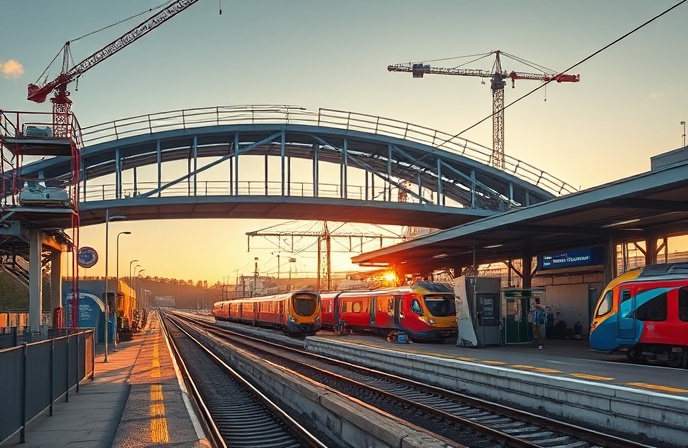
Sandhills Station Upgrade Completed on Time to Support Everton FC’s New Home
Liverpool’s Sandhills station, a critical hub on the Merseyrail network, has undergone a significant infrastructure upgrade, including a new footbridge and a second entrance, to accommodate increased passenger flow generated by the new Hill Dickinson Stadium at Bramley-Moore Dock, the new home of Everton Football Club. The project, completed to a tight deadline, addresses the station’s critical role as a key interchange and the anticipated surge in matchday travel. The upgrade, executed without disrupting the intensive train service, which sees approximately one train departing every three minutes during peak times, showcases innovative construction techniques and strong collaboration. This article details the challenges, solutions, and successes of this crucial infrastructure improvement, demonstrating how complex railway projects can be delivered effectively and efficiently within operational constraints.
Maintaining Operations: The Core Challenge
Sandhills station, an elevated island platform constructed on arches dating back to around 1880, is a crucial part of the Liverpool City Region’s rail network. Closing the platform or scheduling disruptive possessions for construction was not an option. Given the station’s high traffic volume, with trains departing every three minutes during peak hours, any service interruption would have a significant knock-on effect across the network. The imperative was to upgrade the station while maintaining full operational capacity, a major hurdle for the project team.
Innovative Engineering Solutions: Concrete Pumping Technique
Merseyrail and its primary contractor, Morgan Sindall, adopted an innovative approach to overcome the operational constraints. The core solution involved pumping concrete up to the platform through the existing arches. This method allowed construction activities to proceed safely and efficiently during the operational day, effectively isolating the works from passenger services. This technique minimized disruption and ensured the project remained on schedule. This approach required meticulous planning, precise execution, and close coordination between construction teams and rail operators.
Collaboration and Teamwork: The Key to Success
The project’s success was underpinned by strong collaboration among all stakeholders. Chris Maher, Chief Financial Officer at Merseyrail, emphasized the importance of teamwork: “Delivering such a significant infrastructure upgrade to an incredibly tight deadline, while maintaining a full train service, was a huge challenge. Thanks to the outstanding collaboration between Merseyrail, Morgan Sindall and our partners, we achieved our ambitious goal without disrupting our customers.” This collaborative effort ensured efficient communication, proactive problem-solving, and a shared commitment to delivering the project on time and within budget.
Enhanced Passenger Experience: Improving Flow and Safety
The new footbridge and second entrance are designed to improve customer flow at Sandhills station, particularly during peak times and events. The enhancements aim to alleviate congestion between the designated fan management zone adjacent to the station and the platform, thereby improving safety for customers during events like Everton FC matches. This focus on passenger experience reflects a broader trend in railway infrastructure projects: ensuring efficient and safe journeys for the travelling public.
Conclusion
The successful completion of the Sandhills station upgrade showcases the capabilities of the rail industry in delivering complex infrastructure projects under challenging conditions. The innovative use of concrete pumping, coupled with strong collaboration between Merseyrail, Morgan Sindall, and other stakeholders, enabled the project to be delivered on time and without disrupting the critical rail services the station provides. This achievement highlights the industry’s capacity to balance modernization efforts with the ongoing need to maintain reliable and safe passenger transport. The improved customer flow and enhanced safety measures at Sandhills exemplify a proactive approach to handling increased passenger demand associated with high-profile events like football matches. This project sets a positive precedent for similar infrastructure upgrades in busy transport hubs. Future projects can learn from this experience in order to maintain vital services. The project also underscores the effectiveness of public-private partnerships in delivering essential transportation improvements. As cities continue to develop and experience population growth, efficiently managing and upgrading rail infrastructure, as seen at Sandhills, will be critical for meeting passenger needs.
RELATED POSTS
Despite a September dip, the **Port of Los Angeles** celebrates...

July 29, 2017 11:21 am
Optimize your railway infrastructure for sustainable urban mobility. Learn how...
November 25, 2021 5:32 am
High-Speed Maglev Train Development in China: A Technological Leap China’s...
May 3, 2025 7:28 am
This article explores the recent inauguration of Thessaloniki’s first driverless...
February 11, 2025 10:25 pm
Alstom Expands its Chinese Footprint: A Strategic Venture in Hefei...
December 2, 2016 4:56 am
Alstom has received recognition from the Eisenbahn-Bundesamt (EBA), the German...