
San Clemente Rail Line Reopens: Coastal Protection Complete
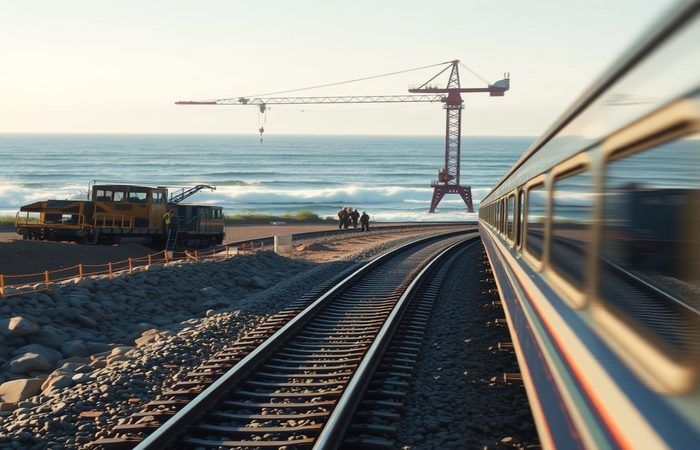
San Clemente Rail Line Reopens Following Emergency Coastal Protection Work
The resumption of passenger rail service along the crucial San Clemente coastal corridor in California marks a significant milestone for both Amtrak Pacific Surfliner and Metrolink. This article will delve into the recent emergency stabilization efforts undertaken to protect the railway from coastal erosion. We will explore the scope of the project, the challenges faced, and the impact on rail operations. The completion of the initial phase of construction, spearheaded by the Orange County Transportation Authority (OCTA), allows for the reopening of the line, providing much-needed relief to commuters and leisure travelers alike. This reopening, ahead of the initially anticipated schedule, is a testament to the dedication and efficiency of the construction crews involved. We will also examine the ongoing work that will continue to ensure the long-term viability of this vital transportation artery.
Coastal Erosion and the Urgent Need for Stabilization
The San Clemente rail line, a vital link for commuters and tourists alike, has been increasingly vulnerable to the effects of coastal erosion. The relentless forces of the Pacific Ocean, coupled with the impacts of climate change, have threatened the stability of the track bed in several key areas. This erosion poses a significant risk to the safety and reliability of rail operations. The precarious situation necessitated immediate action to protect the infrastructure and ensure the continued movement of trains.
The primary response to this threat involved the placement of substantial amounts of riprap (large, irregularly shaped rocks) along the coastline. This riprap acts as a protective barrier, absorbing the energy of waves and preventing further erosion of the track bed. The project also included beach replenishment, adding sand to the beach to widen it and further buffer the railway from the ocean’s impact.
The scale of the operation was considerable, involving the deployment of heavy machinery and the careful coordination of multiple teams. The work was carried out under tight deadlines, requiring meticulous planning and execution to minimize disruptions to rail service and maintain the safety of construction crews.
Engineering and Construction Details
The project, led by OCTA in partnership with Metrolink, involved a multi-faceted approach to stabilize the vulnerable sections of the rail line. A key component of the initial phase was the placement of approximately 5,900 tons of riprap. This required precise calculations to determine the optimal placement and size of the rocks to maximize their effectiveness in dissipating wave energy. The riprap was strategically positioned along the shoreline to protect the track bed from direct wave action.
The project also incorporated beach replenishment efforts. Around 240,000 cubic yards of sand were carefully placed on the beach in designated areas. This process helps to widen the beach, creating a natural buffer zone between the ocean and the rail line. The sand was sourced and transported to the site, where it was spread and graded to ensure proper coverage and stability.
Throughout the construction process, crews worked to minimize environmental impacts. Measures were taken to protect marine life and sensitive coastal habitats. Continuous monitoring was conducted to ensure compliance with environmental regulations.
Preparing for the Resumption of Rail Service
With the core construction phase now complete, the focus has shifted to preparing the rail line for the safe resumption of passenger service. This involves a series of critical steps to ensure the integrity of the track and the smooth operation of trains.
Construction equipment and materials are being demobilized from the site. Construction staging areas are being cleared and restored to their original condition. Extensive testing of rail signals and communication systems is underway to verify their functionality and ensure the safe passage of trains.
In addition, the track itself is undergoing thorough inspection and resurfacing. This includes checking the alignment and condition of the rails, ties, and ballast. Any necessary repairs are being made to ensure a smooth and comfortable ride for passengers. The inspection process utilizes specialized equipment and trained personnel to identify potential issues and address them promptly.
Conclusion
The reopening of the San Clemente rail line on June 7th, 2024, marks a significant victory for transportation infrastructure in California. The swift and decisive action taken by OCTA, Metrolink, and the construction crews involved has safeguarded a critical transportation artery from the relentless forces of coastal erosion. The emergency stabilization efforts, including the placement of riprap and beach replenishment, have provided crucial protection to the track bed, allowing for the safe and reliable resumption of passenger service. The early completion of the initial phase, ahead of schedule, is a testament to the effective planning, efficient execution, and dedication of all involved.
The work, however, doesn’t stop here. While the initial phase has addressed the most vulnerable areas, continued monitoring and maintenance will be essential to ensure the long-term viability of the rail line. Further phases of construction and ongoing coastal management strategies will be necessary to mitigate the ongoing risks posed by erosion and climate change. This proactive approach demonstrates a commitment to investing in the future of public transportation and protecting vital infrastructure for generations to come. The successful reopening of the line is a positive step forward, offering a glimpse of the resilience and adaptability of our transportation systems in the face of environmental challenges. The commitment to ensuring the safety and reliability of this vital rail link is an investment in the economic prosperity and environmental sustainability of the region.
**Summary of Relevant Companies:**
* **Orange County Transportation Authority (OCTA):** The lead agency responsible for the project, overseeing the planning, management, and execution of the stabilization efforts.
* **Metrolink:** A regional commuter rail service in Southern California. Metrolink partnered with OCTA on this project and will resume service on the reopened line.
* **Amtrak Pacific Surfliner:** A passenger rail service that operates along the Southern California coast, including the San Clemente line. Amtrak will resume service on the reopened line.
RELATED POSTS

October 10, 2025 10:54 am
Cando Rail acquires Channelview Terminal in Houston, expanding its rail...

December 9, 2015 9:47 am
The State Railway of Thailand has picked a firm to...

January 7, 2023 12:35 pm
This article explores the recent contract awarded to Stadler by...

September 17, 2024 12:07 pm
The Los Angeles Metropolitan Transportation Authority (LA Metro) has been...

June 23, 2025 8:33 am
Melbourne Metro Rail upgrades asset management, aiming for efficiency and...
March 25, 2020 8:55 pm
The Impact of the COVID-19 Pandemic on New York City’s...