
Rome Metro Line C: Venezia Station, Advancing the Eternal City
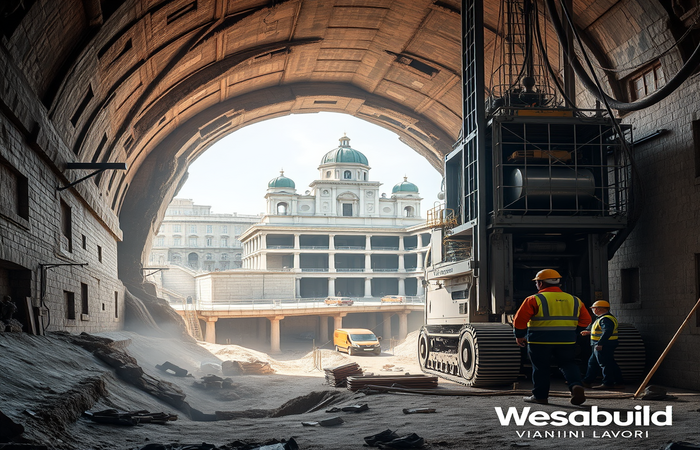
Rome Metro Line C: Advancing Through the Eternal City
Rome, Italy – As of October 26, 2024, significant progress is being made on the construction of the Venezia Station, a crucial element of Rome’s Metro Line C. This ambitious project, spearheaded by a consortium led by Webuild and Vianini Lavori, is pushing the boundaries of engineering and design, as it integrates seamlessly with the city’s rich historical heritage. This article will delve into the complexities of this undertaking, examining the technical challenges, the integration of archaeological findings, and the broader impact of Metro Line C on the city’s transportation network.
The Venezia Station, situated in the heart of Rome’s historical center, is set to become a pivotal transportation hub, offering direct access to iconic landmarks such as Palazzo Venezia, the Vittoriano, and the Fori Imperiali. Its construction is a testament to the innovative spirit of modern engineering, as it tackles the challenges of building in a dense urban environment steeped in history. The project’s success relies heavily on precision, cutting-edge technology, and a deep understanding of the delicate balance between construction and preservation. The ongoing development of Metro Line C is a multifaceted project that not only aims to enhance the city’s public transportation capabilities but also seeks to preserve and celebrate its historical wealth.
Engineering Marvel: The Venezia Station’s Construction
The construction of Venezia Station represents a significant feat of engineering, particularly due to its depth and the complex geological conditions of the site. The station will descend six levels underground, making it one of the deepest and most technically challenging underground stations in Europe. The initial phase of construction involved the completion of diaphragm walls, a crucial element in forming the perimeter box structure of the station. This was achieved using a hydro-milling machine, a massive piece of equipment standing 24.5 meters tall and weighing 185 tonnes. The team successfully completed 124 diaphragm panels, each reaching excavation depths of up to 85 meters. The entire project encompasses a total of 352 underground panels across three phases, which include 170 diaphragm panels. This method allows for the creation of stable underground structures even in challenging ground conditions, a testament to modern engineering capabilities.
Archaeological Integration: A Fusion of Past and Present
A remarkable aspect of the Venezia Station project is the seamless integration of archaeological findings into the station’s design. The construction site has yielded significant artifacts, which will be showcased in an archaeological museum located on the first level of the station. This integration acknowledges the rich historical context of the site, transforming the station into a living museum. The collaboration between engineers, archaeologists, and heritage authorities is essential to ensure the preservation and presentation of the unearthed treasures. The project aims not only to facilitate urban development but also to celebrate the historical depth of Rome, creating a unique cultural space within the transportation infrastructure.
Progress and Future Developments
Following the completion of the initial phase of diaphragm wall construction, the hydro-milling machine has been moved to Via dei Fori Imperiali, adjacent to the Vittoriano monument. This relocation is intended to begin construction on the next phase of the perimeter box and to support archaeological digs and roofing work planned for the autumn. This progression will also enable the reopening of the square near Palazzo Venezia to road traffic, improving the flow of daily life. The overall advancement of the project is a carefully planned and staged process, with each step strategically timed to minimize disruption and maximize efficiency. The project team is simultaneously working on the 3-kilometer stretch from San Giovanni to the under-construction Colosseo/Fori Imperiali station. Operational and safety tests began in February, with the two new archaeological stations—Porta Metronia and Colosseo/Fori Imperiali—scheduled for delivery in the coming months. Design is also in progress for other stations, including Chiesa Nuova, San Pietro, Ottaviano, and Clodio/Mazzini.
Conclusion: A Legacy of Innovation
The ongoing construction of Metro Line C, and the Venezia Station in particular, is a testament to human ingenuity and the ability to merge modern engineering with historical preservation. The project has already overcome considerable technical challenges, from the depths of the excavation to the integration of archaeological findings, while also contributing to the urban landscape by improving the accessibility and promoting the growth of tourism. The meticulous planning and execution, along with the use of advanced technologies like the hydro-milling machine, highlights the capabilities of Webuild and its partners. The project’s focus on sustainability, integration with archaeological sites, and its potential to relieve traffic congestion marks a transformative step towards a more modern, accessible, and culturally rich Rome. The legacy of this project will extend far beyond the completion of the line, influencing future urban infrastructure projects worldwide. With its emphasis on efficiency, sustainability, and a deep respect for its historical setting, Metro Line C sets a new standard for public transportation infrastructure.
Summary of Companies:
- Webuild: A global leader in the construction of major infrastructure projects. They have delivered 891 kilometers of metro lines globally and is involved in several projects.
- Vianini Lavori: A construction company involved in the Venezia Station project.
- Roma Metropolitane: The entity responsible for managing the construction of Rome’s Metro Line C.
- Roma Capitale: The municipal government of Rome.
RELATED POSTS

June 10, 2021 4:06 am
Introduction This article delves into the significant tender process initiated...

July 22, 2025 5:33 pm
Irish Rail launches Western region upgrade, boosting capacity and connectivity....
March 28, 2020 7:33 am
This article examines the impact of the COVID-19 pandemic on...
November 26, 2021 1:24 am
The following article analyzes the bankruptcy filing of Supervia, a...
April 30, 2017 3:02 am
**Voiceover Excerpt:**"MTR is upgrading Stockholm's Green Line with new Stadler...
November 21, 2022 4:06 pm
This article explores the significant expansion of Alstom’s rolling stock...