
Romania’s Ministry Reviews Black Sea-Caspian Route Memorandum
Romanian government advances the **Black Sea–Caspian Sea transport route**, reviewing a key memorandum. This crucial **railway** corridor aims to connect Europe and Asia effectively.
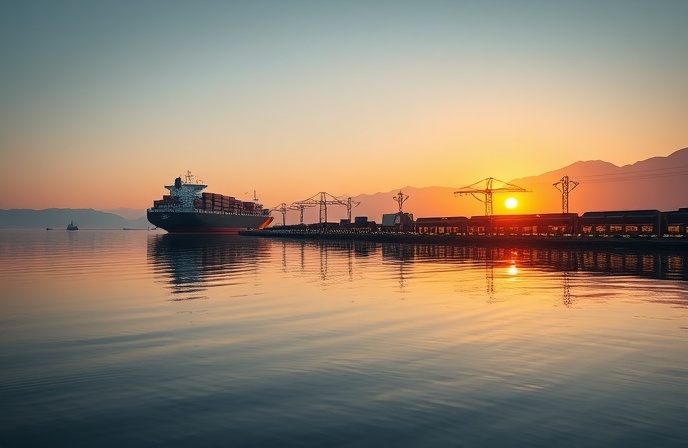
The Romanian government is actively reviewing a key memorandum from its Ministry of Transport, signaling a significant step towards operationalizing the vital Black Sea–Caspian Sea international transport route. This strategic initiative, involving Romania, Georgia, Azerbaijan, and Turkmenistan, aims to establish a robust multimodal corridor connecting Central and Northern Europe with the South Caucasus and Central Asia/Asia-Pacific regions.
| Key Entity | Critical Detail |
|---|---|
| Romanian Government / Ministry of Transport | Reviewing memorandum for Black Sea–Caspian Sea route operationalization. |
| Route Participants | Romania, Georgia, Azerbaijan, Turkmenistan. |
| Project Launch Year | 2012. |
| Core Objective | Multimodal transport corridor connecting Europe to Central Asia/Asia-Pacific. |
| Key Ports Involved | Constanța, Poti, Batumi, Anaklia (under construction), Baku/Alat, Turkmenbashi. |
Strategic Impact
The proposed operationalization of the Black Sea–Caspian Sea international transport route represents a pivotal development for Eurasian logistics. Launched initially by Romania and Turkmenistan in 2012, this multimodal corridor is designed to significantly enhance connectivity and trade flows between Europe and Asia. The memorandum under review by the Romanian government underscores a renewed commitment to streamlining and formalizing the complex framework required for efficient international freight movement along this critical axis. By integrating maritime, river, road, and rail transport, the route seeks to offer a competitive and reliable alternative to existing supply chains.
Operational Framework and Scope
The project envisions a detailed multimodal transport system, leveraging key port infrastructure on both the Black Sea and the Caspian Sea. Participating nations will utilize ports such as Constanța in Romania, Poti and Batumi in Georgia, Anaklia (currently under construction), Baku/Alat in Azerbaijan, and Turkmenbashi in Turkmenistan. A crucial element of this route is the established connection between the Port of Constanța and the Danube River, which provides vital inland waterway access. The regulatory framework being developed aims to ensure the seamless and secure international transport of goods, facilitating bilateral trade, transit operations across member territories, and trade with third states.
Last June 2025, we published an article about Renfe’s cutting-edge Aranjuez maintenance hub. Click here to read – Future of Rail: Renfe’s Railway Technology Hub, Aranjuez: Essential Guide
Industry Context
For industry leaders, the operationalization of the Black Sea–Caspian Sea route presents a compelling opportunity to diversify supply chains, reduce transit times, and access new markets. In an era of increasing geopolitical uncertainty and a persistent demand for resilient logistics solutions, this established corridor offers a strategic advantage. The focus on multimodal transport inherently addresses efficiency and cost-effectiveness, making it an attractive proposition for freight forwarders, shipping lines, and cargo owners looking to optimize their global reach and operational footprint. The successful implementation of this initiative could reshape regional trade dynamics and reinforce the importance of intermodal connectivity.

Railway infrastructure, rolling stock and transport technologies specialist focused on global rail industry developments, high-speed rail systems, signaling technologies and freight transportation. Covering railway investments, public transport modernization, rail operations and international mobility projects across Europe, Asia and North America.