
Robot Revolutionizes Railway Maintenance
Introduction
The railway industry, a cornerstone of global transportation, faces significant challenges in maintaining its aging infrastructure while addressing labor shortages and ensuring worker safety. This article explores a novel solution deployed by West Japan Railways (West JR): a remotely operated, humanoid robot designed for infrastructure maintenance. This innovative technology aims to address the critical issues of labor scarcity, workplace safety, and the need for efficient, cost-effective maintenance of overhead catenary systems (OCS) and other railway assets. The analysis will examine the robot’s capabilities, its operational principles, its impact on workforce dynamics, and the broader implications for the future of railway maintenance practices. We will delve into the technical specifications and operational procedures, exploring both the advantages and potential limitations of this pioneering approach to railway infrastructure management.
A Technological Solution to Labor Shortages
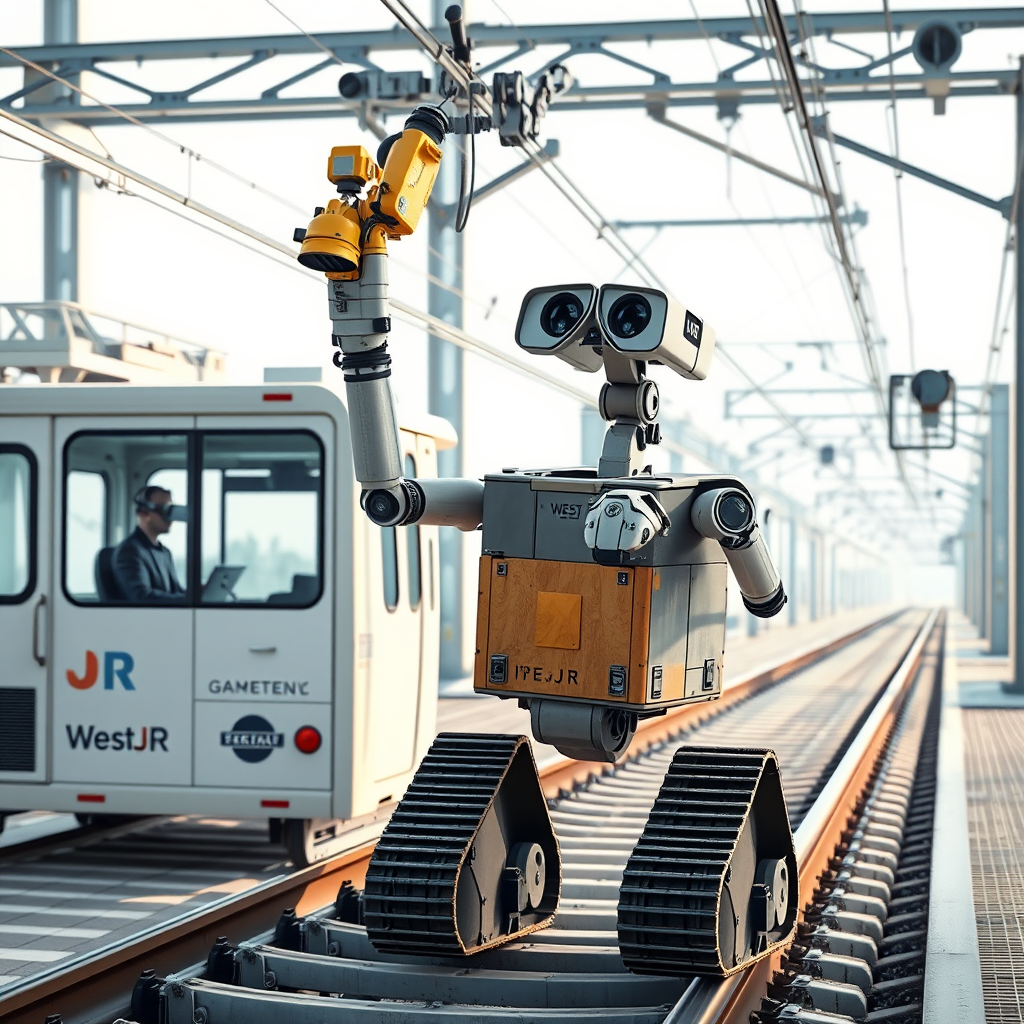
West JR, facing the same workforce challenges prevalent across the global rail industry, has partnered with Jinki Ittai Co. and Nippon Signal Co. to develop a multifunctional humanoid robot for railway equipment maintenance. This robot, designed to resemble the Disney Pixar character Wall-E, addresses the pressing need for efficient and safe maintenance of overhead lines (OHL) and other high-level infrastructure. The robot is deployed via a railway construction vehicle which houses the control room and an extendable boom that positions the robot at heights of up to 12 meters. This significantly reduces the risks associated with manual work at height, a major contributor to accidents in the railway sector.
Enhanced Safety and Operational Efficiency
The robot’s remote operation offers substantial safety improvements. Instead of human workers risking electrocution or falls while working on the OCS, a single engineer operates the robot from a ground-based control room using a VR headset for real-time visual feedback. Force feedback mechanisms allow for intuitive control, making operation relatively simple to learn. Beyond OHL maintenance, this versatile robot can perform a variety of tasks, including tree removal, painting, and the repair and replacement of signaling hardware. This multi-functional capability enhances overall operational efficiency by consolidating maintenance tasks and reducing the need for specialized crews.
Transforming the Railway Workforce
The introduction of this technology significantly impacts the railway workforce. West JR projects a 30% reduction in labor for most tasks. This isn’t just about cost savings; it’s about creating a more inclusive and safer work environment. By eliminating the need for physically demanding work at heights, the robot opens opportunities for a broader range of workers, irrespective of gender or age. This fosters diversity and addresses workforce demographics that are increasingly challenging in many industries. While West JR’s claims about the elimination of barriers for women in previously male-dominated high-level jobs requires further investigation, the potential for increased diversity within railway maintenance is undeniable.
Conclusion
West JR’s innovative humanoid robot represents a significant advancement in railway infrastructure maintenance. By addressing labor shortages, enhancing safety protocols, and improving operational efficiency, this technology offers a compelling model for the future of rail maintenance. The robot’s ability to perform a variety of tasks, from OHL repairs to tree removal, demonstrates its versatility and its potential to significantly reduce reliance on manual labor in hazardous environments. The emphasis on remote operation minimizes risks associated with working at height, directly impacting worker safety and reducing workplace accidents caused by falls or electrical hazards. Furthermore, this technology’s potential to create a more diverse and inclusive workforce deserves commendation. While the long-term impacts and potential challenges still need careful evaluation, including factors such as the initial investment costs and the robot’s maintenance requirements, the successful deployment of this technology by West JR marks a pivotal step towards a more efficient, safer, and inclusive future for railway maintenance worldwide. The ability to leverage robotic technology to address labor shortages and improve worker safety has far-reaching implications, presenting opportunities for enhanced productivity and a more sustainable approach to railway infrastructure management across the globe. Further research into similar robotic systems and their application in diverse railway environments is essential to fully realize the potential of this promising technological advancement.
RELATED POSTS

March 19, 2023 12:44 pm
Introduction The recent derailment of a Norfolk Southern freight train...
August 14, 2025 3:33 pm
Protecting the Railway: Resilient Solutions for the Future of the...
July 11, 2021 8:39 am
Planning and Construction of Sydney Metro West: A Deep Dive...
July 16, 2021 5:36 am
This article examines the significant contract awarded to Alstom by...
March 11, 2023 3:53 am
This article examines the significant upgrade of the Belgrade-Niš railway...
November 24, 2016 11:51 pm
China’s CRRC,Company is in advanced talks to buy Skoda...