
RFG Urges UK MPs to Amend Railways Bill for Rail Freight Growth
Rail Freight Group urges amendments to the **Rail Freight Bill** 2025, crucial for future growth within the **railway** sector. The bill reached a key stage in Parliament.
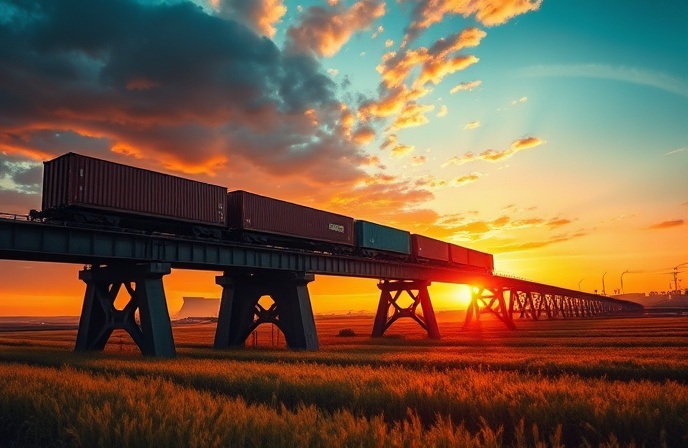
Rail Freight Group Urges MPs to Amend Railways Bill 2025 for Growth and Competitiveness
The Rail Freight Group (RFG) has formally urged Parliamentarians to implement urgent amendments to the Railways Bill 2025, emphasizing its critical role in securing future freight growth and economic competitiveness. Reaching its second reading in the House of Commons on 9 December, the Bill represents a pivotal moment for the sector, which contributes approximately £2.5 billion annually to the UK economy and underpins vital nationwide supply chains.
| Key Entity | Critical Detail |
|---|---|
| Rail Freight Group (RFG) | Calls for urgent amendments to Railways Bill 2025. |
| Railways Bill 2025 | Reached second reading in House of Commons on 9 December. |
| UK Economy Contribution | Rail freight contributes £2.5 billion annually. |
| Core Concern | Potential weakening of regulatory independence and track capacity allocation. |
| Growth Target | Legal requirement for Great British Railways to factor in 75% growth by 2050. |
Strategic Importance of the Railways Bill 2025
Maggie Simpson OBE, Director General of Rail Freight Group, articulated the organisation’s position: “The success of Great British Railways will depend not on the colour of its logo but on how it supports customers, and enables more goods to move by rail. By making some small changes to the Railways Bill, parliamentarians can help us ensure that the future of our railways works effectively for all users.” Freight trains are indispensable to the UK’s logistics infrastructure, transporting millions of tonnes of construction materials, retail products, and energy fuels annually, thereby removing an estimated 75 heavy goods vehicles from the road per service. Maintaining and expanding this modal shift is presented as essential for reducing road congestion, mitigating road maintenance costs, and providing reliable logistics capacity for major industries.
Key Provisions and Emerging Concerns
The proposed legislation includes several provisions that are strongly welcomed by the RFG. Chief among these are a statutory duty on the Government to actively promote rail freight and a clear legal requirement for Great British Railways to incorporate the Rail Freight Growth Target of at least 75% growth by 2050 into its planning. The group also expressed support for the continued use of wear-and-tear-based charging structures, incentive regimes designed to foster high performance among operators and Great British Railways, and discounts aimed at stimulating new freight flows and optimising the use of spare capacity. However, significant concerns have been raised regarding future track capacity allocation and the potential for a weakening of regulatory independence.
RFG has alerted MPs to fears that Great British Railways could be empowered to set and adjudicate access rules without adequate external oversight. This raises the prospect of the organisation effectively being able to “mark its own work” when making or reviewing access decisions, potentially leading to preferential treatment for operators within its direct control over independent freight businesses. The RFG briefing highlights the risk that the demise of the current independent rail regulator could jeopardise decades of progress in route development, competition, and performance improvement.
Government Intervention and Regulatory Independence
Further questions have been raised about the intended “guiding mind” for the industry, with proposed new powers for the Secretary of State to direct or overrule decisions. The RFG also expressed additional concerns regarding potential Government intervention in infrastructure not owned by the state or Great British Railways. The group warns that these measures could lead to the deprioritisation of freight, potentially increasing costs to a point where rail freight becomes uneconomical compared to HGV transport. Such outcomes could deprive the rail industry of an independent regulator with a proven track record for growth and create uncertainty and duplication regarding the ultimate decision-making authority between Great British Railways and the Government.
Last June 2025, we published an article about Renfe’s cutting-edge Aranjuez maintenance hub. Click here to read – Future of Rail: Renfe’s Railway Technology Hub, Aranjuez: Essential Guide
Industry Context
For industry leaders, the Railways Bill 2025 represents a critical juncture that could shape the future landscape of rail freight operations and investment for decades. The concerns voiced by the Rail Freight Group highlight the delicate balance required between achieving growth targets and maintaining a robust, independent regulatory framework. CEOs in logistics, manufacturing, and retail must monitor these developments closely, as decisions made within this Bill will directly impact supply chain reliability, cost-effectiveness, and the industry’s ability to meet sustainability goals. A weakened regulatory environment or a perceived favouritism towards integrated operations could stifle competition, deter investment in new freight capacity, and ultimately hinder the modal shift necessary to achieve national decarbonisation and congestion reduction targets.

Railway infrastructure, rolling stock and transport technologies specialist focused on global rail industry developments, high-speed rail systems, signaling technologies and freight transportation. Covering railway investments, public transport modernization, rail operations and international mobility projects across Europe, Asia and North America.
RELATED POSTS

October 1, 2026 7:09 am
United States regulators confirmed a September 30 deadline for the...

October 8, 2026 1:15 pm
Alstom secured a €1bn contract to build 13 automated trains,...

October 4, 2026 5:14 pm
Alstom secured a CA$4.7 billion order from VIA Rail Canada...

October 1, 2026 12:13 am
Illinois approved $1.5 billion annually for the Northern Illinois Transit...

October 6, 2026 2:14 am
Union Pacific launched export rail shipments with Ferromex to deliver...

October 1, 2026 6:10 am
Amtrak approved a System Expansion Committee on July 30 to...