
Régiolis Train: Cross-Border Rail Transit Success
The Alstom Régiolis: Seamless cross-border operation on the Léman Express, proving efficient, accessible, interoperable rail is possible. Discover how!
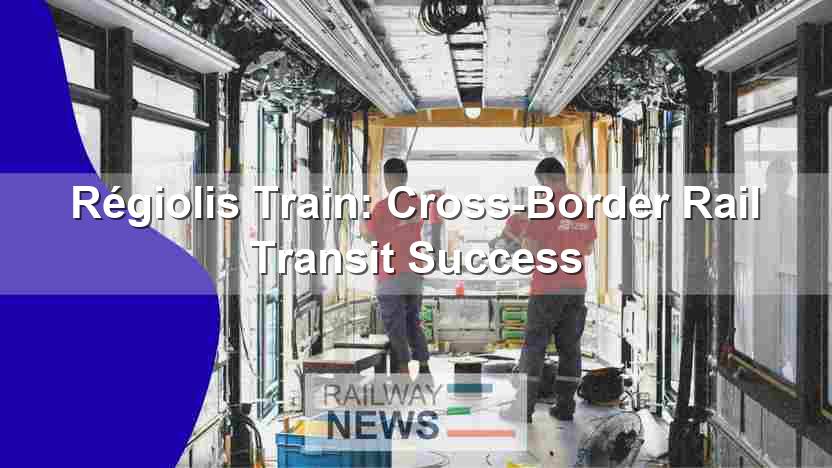
This article examines the unveiling of the first Régiolis train for the Léman Express regional line, highlighting its significance in cross-border rail transit between France and Switzerland. The project represents a significant step forward in the development of efficient and accessible regional rail networks. The introduction of this Coradia Polyvalent (a versatile train model) unit underscores the growing importance of interoperable rolling stock designed to seamlessly navigate differing national railway systems and standards. We’ll delve into the technical specifications of the train, the manufacturing process, its impact on regional transport, and the broader implications for future cross-border rail projects. The successful integration of this train will serve as a valuable benchmark for future collaborations in enhancing international rail connectivity and passenger experience. This case study provides crucial insights into the challenges and successes of implementing modern, technologically advanced trains within a complex, multinational framework.
Technical Specifications and Design
The Régiolis train, part of Alstom’s Coradia Polyvalent range, is a crucial element of the Léman Express project. This 72-meter-long train boasts a capacity of 204 seats and a maximum speed of 140 km/h (87 mph). Its design is specifically tailored for suburban use, featuring seven doors to facilitate rapid passenger boarding and alighting, thus minimizing dwell times at stations. The low-floor design enhances accessibility, and the train is compliant with the PRM-TSI (Persons with Reduced Mobility – Technical Specifications for Interoperability) standard. Further passenger amenities include individual reading lights and electrical sockets at each seat, along with dedicated areas for bicycles and luggage. The ability to operate on multiple network voltages is a critical feature, allowing for seamless cross-border operation without the need for changes in locomotive power.
Manufacturing and Deployment
Alstom’s Reichshoffen site in France played a central role in the design and assembly of the Régiolis units for the Léman Express. The project involved six of Alstom’s thirteen French sites, highlighting the collaborative nature of large-scale rolling stock manufacturing. The on-board intelligence systems were developed at Alstom’s Villeurbanne site, emphasizing the integration of advanced technologies for efficient train operation and management. The delivery of the 17 Régiolis trains, financed by the Auvergne-Rhône-Alpes region and ordered by the SNCF (Société nationale des chemins de fer français), commenced in late 2019, with commercial service starting in mid-December of that year. This demonstrates a successful collaboration between regional authorities, national railway operators, and the manufacturer.
Cross-Border Interoperability
A key achievement of the Léman Express project is the seamless integration of the Régiolis train across the Franco-Swiss border. The train’s multi-voltage capability allows it to operate on both French and Swiss railway networks without modification, a crucial aspect of improving cross-border transport efficiency. This eliminates the delays and complexities often associated with changing locomotives or making adjustments for differences in track voltage, contributing to improved passenger experience and reducing operational costs. The success of this interoperability highlights the potential for broader adoption of such designs across Europe and other regions with international rail connections.
Impact and Future Implications
The successful deployment of the Régiolis trains on the Léman Express line represents a significant advancement in regional rail transit. The improved passenger experience, enhanced accessibility, and increased operational efficiency demonstrate the potential of modern rolling stock to transform regional transport networks. The train’s capacity and speed improve connectivity between the cities served, fostering economic growth and cross-border collaboration. The project’s success serves as a compelling case study for future cross-border rail projects, showcasing the benefits of collaboration between governmental agencies, national railway operators, and rolling stock manufacturers in delivering modern, interoperable, and passenger-centric rail systems. Further investment in similar cross-border initiatives will be vital to supporting sustainable transportation and economic development in interconnected regions.
Conclusions: The introduction of Alstom’s Régiolis train on the Léman Express line signifies a pivotal moment in cross-border rail transit. This article has explored the technical features, manufacturing process, and operational implications of this innovative train. The seamless integration of the Régiolis across the Franco-Swiss border, enabled by its multi-voltage capability and adherence to international interoperability standards, marks a substantial advancement. The success of this project serves as a testament to the potential of collaboration between governments, railway operators, and rolling stock manufacturers. The train’s passenger-centric design, featuring enhanced accessibility and comfort features, contributes significantly to improved regional connectivity and the overall passenger experience. The positive impact on regional economies through improved transportation infrastructure is also notable. This case study underscores the significance of investing in modern, interoperable rolling stock to enhance efficiency, accessibility, and overall satisfaction in international rail transit networks. The lessons learned from the Léman Express project can be applied to similar initiatives globally, paving the way for a future where cross-border rail travel is both efficient and enjoyable.

Railway infrastructure, rolling stock and transport technologies specialist focused on global rail industry developments, high-speed rail systems, signaling technologies and freight transportation. Covering railway investments, public transport modernization, rail operations and international mobility projects across Europe, Asia and North America.
RELATED POSTS

October 8, 2026 1:15 pm
Alstom secured a €1bn contract to build 13 automated trains,...

October 1, 2026 7:09 am
United States regulators confirmed a September 30 deadline for the...

October 8, 2026 12:18 pm
Siemens Mobility signed an agreement with VinSpeed to supply 350...

October 4, 2026 5:14 pm
Alstom secured a CA$4.7 billion order from VIA Rail Canada...

October 1, 2026 12:13 am
Illinois approved $1.5 billion annually for the Northern Illinois Transit...

October 5, 2026 1:13 pm
New York MTA confirmed a late 2026 DEIS release for...