
RATP: Urban Rail Heritage & Innovation in Paris & Beyond
RATP Group modernizes Paris Metro, balancing heritage & innovation in railway sector.
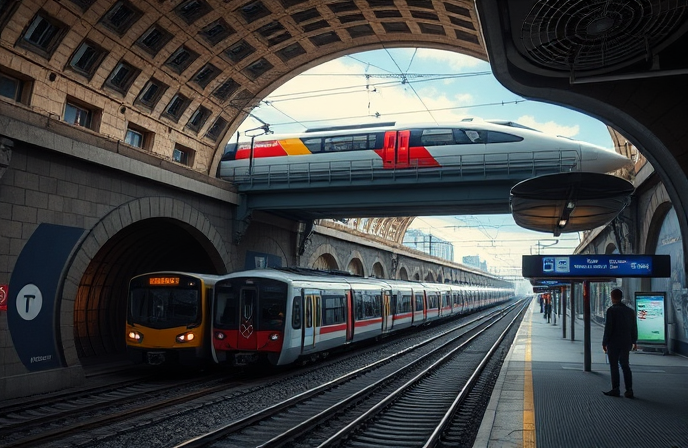
RATP Group: Navigating the Complexities of Urban Rail Heritage and Innovation
In a world increasingly reliant on efficient and sustainable public transport, RATP Group, a global leader in high-capacity urban rail, stands out for its commitment to both preserving its industrial heritage and embracing cutting-edge innovations. This article delves into RATP’s unique expertise, developed over 125 years in the ultra-dense network of Paris, and explores how the group expertly balances historical preservation with modern technological advancements to provide reliable, high-quality urban rail services. We will examine how RATP manages its extensive infrastructure, from ancient tunnels to modern rolling stock, while simultaneously implementing new technologies to enhance efficiency and passenger experience. Who is involved? RATP Group, supported by Île-de-France Mobilités and RATP Dev Australia. What is happening? Managing and upgrading complex industrial heritage whilst improving the passenger experience through innovation. When is this happening? On an ongoing basis. Where? Primarily the Paris Metro and RER (Réseau Express Régional) network, with applications globally. Why? To maintain safety, modernize services, and improve passenger experience. How? Through skilled craftsmanship, digital technologies, and strategic partnerships.
Preserving the Past, Building the Future: Managing RATP’s Infrastructure Heritage
RATP Group’s legacy is intertwined with the history of urban rail. The group’s ownership of an expansive infrastructural heritage is key to the operation. This includes over 1,000 kilometers of metro and Réseau Express Régional (RER) tracks, 380 kilometers of underground and elevated structures, and 368 stations. This vast network, including the Paris Metro, which dates back to 1900, presents unique challenges in terms of maintenance and modernization. The company’s vertical integration is evident in its responsibility for asset ownership, project delivery (both brownfield and greenfield), and day-to-day operations and maintenance. A prime example of this is the replacement of the Pont de Chartres bridge on the RER Line B in 2023, an operation that involved the largest crane ever used on an RATP construction site. This project demonstrates RATP’s proficiency in upgrading aging infrastructure while minimizing passenger disruption and ensuring a safe, efficient service. RATP’s approach extends the lifespan of rolling stock, often achieving 40-50 years instead of the initial 35-year lifespan.
Innovations in Track Maintenance and Passenger Experience
RATP Group excels at improving the performance of operating lines through cutting-edge systems and technologies. The maintenance of tracks, crucial for rail safety, is an ongoing process. In 2009, inspections revealed that the ballasted tracks of the central section of RER A, which were installed in the 1970s, needed complete renewal to ensure optimal rail safety and availability, especially with the arrival of new double-deck rolling stock (MI09). The central section of RER A was replaced over summer months between 2015 and 2021 to minimize disruptions, with alternative transport plans and public information campaigns deployed. The use of digital twins, for example, improves infrastructure design and training. Furthermore, to improve safety and minimize physical effort, RATP has been employing exoskeleton equipment during maintenance activities. The company also uses Maint’Up, an asset management system, to gather and analyze data to improve maintenance, reduce spare part usage, and boost the reliability of the network. RATP also partners with start-ups and labs, such as Rail Open Lab, to seek the best solutions.
Embracing Technological Advancements: Digital Twins and AI-Driven Solutions
RATP Group actively harnesses new technologies to improve operations, focusing on the life cycle management of rolling stock. Digital twins, for example, are used to connect all relevant data in a single 3D model, which enhances infrastructure design and training. For inspection of infrastructure, RATP uses Perceval, a robot dog, for the inspection of tunnels and hard-to-reach areas. Equipped with a 360 degree pan, tilt and zoom (PTZ) camera with infrared sensor and radio equipment, Perceval has already carried out over 100 inspections and collected visual data of hard-to-reach infrastructure in a safe manner for employees. Moreover, RATP has developed solutions like Maint’Up, an asset management system. This system centralises data from all equipment, optimizing maintenance, and streamlining operations. All these technologies contribute to reduce the total cost of ownership, and improve the reliability and performance of the network.
Balancing Heritage with Modernization: Station Design and Urban Integration
RATP’s approach extends beyond technical aspects and includes a sensitivity towards the urban environment and passenger experience. The design and architecture of stations, such as those on Line 14, reflect RATP’s evolving relationship with urban development. The group carefully considers each station individually, choosing between upgrading or preserving heritage. RATP works closely with visual artists to maintain the character of the stations whilst improving the passenger information. In addition to this, RATP Group also understands the necessity to adapt to urban densification. As many depots and maintenance workshops were built at the start of the 20th century, they are now being demolished and rebuilt to incorporate mixed-use and social diversity. This has enabled industrial activity to continue thriving in the city centre.
Conclusion
RATP Group’s success lies in its unique ability to blend its long-standing experience in urban rail with a commitment to innovation and urban integration. This article demonstrates how RATP Group expertly navigates the challenges of maintaining a vast, aging network while embracing new technologies, like digital twins and robotics, to enhance efficiency, and improve the passenger experience. Key takeaways include the significance of asset life cycle management, the strategic integration of new technologies, and the importance of balancing historical preservation with modernization. The group’s actions also highlight how the company can also foster partnerships to accelerate innovation. Looking ahead, RATP Group is ideally positioned to provide its global clientele with enhanced services and develop new transport systems while maintaining its role as a leader. The company’s ongoing commitment to research and development, combined with its deep-rooted expertise, will be crucial in shaping the future of urban rail transport, particularly in crowded city spaces.
RELATED POSTS

July 30, 2015 9:07 pm
The redevelopment of Utrecht’s central station and railway network could...
May 8, 2025 3:24 pm
The Strategic Acquisition of the Santa Maria Valley Railroad: A...

August 3, 2018 8:35 pm
Victoria's Seymour and Shepparton line is getting a $10 million...
March 10, 2025 5:19 am
Autonomous Railcar Inspection: Enhancing Efficiency and Safety in the MTA...
September 12, 2025 4:01 pm
Stadler delivers 100th EURODUAL locomotive, boosting sustainable European rail freight.
February 8, 2019 8:04 am
The Siemens-Alstom merger failure: A crucial antitrust lesson for...