
Railway Tech: Kwu Tung Station’s Rail Innovations, Future of Transport
MTR and Dragages win railway tech awards for Kwu Tung Station, showcasing innovative automation, sustainability, and safety.
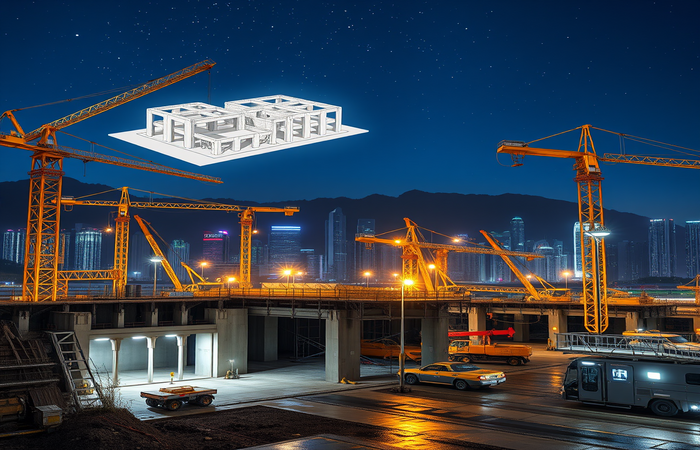
MTR Corporation and Dragages Hong Kong Honored with Railway Technology Excellence Awards for Kwu Tung Station Project
In a landmark achievement for the railway industry, MTR Corporation and Dragages Hong Kong have jointly been awarded three prestigious 2025 Railway Technology Excellence Awards. The awards recognize their collaborative efforts on the Kwu Tung Station project, a critical infrastructure development on Hong Kong’s existing East Rail Line and the future Northern Link, a pivotal element of the city’s Northern Metropolis plan. The awards, powered by GlobalData’s business intelligence, specifically highlight the companies’ innovations in Research and Development, Environmental Sustainability, and Safety. This article explores the groundbreaking technologies and forward-thinking strategies implemented at Kwu Tung Station, showcasing how MTR and Dragages Hong Kong are driving positive change and shaping the future of railway construction.
Automation and Digital Transformation
The Kwu Tung Station project distinguishes itself as a beacon of automation and digital transformation in railway construction. MTR and Dragages Hong Kong received the Research and Development award for their pioneering use of automation and digital technologies, which revolutionized the construction processes. At the heart of this automation is a fully automated under-slab drainage system designed to manage groundwater pressure beneath the station’s floating tunnel box structure. This system utilizes a central Programmable Logic Controller (PLC) to monitor water pressure via sensitive sensors, flowmeters, and motorized valves, detecting changes as minimal as 0.1kPa. This high precision ensured tunnel stability and uninterrupted railway operations during construction directly above an operating railway line. The project also featured an Automatic Deformation Monitoring System (ADMS) equipped with over 200 highly sensitive instruments, including liquid settlement sensors and three-way displacement sensors. This network, linked to a real-time web-based system, detected structural movements down to 0.01mm, providing instant alerts via email, SMS, and mobile notifications when thresholds were exceeded. Building Information Modelling (BIM) and a Common Data Environment (CDE) also fostered seamless collaboration, facilitating real-time design updates and data sharing. The use of 4D modelling and digital twins further enhanced the team’s ability to monitor construction progress. Finally, the project’s embrace of Design for Manufacture and Assembly (DfMA), Modular Integrated Construction (MiC), and Multi-trade Integrated Mechanical, Electrical & Plumbing (MiMEP) approaches for key components moved work to controlled factory environments. This dramatically reduced on-site activities by 36%, minimized exposure to high-risk environments, and increased overall productivity by 20%.
Environmental Sustainability at the Forefront
Environmental responsibility was a core tenet of the Kwu Tung Station project, reflected in its strong focus on decarbonization and sustainable resource management. The project demonstrated commitment to sustainability by implementing carbon-reducing methods and resource circularity. Significant reductions in carbon emissions were achieved through the use of low-carbon construction materials, including over 43,000m³ of Ground Granulated Blast-furnace Slag (GGBS) concrete and more than 8,000 tons of green reinforcement steel, with a significantly lower carbon footprint compared to conventional materials. The adoption of over 273,000 liters of bio-diesel for construction equipment further decreased greenhouse gas emissions. The team repurposed 90% of excavated material, equivalent to 200,000 tons, and used over 92,500m³ of treated recycled water. Over 450 tons of scrap metal were also sorted and recycled, contributing to environmental and economic sustainability. The project’s design as an underground facility further contributes to the environmental cause, preserving valuable above-ground land for community amenities. Continuous environmental monitoring ensured compliance with standards and proactive impact mitigation. This commitment to sustainable practices is further reinforced by the new station’s role in improving accessibility and promoting low-carbon mobility within the Kwu Tung North New Development Area.
Elevating Safety Standards with Real-Time Monitoring
Safety was paramount during the construction of Kwu Tung Station, especially given the complexity of building above an active railway tunnel. The project implemented a detailed real-time monitoring ecosystem, using over 200 automated sensors to continuously track tunnel and structural movements. Data from these sensors, including advanced settlement and displacement instruments, was critical to preserving the integrity of existing railway infrastructure. The Smart Site Management Platform (SSMP) was the central hub for safety management, integrating data from AI-powered CCTV, IoT wearables, digital permit-to-work systems, and environmental sensors. The AI-enabled CCTV system automatically detected unsafe acts, issuing immediate alerts to the safety team. Workers utilized IoT wearables and geolocation tracking devices, enabling real-time monitoring in high-risk areas. The digital permit-to-work system streamlined the authorization of high-risk activities. Flood and groundwater monitoring systems also provided real-time alerts. Additionally, the project invested in safety training, introducing Virtual Reality (VR) for hazard recognition. As a result of these measures, the project achieved zero fatal accidents and zero train service disruptions over 1.6 million manhours. This approach signifies a major advancement, demonstrating how real-time monitoring can improve safety outcomes in complex construction environments.
Conclusion
The 2025 Railway Technology Excellence Awards bestowed upon MTR Corporation and Dragages Hong Kong for the Kwu Tung Station project exemplify a paradigm shift in railway construction. The project has not only set new standards for automation, environmental responsibility, and safety but also showcases the transformative potential of collaborative partnerships. The integration of cutting-edge technologies such as automated monitoring systems, digital twins, BIM, and advanced materials has significantly enhanced construction efficiency, reduced environmental impact, and elevated worker safety. The emphasis on decarbonization, circular economy principles, and the preservation of community spaces underscores the industry’s increasing commitment to sustainability. Looking ahead, these innovations will serve as blueprints for future railway projects worldwide, paving the way for smarter, greener, and safer infrastructure developments. The successful implementation of the Kwu Tung Station project reinforces the railway industry’s pivotal role in achieving sustainable urban development and underscores the importance of embracing innovation to meet future challenges.
Company Summary
MTR Corporation is a world-class operator of sustainable rail transport services, recognized for its leadership in safety, reliability, and efficiency. With over 45 years of railway project experience, MTR’s expertise spans design, construction, commissioning, maintenance, and operations. MTR carries over 10 million passenger journeys daily across Hong Kong, Mainland China, Australia, the United Kingdom, and Sweden. Dragages Hong Kong, a subsidiary of Bouygues Construction, has a long history in Hong Kong, completing numerous significant projects in the region. Dragages is known for spearheading new construction technologies and techniques, particularly in its building, civil, and mechanical divisions. Together, MTR and Dragages Hong Kong are setting new benchmarks in the railway industry by collaborating on complex projects like Kwu Tung Station.

Railway infrastructure, rolling stock and transport technologies specialist focused on global rail industry developments, high-speed rail systems, signaling technologies and freight transportation. Covering railway investments, public transport modernization, rail operations and international mobility projects across Europe, Asia and North America.
RELATED POSTS

October 1, 2026 7:09 am
United States regulators confirmed a September 30 deadline for the...

October 8, 2026 1:15 pm
Alstom secured a €1bn contract to build 13 automated trains,...

October 4, 2026 5:14 pm
Alstom secured a CA$4.7 billion order from VIA Rail Canada...

October 1, 2026 12:13 am
Illinois approved $1.5 billion annually for the Northern Illinois Transit...

October 6, 2026 2:14 am
Union Pacific launched export rail shipments with Ferromex to deliver...

October 1, 2026 6:10 am
Amtrak approved a System Expansion Committee on July 30 to...