
Railway Giants CAF, Alstom, Bombardier Win Big Contracts
Major railway contracts awarded to CAF, Alstom, and Bombardier signal massive industry investment in modern rolling stock and signaling. Discover how these advancements shape the future of rail!
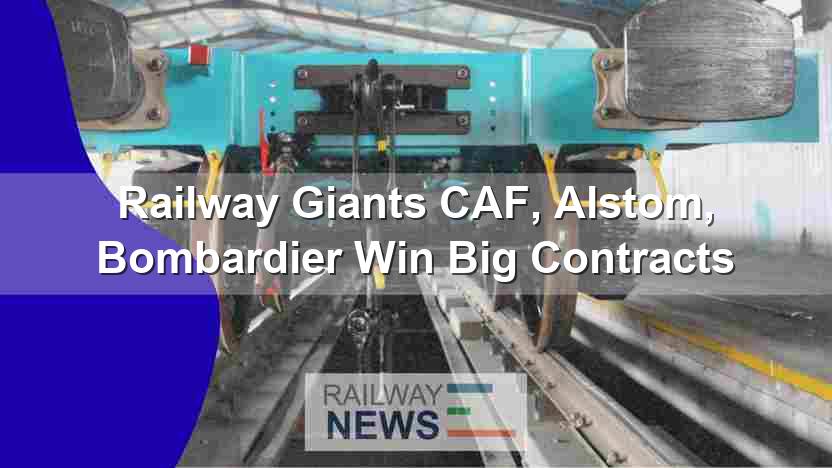
The global railway industry is a dynamic sector characterized by continuous technological advancements and significant infrastructure investments. This article explores several substantial contracts awarded to leading railway manufacturers, specifically examining the recent deals secured by Construcciones y Auxiliar de Ferrocarriles (CAF), Alstom, and Bombardier Transportation. These contracts showcase the current trends in railway procurement, highlighting the demand for modern rolling stock and signaling system upgrades. We will explore the details of these agreements, analyzing their implications for the companies involved and the broader railway landscape. The focus will be on the technological aspects of the contracts, the strategic partnerships formed, and the long-term impact on railway operations and passenger experience. By examining these case studies, we aim to provide insights into the evolving needs of railway operators worldwide and the role of leading manufacturers in meeting these demands. The discussion will also touch upon the innovative technologies employed and the commitment to long-term maintenance and support, crucial components of successful railway projects.
CAF’s Expansion in the Netherlands
Construcciones y Auxiliar de Ferrocarriles (CAF), a Spanish rolling stock manufacturer, secured a substantial €400m ($456.12m) contract from Nederlandse Spoorwegen (NS), the Dutch national railway operator. This contract represents an expansion of a previous agreement signed in 2014 and involves the supply of an additional 302 passenger cars based on CAF’s Civity platform. These cars will be configured into 38 four-car and 50 three-car trainsets. The deployment of these new vehicles aims to enhance the capacity and reliability of NS’s passenger services, reflecting a continuing investment in modernizing the Dutch rail network. The planned entry into service in the first half of 2023 underscores the commitment to timely project delivery and integration within the existing operational framework.
Alstom’s Signaling Modernization in Argentina
Alstom, a global leader in railway signaling and rolling stock, was awarded a €90m ($102.62m) contract by the Argentinian Ministry of Transport. This contract focuses on the refurbishment of the signaling network on the General Roca Railway. A consortium led by Alstom (holding a 58% stake), in partnership with POSE (42% stake), will undertake the project. Alstom will leverage its Iconis Centralised Traffic Management System and Automatic Train Stop (ATS) technology for this modernization effort. The integration of these advanced signaling systems aims to improve safety, increase operational efficiency, and enhance overall capacity on the General Roca Railway. POSE will manage the civil and electrical works, while Alstom and POSE will collaboratively handle field tests, warranty, and commissioning. The inclusion of a 24-year FlexCare maintenance management system further emphasizes the commitment to long-term operational support.
Bombardier Transportation’s Tram and Locomotive Contracts
Bombardier Transportation secured two significant contracts. First, Wiener Lokalbahnen (WL), an Austrian railway operator, purchased 18 FLEXITY trams from Bombardier, in a deal worth $107m. This purchase includes an option for 16 additional trams and eight years of maintenance. These new trams will replace existing TW100-type trains. The second contract involves the delivery of 20 BOMBARDIER TRAXX locomotives to Railpool, a rail vehicle leasing company, valued at $85m. This contract includes options for an additional 20 locomotives. The TRAXX 3 platform, encompassing TRAXX AC3, TRAXX MS3, and TRAXX DC3 models, offers versatility with an optional diesel engine for use on non-electrified lines. The diversity of Bombardier’s contracts highlights its expertise across various rolling stock segments.
Bombardier’s Contract with SNCF
Société nationale des chemins de fer français (SNCF), the French national railway company, contracted Bombardier Transportation for the delivery of 334 Francilien rail cars, valued at $378m. These cars will be configured into 42 seven-car and five eight-car train sets. Intended for deployment on the L, J, and P lines of the Transilien network, this contract signifies a substantial modernization effort by SNCF to improve its commuter services in the Île-de-France region. The investment in new rolling stock demonstrates SNCF’s commitment to providing modern and efficient passenger transport.
Conclusions
The contracts awarded to CAF, Alstom, and Bombardier Transportation highlight significant trends within the global railway industry. The substantial investments in new rolling stock by NS and SNCF underscore a focus on upgrading passenger fleets to enhance capacity, improve passenger experience, and meet evolving operational demands. These investments also reflect the ongoing modernization of national railway networks. Alstom’s contract showcases the importance of advanced signaling systems in improving safety, efficiency, and network capacity. Bombardier Transportation’s diverse portfolio of contracts – encompassing trams and locomotives – exemplifies the breadth of its capabilities and its market position across multiple railway segments. The inclusion of long-term maintenance contracts, such as the 24-year FlexCare agreement with Alstom, emphasizes a shift towards detailed service packages. This approach benefits railway operators by providing ongoing support, minimizing operational disruptions and ensuring the longevity of their assets. The overall picture painted by these contracts is one of continued investment and modernization within the railway sector, driven by a need for improved efficiency, increased capacity, enhanced passenger experience, and a strong focus on long-term operational reliability. These major deals represent not just individual company successes, but also significant advancements in railway technology and infrastructure globally. The future of railway development will likely continue to see similar investments in modern rolling stock and sophisticated signaling systems, further solidifying the crucial role of these manufacturers in shaping the evolution of rail transport.

Railway infrastructure, rolling stock and transport technologies specialist focused on global rail industry developments, high-speed rail systems, signaling technologies and freight transportation. Covering railway investments, public transport modernization, rail operations and international mobility projects across Europe, Asia and North America.
RELATED POSTS
September 6, 2026 5:19 am
Hitachi delivered Taiwan's first N700ST high-speed train from Japan in...
September 6, 2026 6:17 am
Hungary ordered a national ban on most freight trains from...
September 6, 2026 1:17 am
Hitachi Toshiba Supreme Consortium confirmed the first of 12 N700ST...

September 5, 2026 4:19 pm
CPK launched formal tender talks with four consortia to design...

September 6, 2026 4:12 am
Alstom delivered the first of 100 new G Class trams...
September 7, 2026 8:16 am
Midea, Gree and TCL shipped air conditioners via China Railway...