
Rail Investment: Unlocking LICs & LMICs Potential
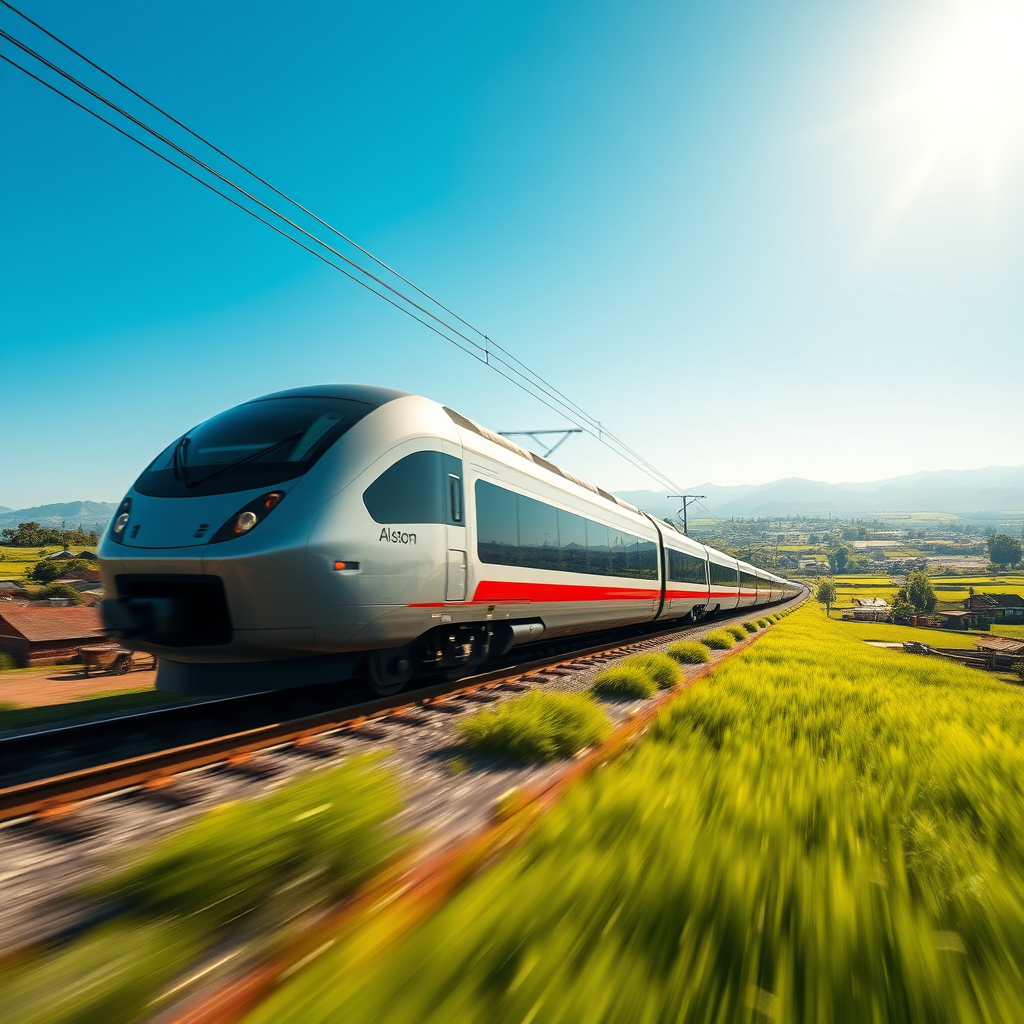
The Urgent Need for Rail Investment in Low- and Lower-Middle-Income Countries (LICs and LMICs)
This article explores the critical need for increased investment in rail infrastructure within LICs and LMICs. A recent whitepaper, jointly published by Alstom, the International Union of Railways (UIC), the University of Birmingham (UoB), and Roland Berger, powerfully argues that significant investment in expanding global rail networks is not merely a desirable goal but a crucial step towards achieving global net-zero emissions targets. The study projects that expanding rail infrastructure by 192,000 kilometers could result in a remarkable 1.8 gigatonnes of CO2 reduction by 2050. This potential environmental benefit is coupled with significant socio-economic advantages for developing nations. However, the study also highlights the considerable challenges faced in securing the necessary funding for such ambitious projects. This article will delve into these challenges, explore potential solutions outlined in the whitepaper, and analyze the broader implications of increased rail investment for global sustainability and economic development. The analysis will specifically focus on the financial barriers, technological solutions, and international collaborations necessary to unlock the transformative potential of rail infrastructure in developing nations.
Financial Barriers to Rail Development
One of the most significant obstacles hindering rail expansion in LICs and LMICs is the persistent challenge of securing adequate financing. Traditional financial models often fail to adequately capture the long-term economic and environmental benefits associated with rail infrastructure. The upfront capital costs are substantial, and the return on investment (ROI) may not be immediately apparent within conventional financial frameworks. This leads to a funding gap, preventing many promising rail projects from moving forward. Furthermore, the complexities involved in securing international loans and navigating bureaucratic processes often further delay or derail projects. The whitepaper emphasizes the need for innovative financial mechanisms, including grants and concessional loans from higher-income countries, to bridge this critical gap.
Technological Advancements and Sustainable Solutions
The whitepaper strongly advocates for leveraging technological advancements to enhance the efficiency and sustainability of rail systems. The adoption of electric locomotives, for example, drastically reduces greenhouse gas emissions compared to diesel-powered alternatives. Furthermore, incorporating heat recycling HVAC (Heating, Ventilation, and Air Conditioning) systems within rail cars improves energy efficiency and reduces operational costs. Beyond these technologies, the integration of smart technologies for real-time monitoring and predictive maintenance can optimize operational efficiency, minimizing delays and reducing overall lifecycle costs. These technological improvements, combined with strategic planning and efficient project management, can significantly enhance the viability and appeal of rail projects to investors.
International Collaboration and Policy Frameworks
The success of large-scale rail expansion in LICs and LMICs hinges on effective international collaboration. The whitepaper highlights the importance of fostering partnerships between developed and developing nations, encouraging technology transfer, and promoting knowledge sharing. This includes the establishment of clear policy frameworks that incentivize investment in sustainable rail infrastructure. Aligning rail development projects with the goals of the Paris Agreement on climate change could unlock access to significant funding opportunities. Furthermore, promoting public-private partnerships can leverage the expertise and resources of both sectors, accelerating project implementation.
Recommendations and Conclusion
The whitepaper offers seven key recommendations to address the challenges faced in financing rail development: 1) leveraging technological advancements; 2) securing grants from high-income countries; 3) aligning projects with the Paris Agreement; 4) developing innovative financing models; 5) strengthening institutional capacity; 6) enhancing project planning and implementation; and 7) promoting public-private partnerships. In conclusion, the imperative for increased rail investment in LICs and LMICs is undeniable. The potential for substantial CO2 reduction, coupled with the significant economic and social benefits, makes a compelling case for urgent action. Overcoming the financial barriers requires a multi-faceted approach involving innovative financing mechanisms, international collaboration, and technological advancements. The whitepaper provides a concrete roadmap, highlighting the necessity for a paradigm shift in how we approach rail infrastructure development. By embracing the recommendations outlined in this study, the global community can unlock the transformative potential of rail, contributing significantly to sustainable development and the fight against climate change. The future of sustainable mobility hinges on prioritizing investment in rail, particularly within regions where the need is most urgent and the potential impact is most profound. Failure to act decisively will not only limit progress towards global net-zero emissions targets but also deny LICs and LMICs the opportunity to achieve significant economic and social progress through improved transportation infrastructure.
RELATED POSTS
April 9, 2025 8:46 pm
This article delves into the significant contract awarded to Alstom...

September 9, 2021 8:40 pm
This article examines the strategic investment by Meridiam, a French...
October 3, 2025 2:54 pm
Poland's Integrated Railway Network (ZSK) project advances, promising over 2,000...
September 9, 2021 2:04 am
The Soham Railway Station: A Case Study in Revitalizing Regional...
November 16, 2020 1:50 pm
Gatwick Airport Station Redevelopment: A Modernization Project This article explores...
January 9, 2022 3:12 am
Introduction This article examines the significant contract awarded to Cordel...